A roofing inspection checklist for Gainesville, FL homeowners turns a quick glance at the roofline into a repeatable habit that catches damage while it is still cheap to fix. Gainesville's mix of intense UV, daily summer humidity, and a six-month hurricane season puts more stress on shingles and flashing than most of the country ever sees. Work through the checklist below, then decide whether it is time to get a trained eye on the roof.
Why Gainesville's Climate Puts Extra Stress on Your Roof
Florida roofing faces challenges most other states rarely see. Intense UV exposure breaks down shingle granules and asphalt binders faster than in cooler climates, and year-round humidity feeds algae growth that drier regions mostly avoid.
Gainesville sits inland, so it escapes storm surge, but it does not escape the storms themselves. The Atlantic hurricane season runs from June 1st to November 30th , which means wind-driven rain and flying debris are a six-month-a-year concern for any roof in North Central Florida. That window is also why most local contractors recommend bracketing hurricane season with two inspections rather than relying on one annual check.
Roof age compounds all of this. As shingles pass their mid-life point, UV and humidity accelerate granule loss and seam deterioration, pushing inspection frequency from an occasional glance to a scheduled habit.
How Often to Inspect Your Roof, by Age
The table below reflects general industry guidance rather than a rigid rule, since actual wear varies with installation quality and sun exposure.
| Roof Age | Recommended Inspection Interval | Why It Matters in Gainesville |
|---|---|---|
| 0 to 10 years | Every 2 years | New materials hold up well, but hurricane-season checks still catch storm damage early |
| 11 to 20 years | Annually | UV and humidity begin accelerating granule loss and seal breakdown |
| 20+ years | Twice a year | An aging roof loses flexibility, making leaks and flashing failures more likely |
A manufacturer's warranty does not replace the need for periodic inspections and necessary maintenance, a point the National Roofing Contractors Association makes to homeowners directly. Florida's climate tends to push wear toward the faster end of these intervals, so treat the table as a floor, not a ceiling.
The Complete Roofing Inspection Checklist for Gainesville, FL
Reading about roof stress is one thing. Walking your own property is another. This step-by-step check moves from the ground up: shingles and surface first, then flashing and gutters, then the attic.
You can start this walkthrough today, and if anything looks uncertain, our roof inspection team can follow up with a documented professional assessment.
Shingles and Roof Surface
Scan the roof from the ground for these signs:
- Cracking, curling, or missing shingles
- Granule loss that exposes bald spots
- Dark streaks from algae growth
- Sagging or uneven roof planes
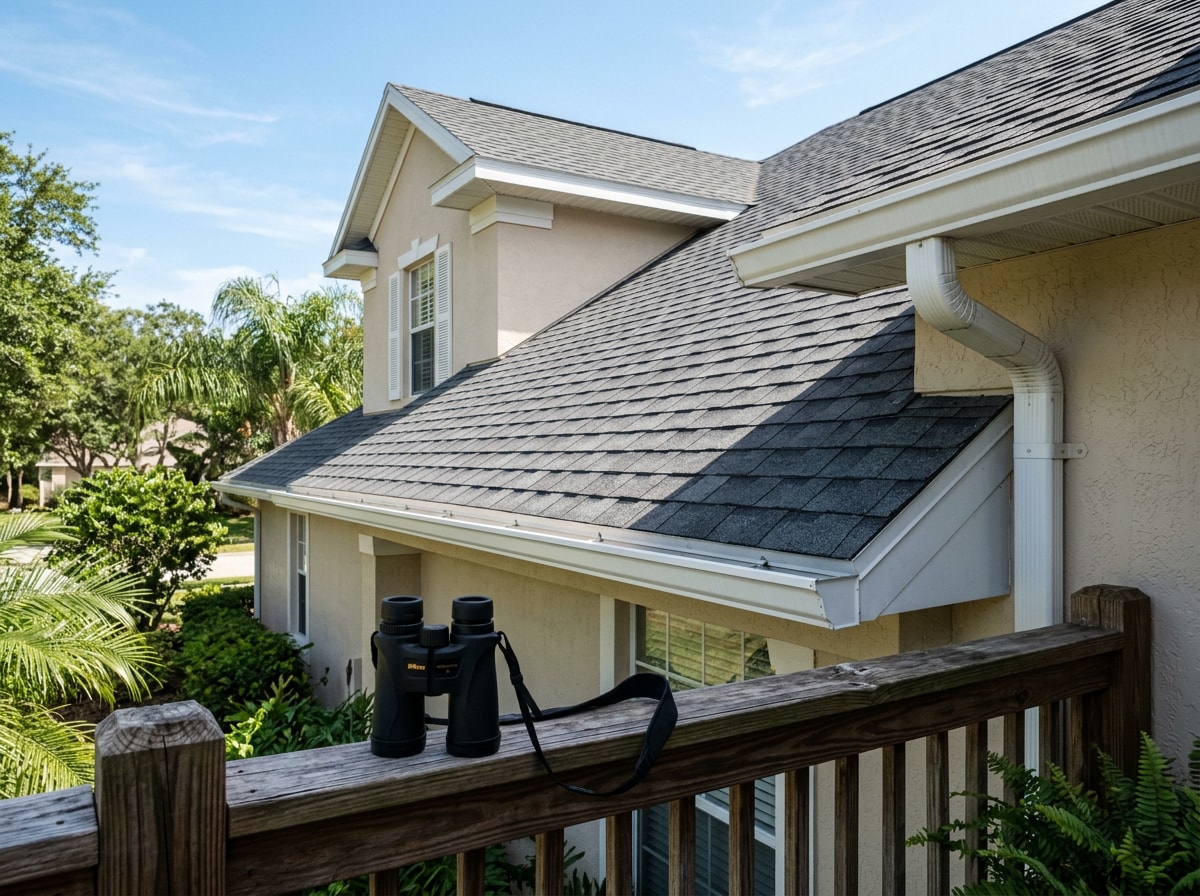
Binoculars make this easier without climbing a ladder. Curling edges usually mean shingles are drying out and losing their seal. Heavy granule loss collecting in gutters points to advancing wear. Dark streaking is typically algae, which thrives in Florida's humidity and is not usually structural, though it does age the roof's appearance.
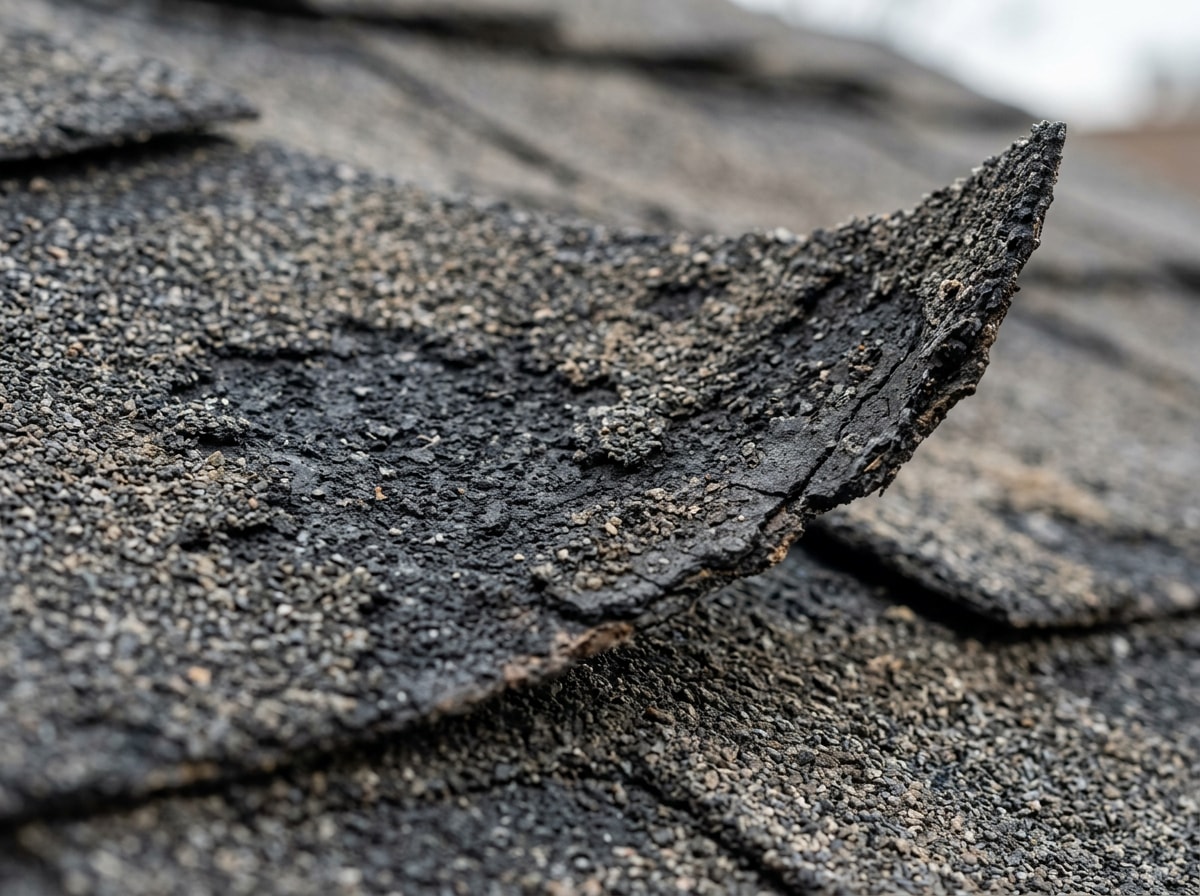
While you are at it, trim back overhanging branches. They trap moisture against shingles and give pests easy access to the roof deck.
Flashing Around Chimneys, Vents, and Valleys
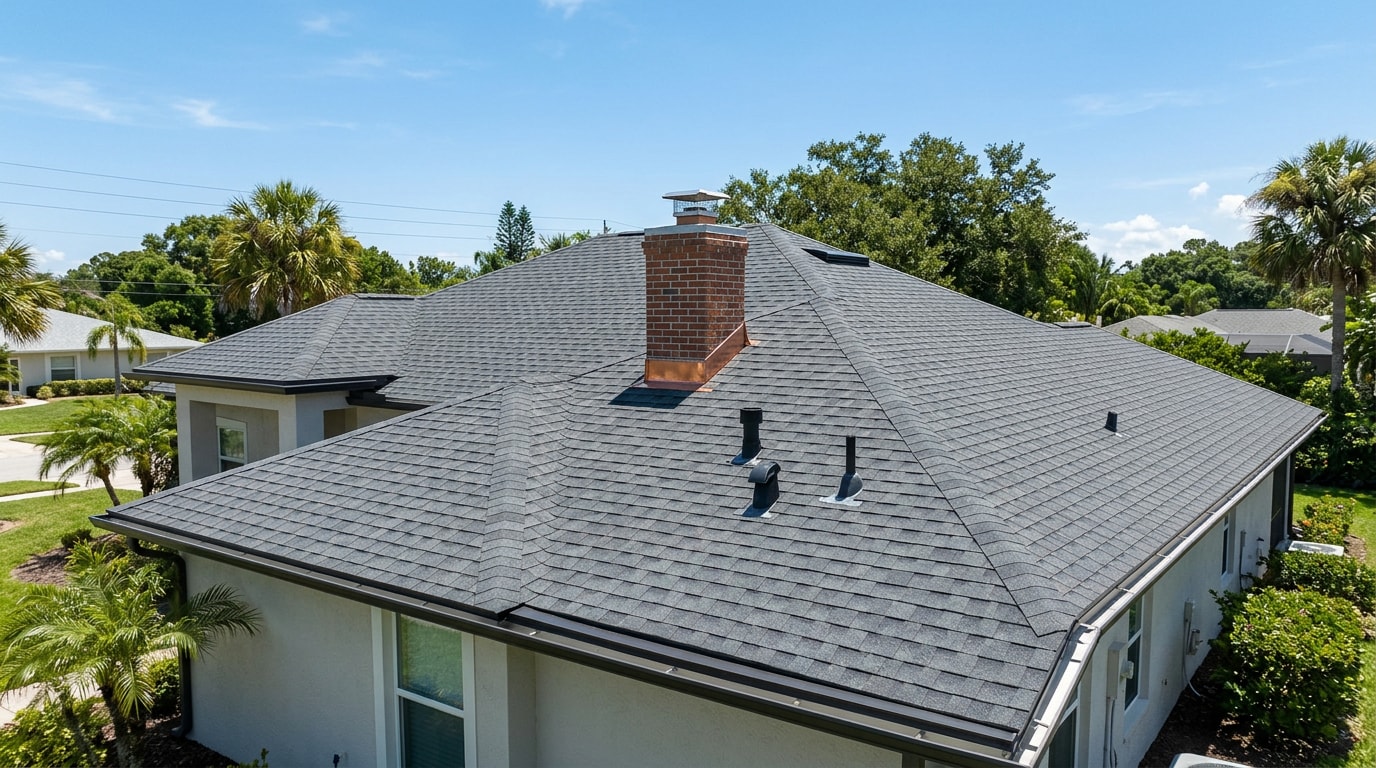
Flashing is the thin metal barrier sealing joints around chimneys, vents, skylights, and roof valleys. It is one of the most common failure points on an otherwise healthy roof.
Look for:
- Rust streaks or corrosion on metal flashing
- Flashing that is lifted, bent, or pulling away from the surface it seals
- Gaps around chimney or valley flashing
These spots are easy to miss from the ground but are frequent entry points for water, which is why a closer inspection matters once a roof passes the ten-year mark.
Gutters and Downspouts
Gutters and downspouts do more for roof durability than most homeowners realize. Clogged gutters hold water against the roof edge and fascia. Sagging sections usually mean the hangers have loosened or rotted.
Check for heavy granule buildup inside the gutter. That is a sign shingles are shedding faster than normal, often an early indicator of an aging roof. Finally, confirm downspouts carry water well away from the foundation. Discharge points placed too close to the house cause drainage problems that get blamed on the roof but have nothing to do with it.
Attic Ventilation and Moisture Signs
Attic problems rarely stay in the attic. A musty odor, damp or compressed insulation, and warped roof decking are all signs that ventilation is not working as it should. Blocked soffit vents trap heat and moisture, which accelerates shingle aging from underneath, a problem the ground-level checks above cannot catch.
Attic moisture intrusion is often closely linked to the next biggest problem facing the attic: improper ventilation, and avoiding moisture intrusion while ensuring proper ventilation are the keys to a durable attic. The U.S. Department of Energy's guidance on attic durability outlines exactly this link between blocked airflow and long-term roof damage.
Interior water stains on ceilings or visible mold near the roofline point to moisture that has already found a way in. If any of these signs show up, treat it as a reason for a closer look rather than assuming the problem is minor. Moisture issues tend to worsen quietly.
When to Call a Professional Roof Inspector in Gainesville
A DIY walkthrough catches a lot, but it cannot replace a trained eye on the roof surface itself. When our crews at Alpha One Roofing walk Gainesville roofs after summer storms, lifted ridge caps and cracked pipe boots show up more often than almost any other single defect, and both are nearly invisible from the ground.
An annual professional inspection, ideally one before hurricane season and one after, creates a documented record of roof condition that matters for insurance claims and resale value. Photos and written reports give homeowners something a visual check alone cannot: proof.
That documentation also pays off directly. Section 627.0629, Florida Statutes, requires insurers to provide discounts and deductible reductions that reflect wind-resistant construction features , and a current wind mitigation report is how most Gainesville homeowners claim that savings. If a storm has already passed through, a storm damage assessment establishes a clear before-and-after record for your insurer.
You can see examples of completed inspections and repairs across North Central Florida in our project gallery, and if the checklist above turned up something that needs attention, our roof repair pricing guide for Tallahassee is a useful starting point for ballpark costs before you commit to a full repair. Alpha One Roofing serves homeowners across Gainesville, FL and the surrounding Panhandle region, and you can learn more about our full range of services on our homepage.
Ready to get a certified set of eyes on your roof? Get a Free Estimate and we will schedule a documented inspection before your next storm season.
FAQ
How much does a roof inspection cost in Gainesville, FL?
Most roof inspections in the Gainesville area cost between $150 and $400, though pricing varies with roof size, pitch, accessibility, and whether it is a basic visual check or a detailed, documented report.
Is a roof inspection free in Florida?
Often, yes. Many contractors offer a free roof inspection when it is tied to a repair or replacement estimate. An independent inspection with no sales component typically carries a fee since it is a standalone, unbiased service.
How often should I have my roof inspected in Gainesville?
Inspect a roof under 10 years old every two years, a roof 11 to 20 years old once a year, and a roof over 20 years old twice a year. Add an extra check after any major storm regardless of age.
How long does a professional roof inspection take?
Most professional inspections take 45 minutes to a few hours, depending on the roof's size, pitch, and age. A basic visual check from the ground is faster than a full walk-on inspection with attic access.
What is a 4-point inspection in Florida?
A 4-point inspection differs from a general roofing inspection checklist. Insurers require it to evaluate four systems: roof, electrical, plumbing, and HVAC, often alongside a separate wind mitigation inspection, mainly for older homes or new insurance policies.
Do I need a roof inspection before selling my home?
Usually, yes. Buyers and their insurers often request proof of roof condition before closing, and a roof inspection before selling can prevent surprises during negotiations or delays tied to real estate roof certification requirements.