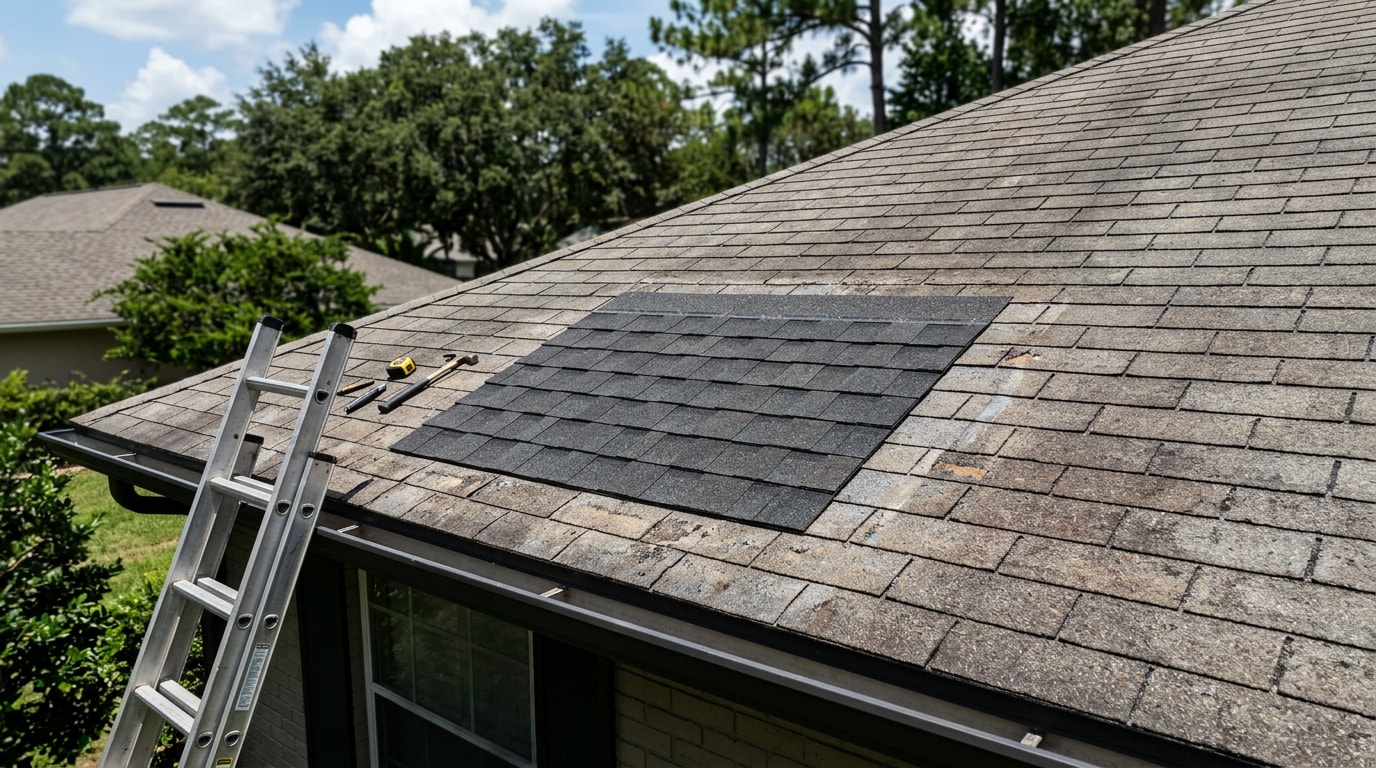
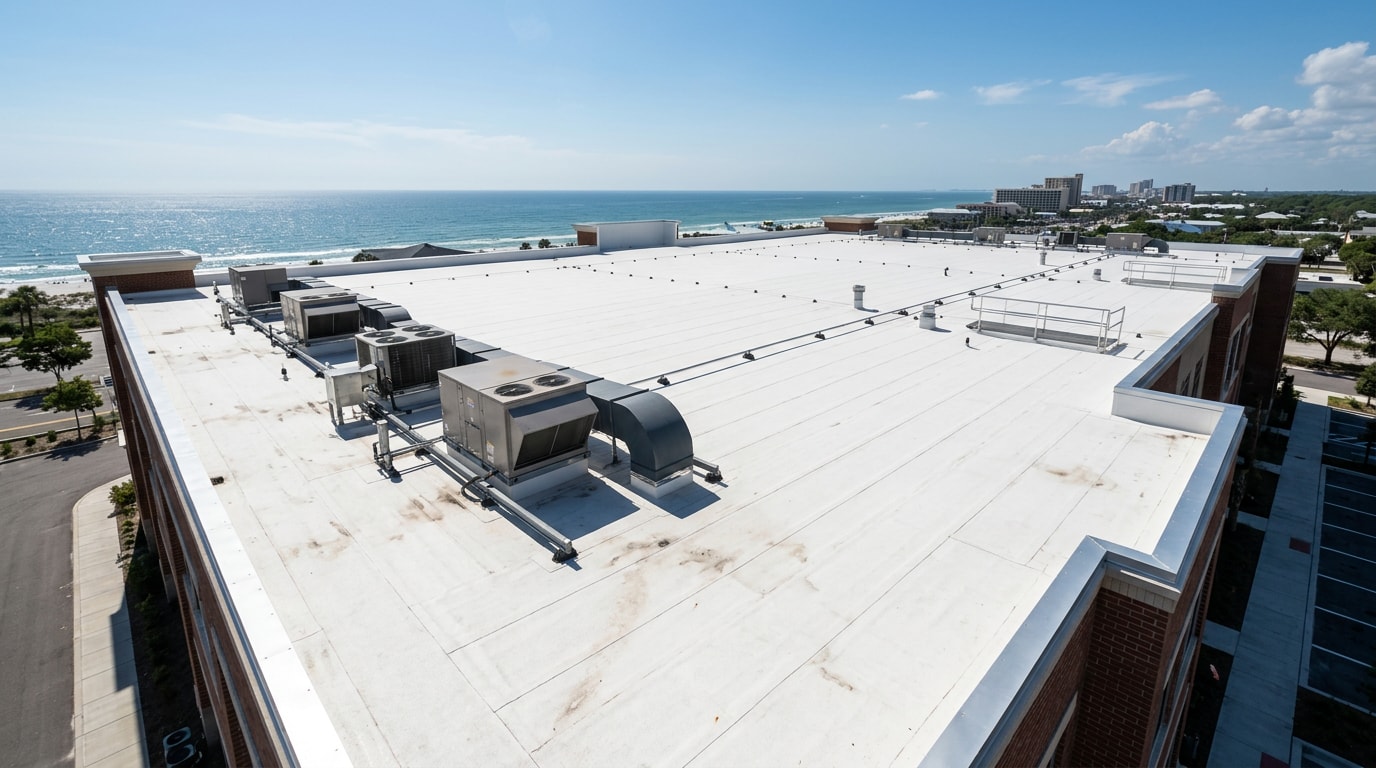
Roofing TPO in Panama City, FL is the most requested low-slope membrane system we install along this stretch of the Gulf Coast, and the reasons come down to wind performance, cooling costs, and price. This guide covers what TPO actually costs installed in 2026, how attachment method affects storm performance here, and what a manufacturer warranty really protects before you sign a contract. If you manage a flat-roofed building in Bay County, the details below will save you a few expensive surprises.
Alpha One Roofing is a licensed Florida roofing and general contractor serving Panama City and the broader Florida Panhandle. If you want a second opinion on an existing TPO roof or a quote on a new one, contact our team directly.
What Is TPO Roofing and How Is It Installed?
TPO stands for Thermoplastic Polyolefin. It's a single-ply membrane installed over a solid substrate, usually rigid insulation board, on flat or low-slope roofs. Membrane thickness generally runs from 40-mil up to 80-mil or thicker, with thicker membranes holding up better under foot traffic and hail.
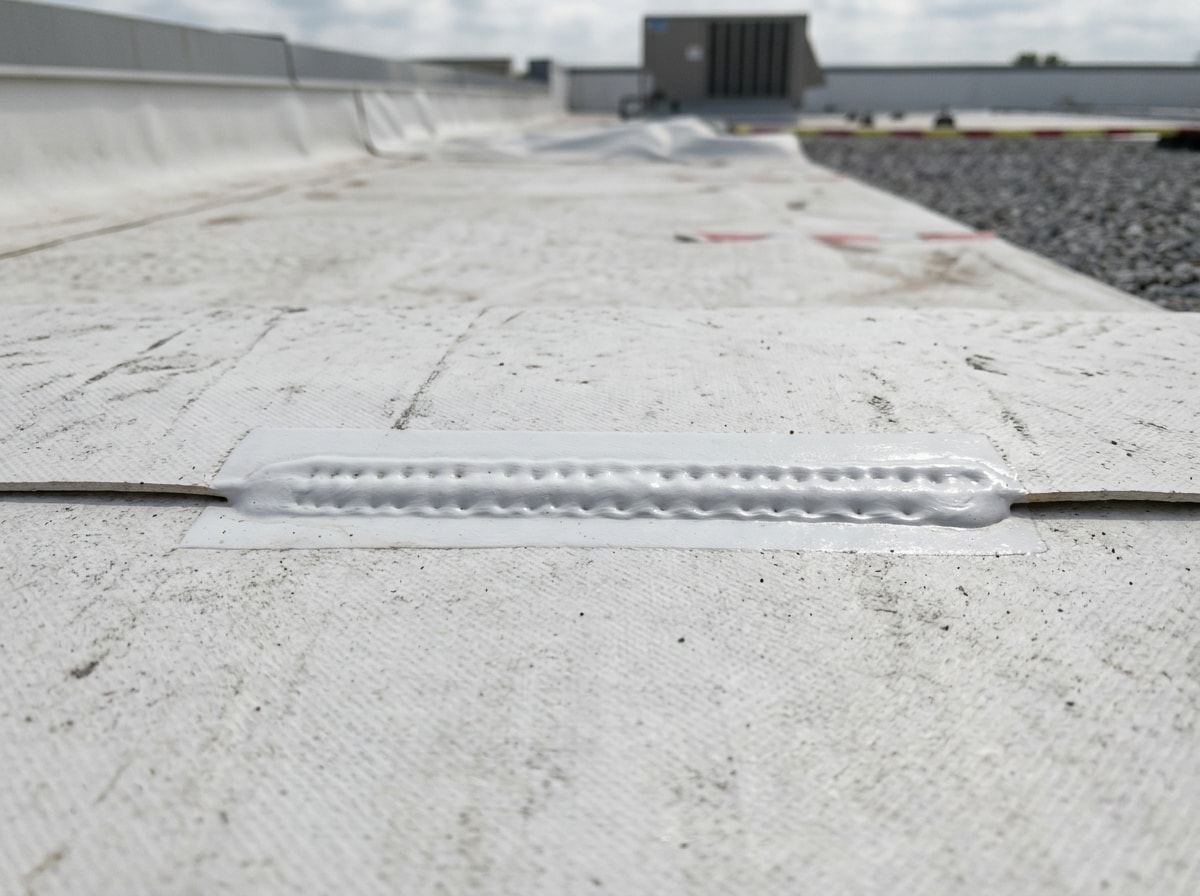
Installation follows a straightforward sequence: the old roof is torn off or prepped, insulation board goes down, and the membrane is attached and heat-welded at the seams. Contractors generally choose between two attachment methods.
- Mechanically fastened: the membrane is secured with screws and plates through the insulation into the deck. Lower upfront cost, faster install.
- Fully adhered: the membrane is bonded directly to the substrate with adhesive. Higher material and labor cost, but better uplift resistance in most third-party wind testing.
Why Attachment Method Matters More in Panama City
Coastal wind exposure changes the math. On properties we've serviced within a half-mile of the Gulf in Panama City Beach and St. Andrews, fully adhered systems have consistently held their seams better through tropical storm-force gusts than mechanically fastened systems installed at standard fastener spacing. That's not a universal rule. Building height, parapet detailing, and field pressure zones all factor into the final recommendation, which is why a qualified contractor should walk the roof before pricing either option.
Our roof installation page covers the full process in more detail, and our projects page has examples of completed TPO work in the area.
TPO Roofing Cost in Panama City, FL (2026)
Pricing varies by membrane thickness, attachment method, insulation requirements, and whether the old roof needs to be torn off first. The table below shows typical 2026 planning ranges for TPO against two common alternatives.
| System | Installed Cost per Sq Ft (2026) | Expected Lifespan | Gulf Coast Performance |
|---|---|---|---|
| TPO | $5.50–$11.00 | 20–30 years | Reflective surface, strong uplift resistance when fully adhered |
| EPDM | $5.00–$9.00 | 20–25 years | Good wind resistance, but the black membrane absorbs heat |
| Metal | $8.00–$16.00 | 40–60 years | Excellent wind resistance, reflective coatings available |
Treat these as planning ranges, not quotes. Tear-off, deck repair, insulation upgrades, and roof access all move the number. For a figure specific to your building, our roof replacement page can connect you with an estimator, or you can request a free estimate directly.
Why TPO Handles Panama City's Heat, Wind, and UV
Three things matter most for a low-slope roof here: solar reflectance, wind uplift resistance, and seam integrity over time.
Solar reflectance. White TPO membranes are built to clear ENERGY STAR's performance thresholds for low-slope roof products, which require an initial solar reflectance of at least 0.65 and no less than 0.50 after three years of weathering. That reflectance is what keeps a flat roof from turning into a heat sink during a Florida summer, which lines up with the EPA's Heat Island Reduction Program, which notes that most solutions have multiple benefits, including cleaner air, improved human health and comfort, reduced energy costs, and lower greenhouse gas emissions .
Wind uplift. Panama City sits in a high-velocity coastal wind zone, and commercial roof assemblies here have to meet Florida Building Code wind-load and fastening requirements. Florida's building code imposes some of the most rigorous roofing standards in the United States, driven by the state's exposure to Category 5 hurricanes, high humidity, and a coastal geography that accelerates structural degradation. You can review the full requirements on the Florida Building Code's official publication.
Seam integrity. Heat-welded seams are stronger than taped seams, but weld quality depends entirely on installer training and weather conditions during installation. This is the single biggest point of failure we see on TPO roofs that leak within the first five years.
If a storm is already on its way, our emergency roof tarping service and storm damage assessment can limit damage while a permanent repair or replacement gets scheduled.
TPO Roofing Service Area: Panama City and the Florida Panhandle
We install and repair TPO roofing across Panama City, covering ZIP codes 32401, 32402, 32403, 32404, 32405, 32406, 32408, 32409, 32411, 32412, and 32417. We also serve commercial and residential properties throughout the wider Florida Panhandle.
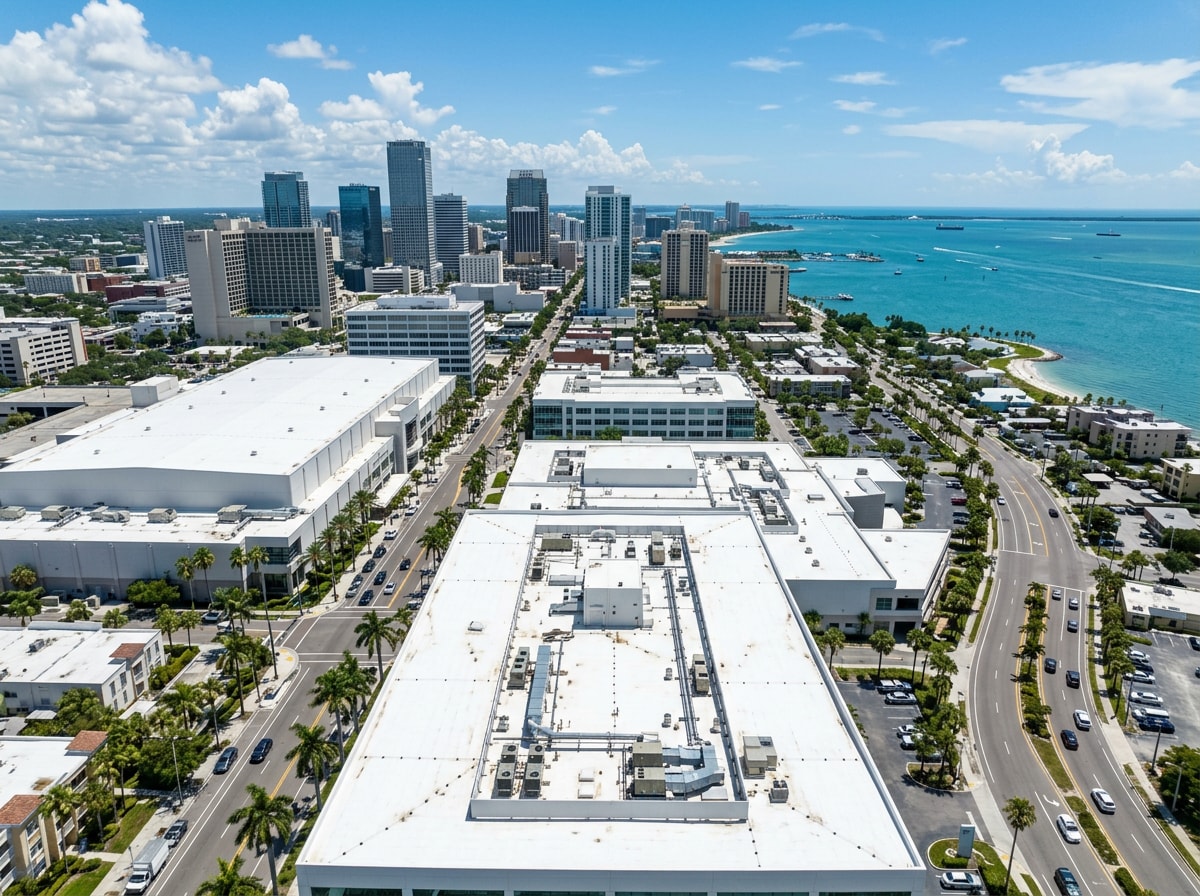
Not sure your building qualifies? Check our Panama City, FL service area page or contact us and we'll confirm.
TPO Roof Warranty and Maintenance: What's Actually Covered
A TPO warranty usually comes in two parts: a manufacturer warranty on the membrane material, and a separate workmanship warranty from the installer. Manufacturer warranties on commercial TPO systems commonly run 15 to 20 years, but coverage terms vary significantly by brand and installation method, so read the exclusions before assuming anything is covered.
A few things that commonly void or limit a warranty:
- Mechanically fastened systems installed at wider-than-spec fastener spacing
- Seam welds that weren't tested after installation
- Ponding water left unaddressed for extended periods
- Rooftop equipment installed or serviced by a third party without the roofer's sign-off
Routine inspections catch small problems, like a lifted seam or a punctured membrane, before they turn into a warranty dispute or a leak. Our roof inspection service and wind mitigation report can also document your roof's condition for insurance purposes.
If you're planning new construction, it's worth specifying TPO at the design stage rather than retrofitting later. See our new construction roofing page for how that process works.
Ready to get a number on your roof? Request a free estimate or learn more about our full range of services on the Alpha One Roofing homepage.
FAQ
What Is TPO Roofing?
TPO is a single-ply roofing membrane made from a blend of polypropylene and ethylene-propylene rubber, installed on flat or low-slope roofs. It's valued for its reflective white surface, heat-welded seams, and relatively low installed cost compared to metal or PVC systems.
How Long Does a TPO Roof Last?
A properly installed and maintained TPO roof typically lasts 20 to 30 years. Lifespan depends heavily on membrane thickness, attachment method, and whether seams were welded and tested correctly at installation.
Is TPO Roofing Environmentally Friendly?
Yes. TPO is recyclable, and its reflective surface lowers cooling demand, which reduces overall building energy use. The EPA's cool roof guidance covers how reflective roofing fits into broader heat-reduction strategies.
Can a TPO Roof Be Repaired?
Yes. Punctures, torn flashing, and failed seams can usually be repaired without a full tear-off, as long as the underlying insulation and deck are still sound. A full replacement is typically only needed when the membrane has widespread UV degradation or the deck itself has failed.
How Much Does TPO Roofing Cost Per Square Foot?
In 2026, installed TPO typically runs $5.50 to $11.00 per square foot, depending on membrane thickness, attachment method, and whether tear-off is required. Coastal wind-rating upgrades can push costs toward the higher end of that range.
Is TPO or EPDM Better for a Florida Roof?
TPO generally performs better in Florida's climate because its white, reflective surface cuts cooling costs, while EPDM's black membrane absorbs heat. EPDM can still be a reasonable choice on buildings where reflectivity matters less than raw membrane durability.
Does a TPO Roof Qualify for Wind Mitigation Credits?
It can, depending on the attachment method, fastening pattern, and documentation provided at installation. A wind mitigation inspection is the only way to confirm eligibility and the discount amount, since insurers evaluate each roof individually.