Commercial roof waterproofing in St. Marks, FL is the only thing standing between a flat roof and the Gulf humidity, driving rain, and storm surge that regularly hit this river town harder than most of the Panhandle. A sealed, properly maintained system stops leaks before they start, and it keeps repair bills predictable instead of surprising. This guide covers the materials, the real local flood risk, the process, and what the work costs in 2026.
What Is Commercial Roof Waterproofing?
Commercial roof waterproofing seals a roofing system so water cannot penetrate the building envelope, even under standing water or wind-driven rain. It's broader than a basic repair or single recoat. True waterproofing treats the membrane, coatings, sealants, and flashing details as one connected system.
A repair patches a specific leak after it shows up. Waterproofing coatings and membrane systems go on proactively, across the entire roof surface and its vulnerable points: seams, penetrations, parapet walls, and drains. The goal is to stop water intrusion before it starts, not chase it after the fact. See our full approach to commercial roofing for how we scope a project before touching the roof.
Why St. Marks Buildings Face Unusual Water Risk
St. Marks sits at the confluence of the St. Marks and Wakulla rivers, right where they meet the Gulf of Mexico. That geography makes it one of the more flood-exposed small towns in North Florida, and it's not a theoretical risk.
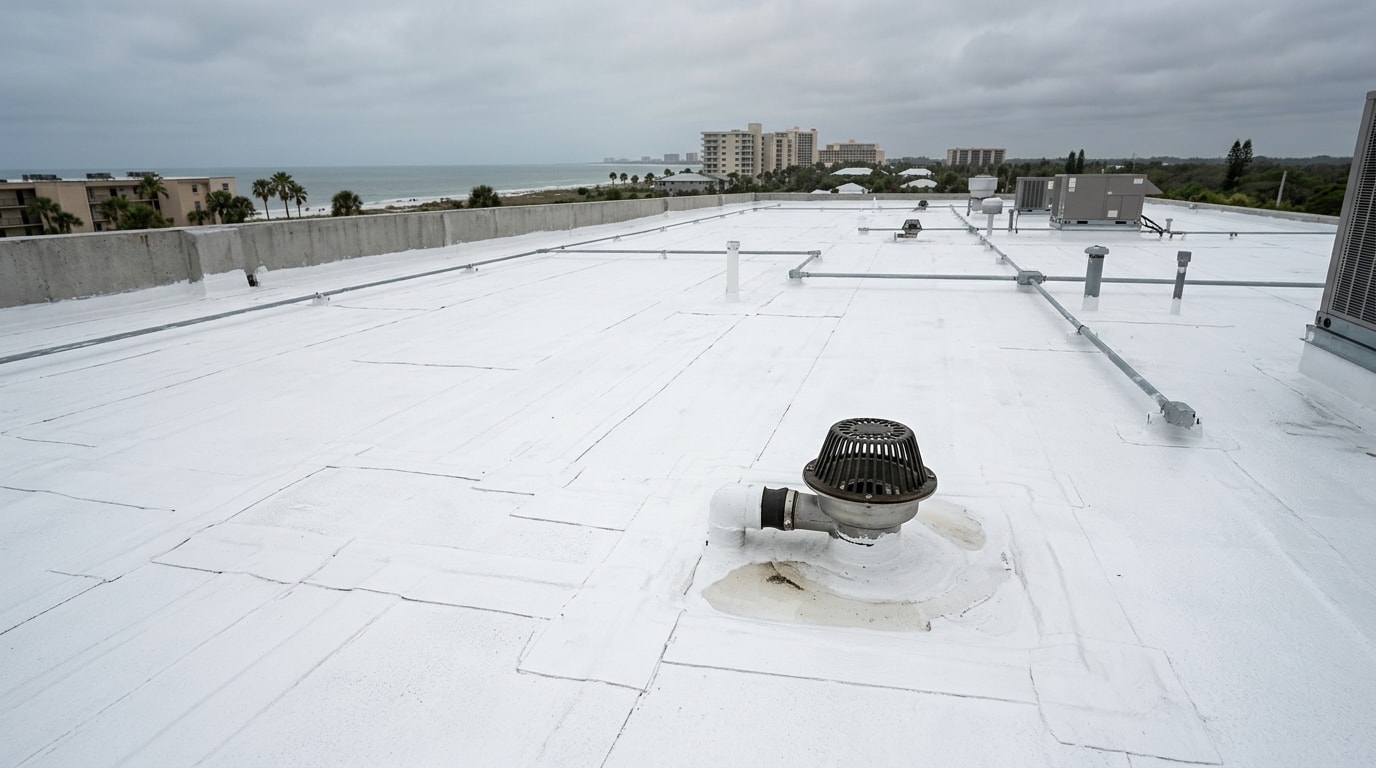
Storm surge flooding of 7-9 feet has produced considerable storm surge-related damage near St. Marks, Florida during past hurricanes, even in storms that made landfall well to the west. That kind of water load doesn't just threaten the ground floor. It pushes moisture into roof penetrations, parapet caps, and any seam that isn't fully sealed, and it leaves standing water on low-slope roofs long after the storm passes.
This is the piece most generic roofing pages skip: waterproofing in St. Marks isn't just about rain volume. It's about a roof's ability to shed water fast and keep it out when the water table and river levels rise at the same time. A roof that performs fine in Tallahassee can still fail here if drainage and sealant details aren't built for river-adjacent flooding.
Signs Your Building Needs Waterproofing Now
Common warning signs that a commercial roof needs waterproofing include:
- Interior ceiling stains or soft spots on drop ceiling tiles
- Ponding water that lasts more than 48 hours after rain
- Cracked, blistered, or lifted membrane sections
- Rust forming around rooftop HVAC curbs or penetrations
- Rising energy bills with no other explanation
A thorough roof inspection catches most of these early. In practice, many property managers only notice a problem once a stain appears on the ceiling tile. By then, moisture has usually already reached the insulation layer below the membrane, and the fix has moved from "coat it" to "tear out and replace a section."
Our Commercial Roof Waterproofing Process
A sound waterproofing process for St. Marks and the surrounding Gulf Coast follows the same five steps every time, regardless of roof type:
- Full roof inspection with moisture testing to find trapped water before it gets sealed in
- System selection based on roof type, slope, and ponding history
- Surface prep and repair of any damaged substrate or soft decking
- Application of the coating, membrane, or seam-sealing system
- Documentation and warranty paperwork so the work is on record for insurance and resale
Skipping any step shortens the finished system's lifespan. Moisture testing in particular catches water that would otherwise get sealed under a new coating, which is one of the most common causes of early coating failure. Request a free waterproofing estimate to get a roof-specific plan instead of a generic quote.
Waterproofing Systems We Install
The right system depends on the existing roofing material, the building's exposure, and how it's used day to day.
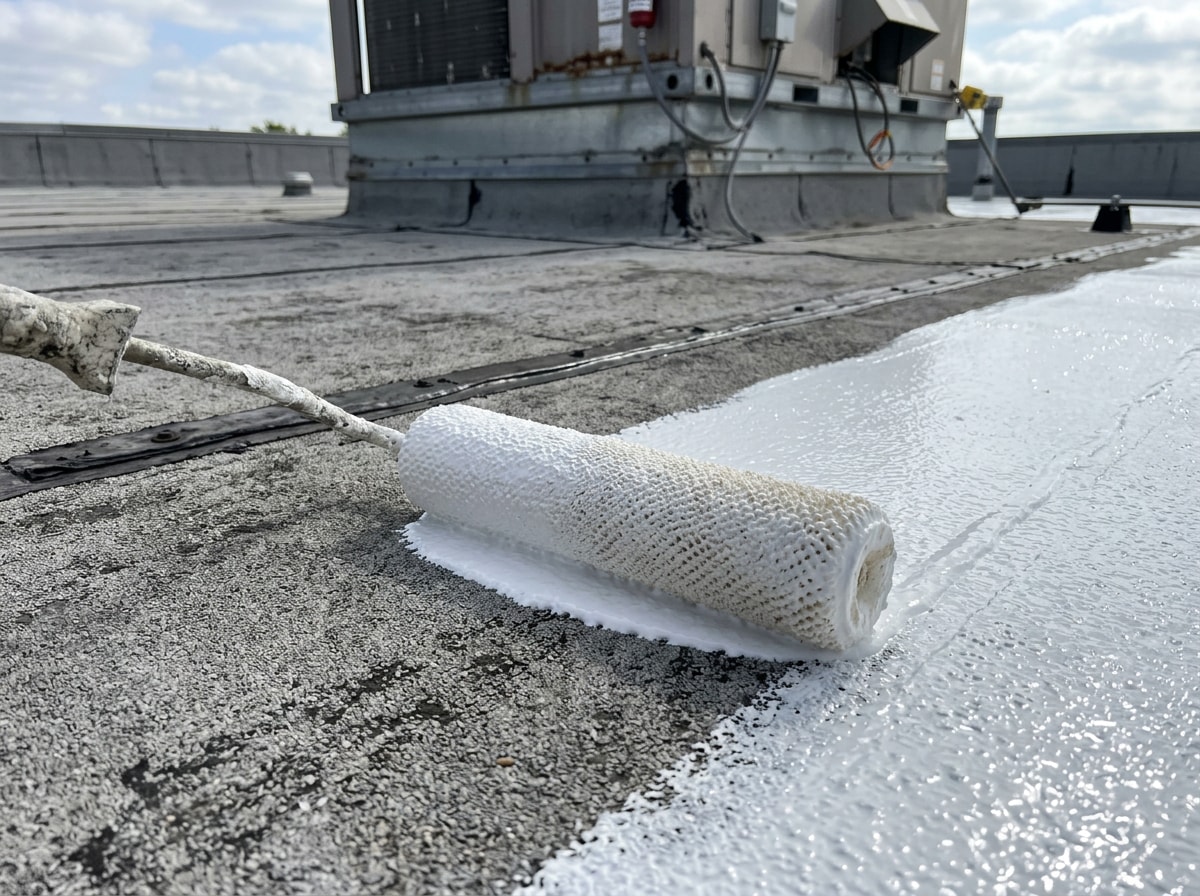
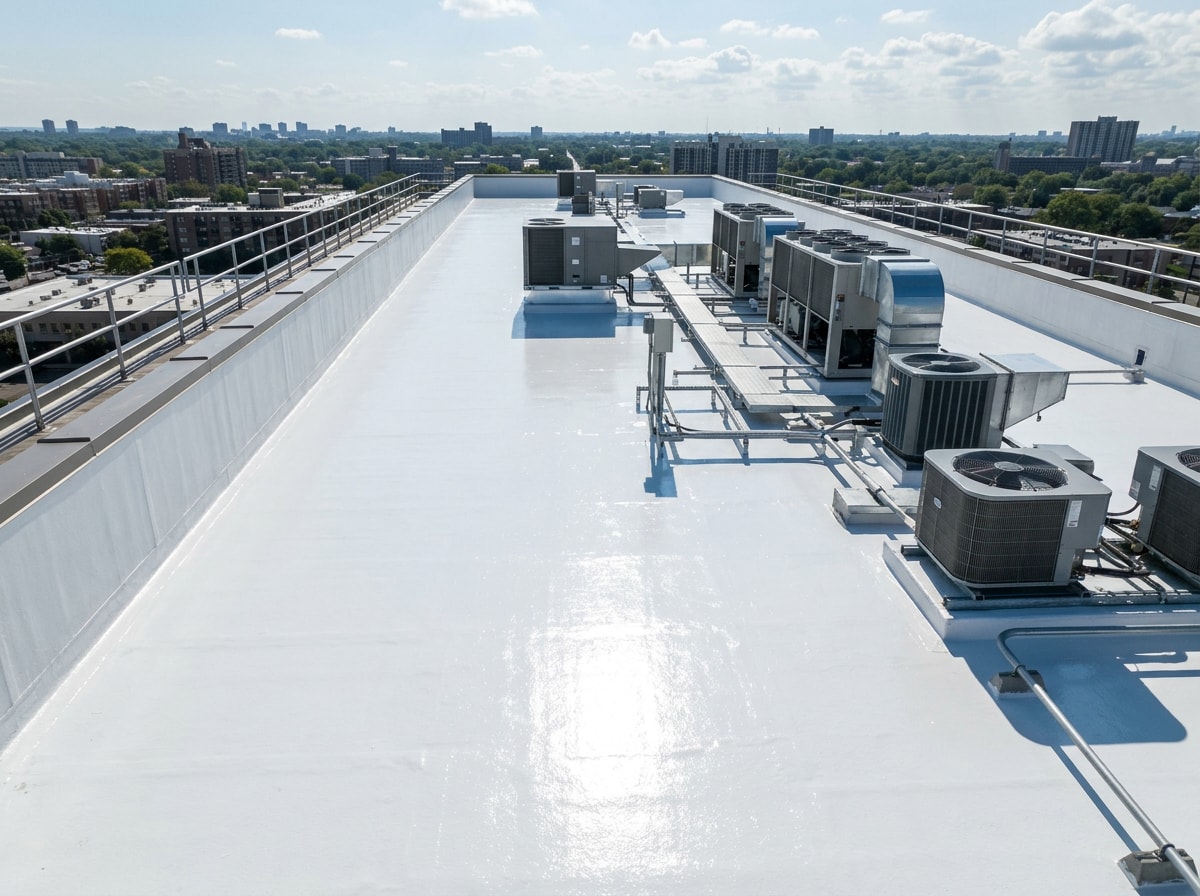
- Silicone roof coatings for UV and ponding-water resistance on roofs with chronic standing water
- Elastomeric coatings for flexible, seamless protection over sound but weathered membranes
- SPF (spray polyurethane foam) roofing for added insulation with a monolithic, seamless seal
- Seam sealing on single-ply and metal roof systems, where water most often finds a way in
NRCA's current roof coating guidance addresses substrate evaluation, repair, and preparation steps for single-ply membranes, built-up roofing, modified bitumen, SPF, and metal panel systems , which is why a contractor should match the system to inspection findings rather than defaulting to whatever product they stock.
Matching Waterproofing to Your Roof Type
Most commercial roofs in the region fall into four categories, each with different waterproofing needs.
| Roof Type | Primary Waterproofing Need | Common Weak Point |
|---|---|---|
| Single-ply (TPO/EPDM) | Tight seam sealing | Field and penetration seams |
| Modified bitumen / asphalt | Reflective coating layer | UV breakdown over time |
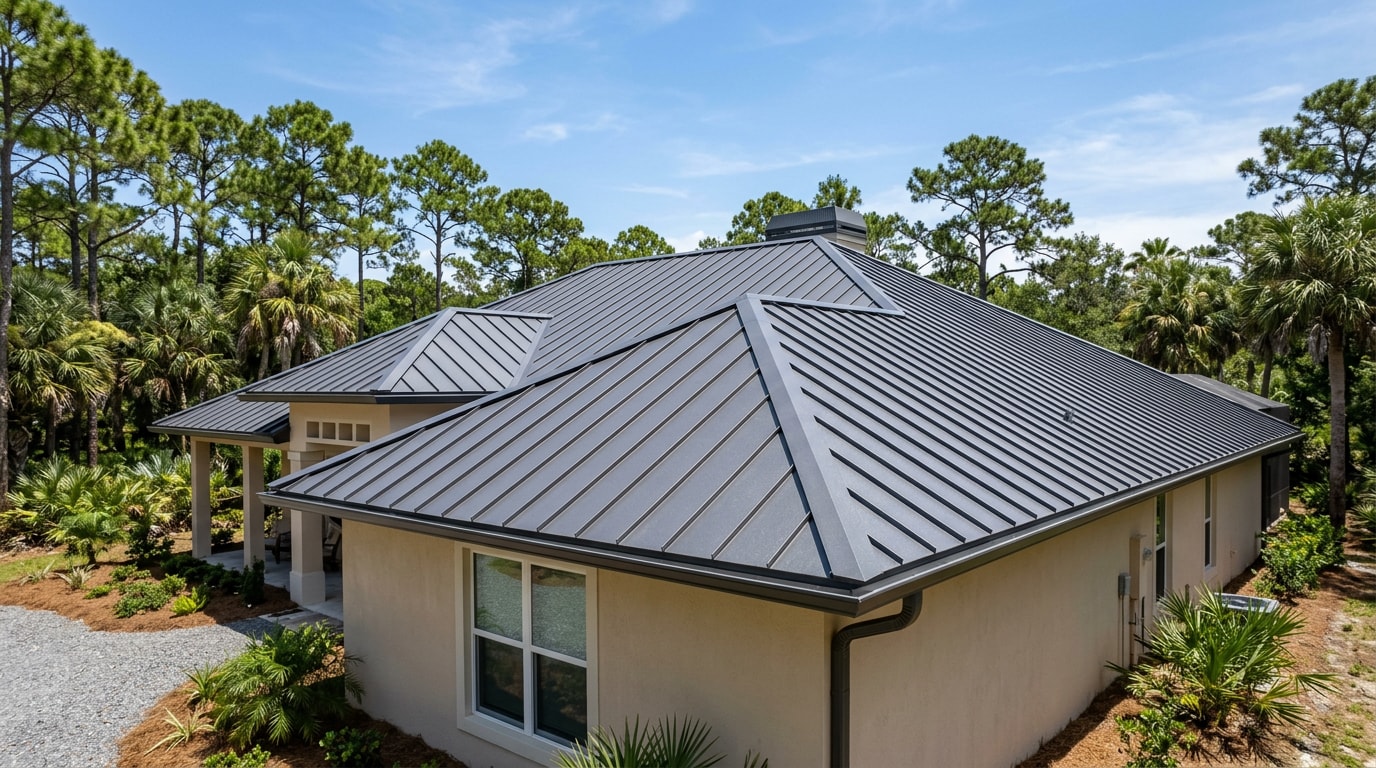
| Metal commercial roofing | Sealed fasteners and panel seams | Fastener backout, panel laps |
| Coating/restoration systems | Full-roof recoat cycle | Substrate prep before recoat |
Matching the waterproofing approach to the existing material matters more than the material itself. A coating applied over the wrong substrate can fail within a single season.
Commercial Waterproofing Membrane Comparison
Choosing between membrane and coating systems depends on existing roof condition, budget, and how much UV and humidity exposure the roof sees. In St. Marks, that exposure runs high year-round.
| System | Typical Lifespan | Best-Fit Roof Condition | Pros | Cons |
|---|---|---|---|---|
| EPDM (rubber membrane) | 20-25 years | New or full tear-off installs | Durable, storm-resistant | Dark surface absorbs heat |
| TPO (single-ply) | 15-20 years | New installs, reflective upgrades | Energy-efficient, heat-welded seams | Seam quality varies by installer |
| Silicone coating | 10-15 years | Aging roofs with ponding water | Strong UV and pond resistance | Needs clean, dry substrate |
| Elastomeric coating | 8-12 years | Sound membranes needing refresh | Flexible, cost-effective | Shorter lifespan than silicone |
These figures reflect general industry ranges. Actual performance depends on installation quality, substrate condition, and ongoing maintenance, not the product label alone.
Reflective coatings carry a second benefit beyond waterproofing. A required ENERGY STAR-qualified cool roof product saves money if priced no more than $0.64 per square foot above a less efficient alternative , according to the U.S. Department of Energy's purchasing guidance, making reflective systems a reasonable upgrade on roofs that already need recoating.
A Code Detail Most Quotes Won't Mention
Florida Building Code treats waterproofing as a distinct category from standard roof assemblies, not an interchangeable term. Under FBC Section 1519.16, if any portion of the waterproofing membrane is to remain exposed, the system must be ultra-violet resistant, and it must be flood tested in accordance with ASTM D5957 .
That flood-test standard matters for plaza decks and pedestrian-traffic waterproofing, not for every low-slope roof. For standard roof assemblies, flood testing risks irreversible damage to newly installed materials, and ASTM D5957 explicitly states it is "not intended for use on building roofing systems." A contractor who proposes flood-testing your finished roof as a quality check is applying the wrong standard to the wrong assembly. It's a small detail, but it's the kind of thing that separates a crew that knows the code from one that's guessing.
Common Mistakes That Shorten a Waterproofing System's Life
Frequent waterproofing mistakes include:
- DIY patch jobs that mask a leak without solving its source
- Skipping moisture testing before applying a new coating
- Sealing over wet insulation, which traps moisture and accelerates deck rot
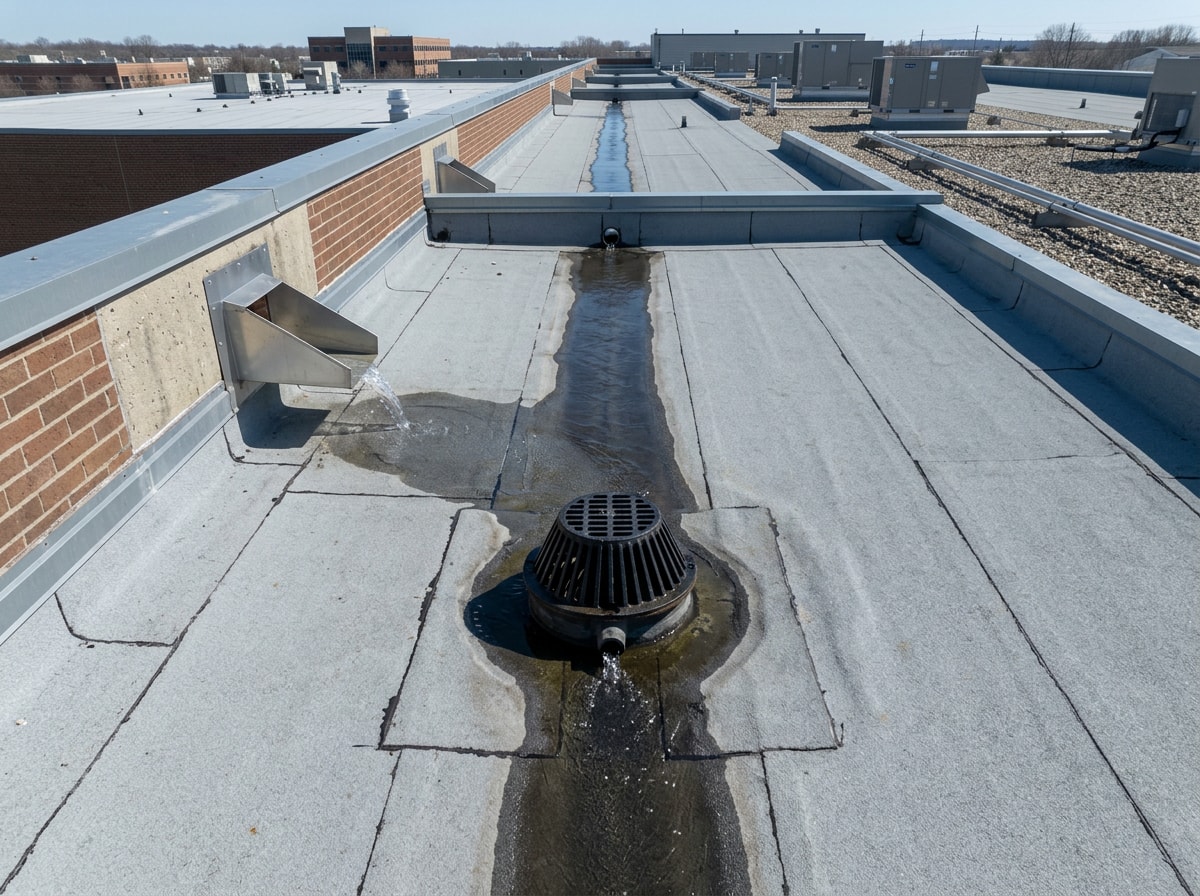
- Ignoring drainage problems like clogged scuppers that let ponding water return
- Confusing a cosmetic recoat with a full waterproofing scope
Each of these looks like a fix in the short term. A patched leak may stop dripping for a season, but if the underlying moisture or drainage issue goes unaddressed, it almost always resurfaces, usually somewhere harder to reach than before.
Maintenance Checklist to Protect Your Investment
A basic maintenance routine keeps a waterproofed roof performing for its full expected lifespan:
- Schedule a roof inspection every spring, before hurricane season ramps up
- Clear drains and scuppers of debris at least quarterly
- Re-check sealant and caulk joints annually for cracking or separation
- Walk the roof after any major storm to check for lifted seams or new ponding
- Keep inspection and repair records for warranty and resale purposes
If a storm has already come through, don't wait on the next scheduled visit. A storm damage assessment right after an event catches issues before they turn into interior leaks, and emergency roof tarping buys time if the membrane is compromised.
What Commercial Roof Waterproofing Costs in St. Marks, FL
Waterproofing cost varies because no two roofs face the same conditions. The biggest cost drivers are:
| Cost Factor | Why It Matters |
|---|---|
| Current roof condition | Existing damage needs repair before any coating goes on |
| System type | Silicone, elastomeric, and SPF carry different material costs |
| Total square footage | Larger roofs benefit from economy of scale per square foot |
| Access | Limited crane or hoist access raises labor costs |
Industry estimates generally put coating-based waterproofing somewhere between $3 and $8 per square foot, with older or storm-damaged roofs running higher. That range covers material and labor, not major structural repairs. Property managers should request a line-item quote rather than a flat number, since roof-to-roof conditions vary this much.
On a recent inspection of a warehouse near the St. Marks waterfront, our crew found two inches of trapped moisture under a membrane section that looked intact from above. The owner had been quoted a straight recoat by another contractor, with no mention of the wet insulation underneath. That's the gap a real inspection closes, and it's also the gap that turns a $4-per-square-foot coating job into a $12-per-square-foot tear-out if it's missed.
Why Work With a Licensed Local Contractor
A waterproofing system performs only as well as the crew installing it. Licensing, manufacturer-backed warranties, and hands-on experience with Gulf Coast weather separate a lasting installation from one that fails within a year or two.
This guide draws on field inspections and waterproofing work across St. Marks, Crawfordville, and the wider Florida Panhandle completed by Alpha One Roofing, a licensed roofing and general contractor serving the region. If your building is due for an inspection, contact our team or browse our service area in St. Marks to confirm coverage. Property owners managing a mixed portfolio of commercial roofs may also find our guide on commercial roofing maintenance in Monticello useful for building a long-term upkeep plan.
FAQ
How long does commercial roof waterproofing last?
Coating systems typically last 10-15 years, while fully installed membrane systems like TPO or EPDM can last 15-25 years, depending on material and installation quality. Regular maintenance (clearing drains, resealing seams, prompt repairs) extends either system meaningfully. Sun exposure and storm frequency also affect lifespan.
How much does commercial roof waterproofing cost?
Costs generally run $3 to $8 per square foot depending on system type and roof condition, though older or storm-damaged roofs can run higher. That figure covers material and labor, not major structural repairs.
Can waterproofing be done on an occupied commercial building?
Yes. Crews typically phase the work section by section and schedule noisy or odorous steps outside business hours when possible. This is routine for office buildings, retail centers, and warehouses, and tenants usually notice rooftop activity but experience minimal disruption.
Do you offer emergency roof waterproofing in St. Marks?
Yes. Active leaks and storm damage don't wait for a scheduled appointment, especially during hurricane season. Check our coverage for St. Marks and surrounding areas to confirm response times for your property.
Is a code-required flood test the same as a quality check on my roof?
No. ASTM D5957, the standard referenced in Florida's waterproofing code, applies to waterproofing on pedestrian and vehicular traffic decks, not standard low-slope roof assemblies. Flood-testing a finished roof risks trapping water and damaging new materials rather than verifying them.
What roofing materials need the most waterproofing attention in St. Marks?
Single-ply membranes (TPO/EPDM) need the closest seam inspection, since that's where leaks most often start. Metal roofs need fastener and panel-seam checks. Any roof with chronic ponding water, regardless of material, needs a coating rated for standing water, not just UV exposure.