Commercial roofing maintenance in Monticello, FL is what separates a roof that reaches its full 20-year design life from one that fails at year 12 with a surprise replacement bill. North Florida's humidity, intense UV exposure, and an active hurricane season put extra stress on flat and low-slope commercial roofs every year. The checklist below shows exactly what to inspect, how often, and what it actually costs to stay ahead of a leak instead of reacting to one.
Alpha One Roofing ({{SITE_URL}}/) is a licensed roofing and general contractor serving Tallahassee, Monticello, and the Big Bend region, and our crews see the same North Florida failure patterns on almost every commercial callout: clogged drains from oak and pine debris, sun-cracked sealant, and flashing that let go months before anyone noticed a leak inside the building.
Visit Alpha One Roofing to see our services and request a free estimate.
Key Takeaways
- Inspect your roof twice a year (spring and fall), plus after any named storm that tracks near Jefferson County.
- Core checklist items: drainage, membrane condition, flashing, penetrations, and sealants.
- Preventive maintenance runs a fraction of what reactive repair or early replacement costs.
- Anything beyond visual checks and debris removal needs a licensed commercial roofing contractor.
- A documented maintenance plan protects your manufacturer warranty and strengthens any future insurance claim.
Commercial Roof Maintenance Checklist for Monticello Buildings
Most commercial roof maintenance programs come back to the same five task areas, regardless of building type. What changes in Monticello is the intensity: heavier rain loads, more pine and oak debris, and a longer run of peak UV months than most of the country sees.
Schedule Regular Roof Inspections (Spring and Fall)
A commercial roof inspection in Monticello, FL should happen at minimum twice a year, once in spring before hurricane season ramps up and once in fall after it winds down, with an additional post-storm inspection any time a named system passes within range of the property. NRCA recommends all building owners and homeowners schedule roof system inspections at least twice per year in the spring and fall.
Biannual inspections often can uncover cracked, warped or missing shingles, loose seams and deteriorated flashings, excessive surface granules accumulating in gutters or downspouts, and other visible signs of problems.
Roofs over 15 years old, roofs carrying heavy HVAC or mechanical equipment, and any roof with a prior leak history need more frequent checks, sometimes quarterly. A professional roof inspection catches the problems a visual walk-through from the ground never will.
Clear Debris and Maintain Drainage Systems
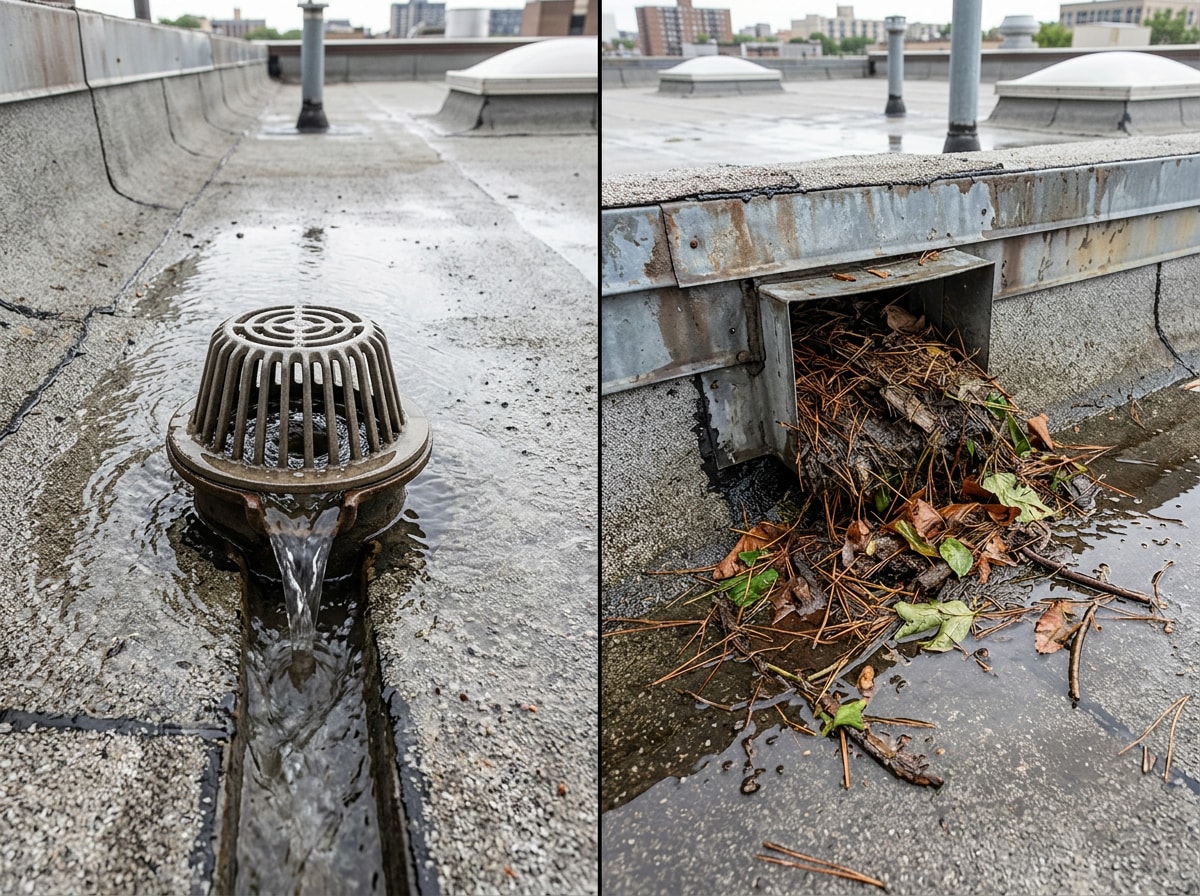
Clogged drains are one of the most preventable causes of commercial roof failure, and Monticello's tree canopy makes this a bigger issue here than in more urban parts of the state. Pine needles, leaves, and pollen build up quickly around drains, scuppers, and parapet walls, especially after spring growth and summer storms.
Ponding water that sits for more than 48 hours is generally the trigger point for concern; beyond that window, membrane degradation and added structural load become real risks. Routine drain and gutter maintenance, along with debris removal around HVAC units and low points, keeps water moving off the roof the way it was designed to.
Inspect the Roof Membrane and Seams
A roof membrane inspection should check for seam separation, blistering, and UV-related cracking, since each signals a different failure mode. On a TPO or EPDM roof, look closely at seam tape and adhesive lines, where separation tends to start small and spread. Modified bitumen roofs show different warning signs, mainly surface blistering and granule loss. Either way, catching membrane issues early is far cheaper than a full section replacement later.
Check Flashing, Penetrations, and Sealants
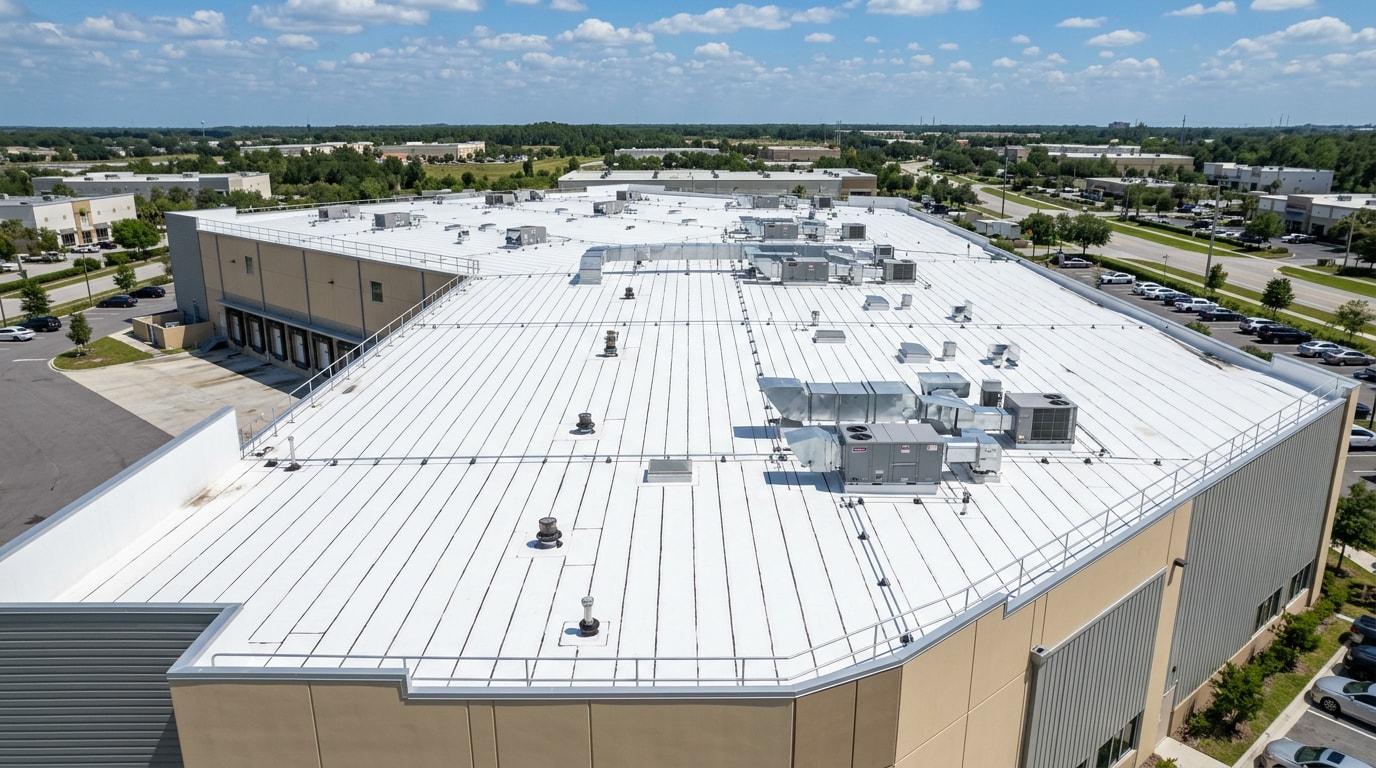
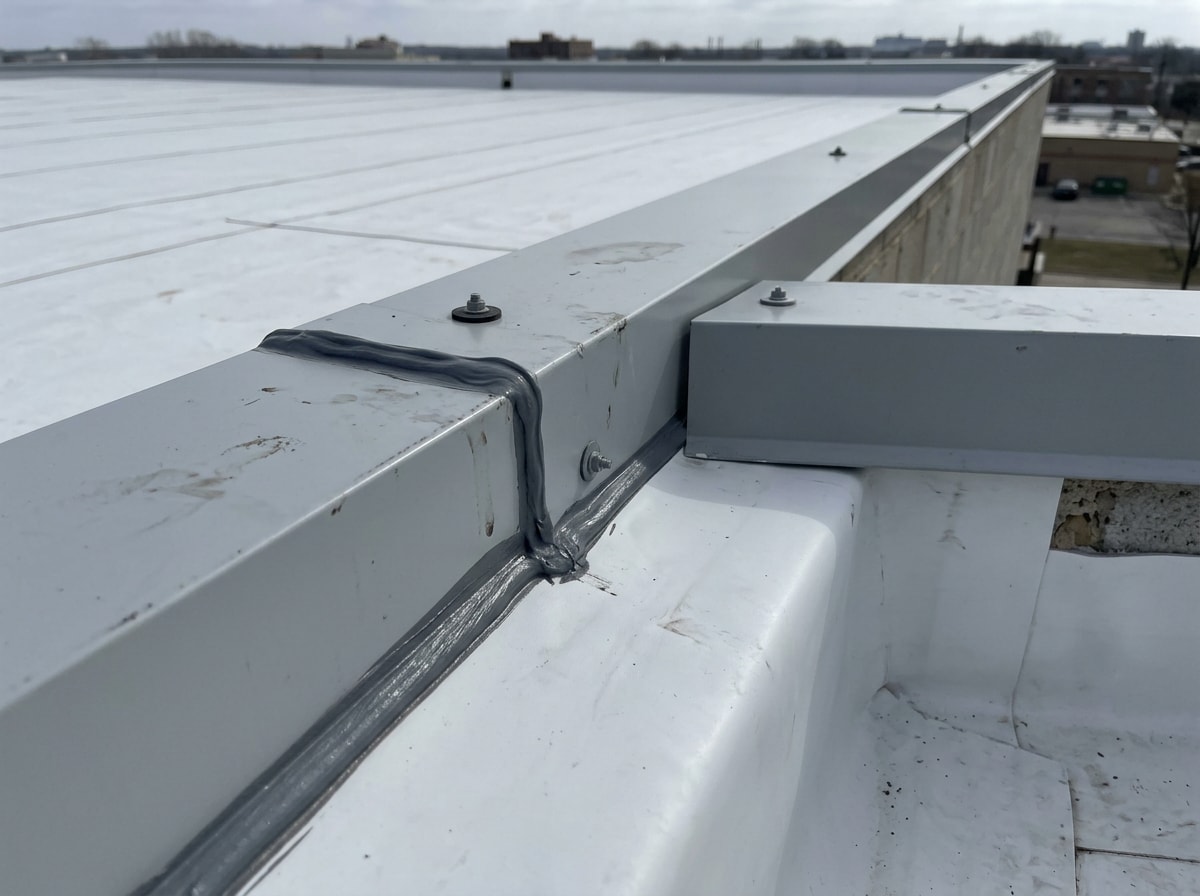
Flashing, vents, skylights, and roof edges account for the majority of commercial roof leaks, not the membrane field itself. Pay particular attention to penetrations around plumbing stacks and the HVAC roof curb, where equipment vibration and thermal cycling gradually loosen seals. Sealant maintenance is a seasonal task here; North Florida's UV exposure and heat cycling dry out and crack sealant faster than in milder climates, so a bead that looked fine last fall may need resealing by spring. Any repair beyond a simple recaulk should go through a roof repair specialist rather than a caulk gun from the hardware store.
Document and Track Every Maintenance Visit
Every inspection, repair, and cleaning should be logged with dates, photos, and the technician's findings. This matters for two reasons. First, most manufacturer warranties require proof of regular maintenance to remain valid. Second, a maintenance log gives you leverage in an insurance dispute by showing the roof's condition before a storm rather than leaving the adjuster to guess.
What Commercial Roof Maintenance Costs in Monticello
Preventive maintenance is one of the few line items in a facilities budget that reliably pays for itself. A Building Owners and Managers Association Experience Exchange Report shows that repair and maintenance account for roughly 15 percent of total building expenses, and preventive maintenance may account for 30 to 50 percent of that repair and maintenance spend. In plain terms: the building owners who budget a small, predictable amount every year spend far less over time than the ones who wait for a leak.
| Approach | Typical Cost Pattern | What It Covers |
|---|---|---|
| Preventive maintenance program | Small annual cost per square foot | Biannual inspections, drain and debris cleaning, minor repairs, documentation |
| Reactive repair | Variable, often several times the cost of a scheduled fix | Emergency leak response after damage has already occurred |
| Full roof replacement | Largest single cost, several dollars per square foot and up | Tear-off and new roof system, typically needed every 15 to 25 years |
One detail most generic roofing checklists skip: Florida's building code gives owners a real advantage on partial repairs. Under the Florida Building Code, not more than 25 percent of the total roof area or roof section of an existing building has to be repaired, replaced, or recovered in any 12-month period unless the entire roofing system or section is brought up to current code. That rule, combined with a documented maintenance history, is often what keeps a storm-damaged Monticello roof in the "repair" column instead of the "full replacement" column. For a building-specific number, request a detailed construction estimate, and for repair-specific pricing nearby, see our Roof Repair Quote Tallahassee, FL: 2026 Pricing Guide.
When to Call a Professional Roofing Contractor
Some maintenance tasks are safe for in-house facilities staff. Others require a licensed roofer, fall-protection equipment, and training. Knowing the difference keeps your team safe and avoids well-intentioned repairs that void a manufacturer warranty.
| Task | Facilities Staff | Licensed Roofing Contractor |
|---|---|---|
| Debris removal, visual check from a safe access point | Yes | Optional |
| Maintenance log upkeep | Yes | N/A |
| Membrane repair or patching | No | Yes |
| Flashing replacement | No | Yes |
| Leak diagnosis | No | Yes |
| Post-storm structural assessment | No | Yes |
| Any work within 6 feet of an unprotected roof edge | No | Yes, trained and equipped |
OSHA's fall protection standard for construction, 29 CFR Part 1926 Subpart M, generally requires fall protection when there is a fall distance of 6 feet or more. That's not a step to shortcut with untrained staff on a ladder. When in doubt, schedule a professional roof inspection rather than send someone up without the right equipment.
Building a Year-Round Maintenance Plan for Monticello
The checklist above works best inside a standing maintenance plan rather than handled ad hoc. A solid program bundles biannual inspections, scheduled drain and debris cleaning, a minor-repair allowance for small fixes caught early, documented reporting after every visit, and a defined storm-response protocol.
That last piece matters more here than in most of the country. Hurricane Helene's 2024 landfall occurred near Perry, Florida, just across the county line from Jefferson County, a reminder that storm tracks through the Big Bend region routinely pass within range of Monticello property. Building owners who already have storm damage assessment and emergency protocols in place move through recovery faster than those scrambling after the fact. A current wind mitigation report also helps document pre-storm roof condition for insurance purposes, and if a storm does hit before repairs are scheduled, emergency roof tarping buys time to prevent interior damage.
Building owners across Monticello, FL who put this structure in place before storm season, rather than after damage occurs, are the ones who get the full extra years of roof life out of the investment.
FAQ
How often should a commercial roof be inspected?
At least twice a year, once in spring and once in fall, plus immediately after any major storm. Increase frequency for roofs over 15 years old, roofs with heavy rooftop equipment, or any roof with a history of leaks.
What is preventive roof maintenance?
Scheduled, proactive roof care, including inspections, cleaning, and minor repairs performed on a set schedule before problems appear. Reactive repair only addresses damage after a leak or failure has already occurred, usually at a higher cost.
How much does commercial roof maintenance cost?
It typically costs a small fraction of full replacement, since preventive work targets minor issues before they spread. Reactive repairs and early replacement cost significantly more per square foot than a maintained roof over its service life.
What voids a commercial roof warranty?
Skipping required inspections, letting unlicensed staff perform membrane or flashing repairs, and failing to document maintenance visits are the most common reasons manufacturers deny warranty claims. Most warranties specifically require proof of regular, documented maintenance.
Who is responsible for roof maintenance, the tenant or the landlord?
This depends entirely on the lease. Triple-net (NNN) leases often shift maintenance cost to the tenant, while gross leases usually keep it with the landlord. Either way, the party responsible should confirm the maintenance schedule in writing and keep the documentation current.
How do you maintain a flat commercial roof in Florida?
Flat and low-slope roofs need extra attention to drainage since they don't shed water by gravity alone. Focus on clearing drains and scuppers, checking for ponding water after every rain, and inspecting seams and flashing more frequently than you would on a sloped residential roof.
Ready to put a maintenance plan in place before the next storm season? Get a Free Estimate from Alpha One Roofing and get your Monticello commercial roof on a documented, warranty-safe schedule.