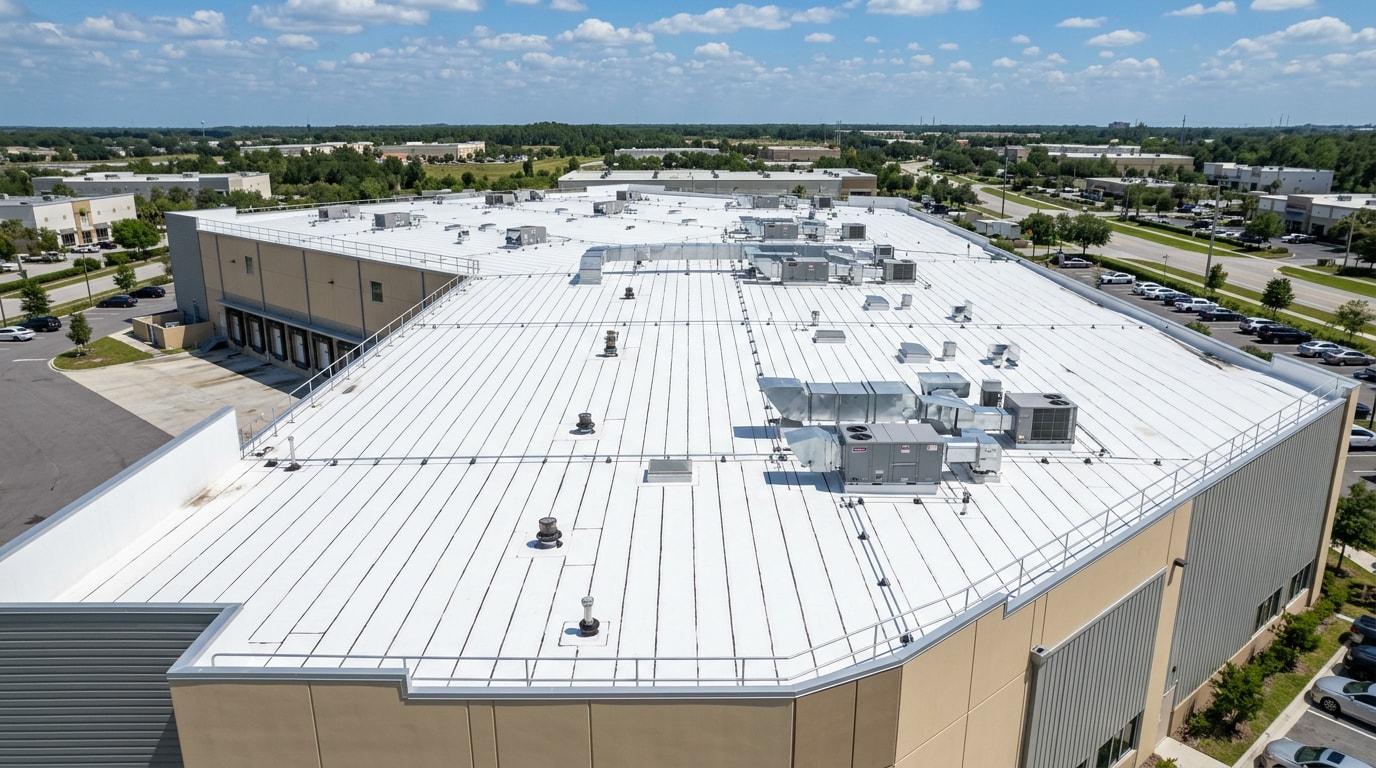
TPO roofing material is the reflective, heat-welded membrane that most flat and low-slope buildings in Tallahassee now use to fight off summer heat and storm-driven rain. It handles UV exposure, standing water, and wind uplift better than older built-up systems, which is why it has become the default recommendation for commercial reroofs and flat-roofed additions across Leon County. Below is what the material actually costs in 2026, how it's installed, and the questions our crews get asked most on local jobs.
What Is TPO Roofing Material?
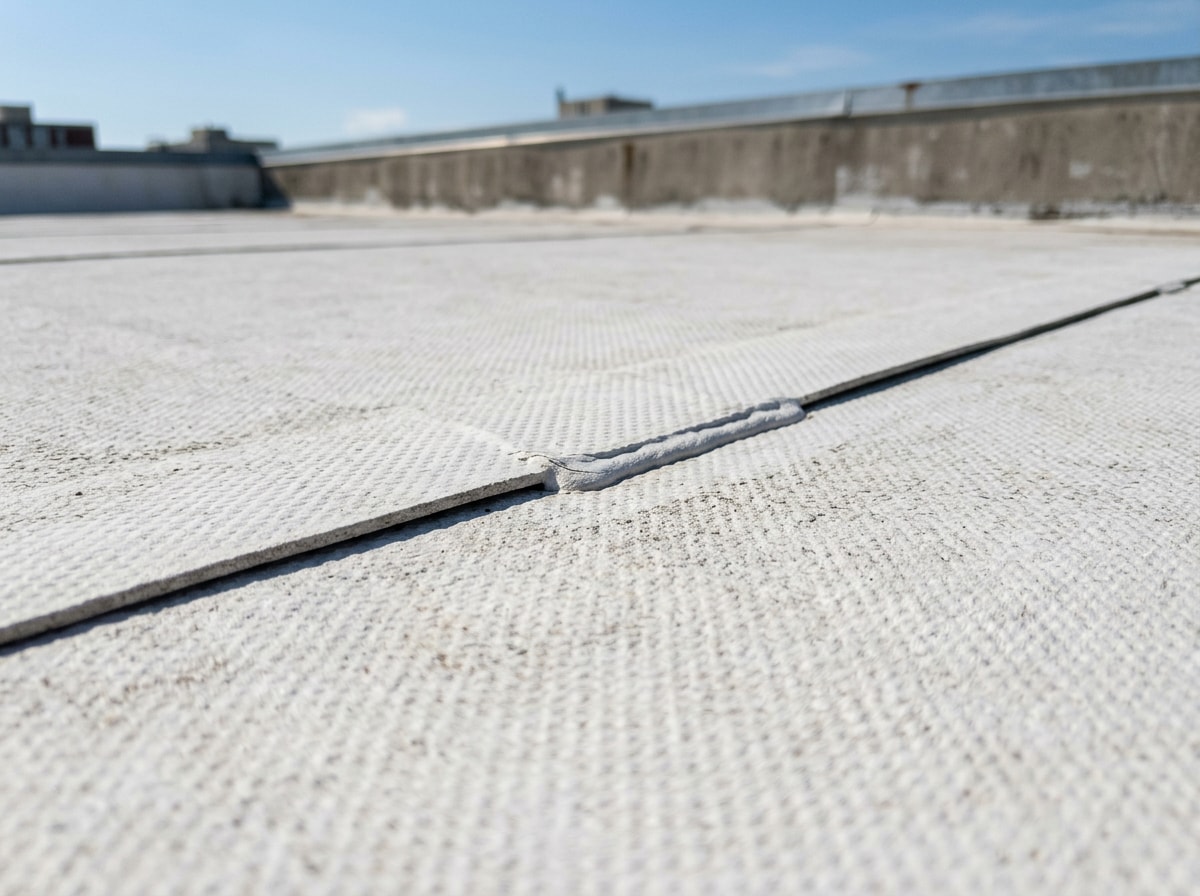
TPO, or thermoplastic polyolefin, is a single-ply membrane made from a blend of polypropylene and ethylene-propylene rubber. Installers roll it out in wide sheets and fuse the seams with hot air, creating one continuous, watertight barrier across the roof deck. The industry standard that governs how TPO sheet is manufactured and tested is ASTM standard D6878, the Standard Specification for Thermoplastic Polyolefin-Based Sheet Roofing, developed by Subcommittee D08.18 on Nonbituminous Organic Roof Coverings . That specification has tightened over the years; it now reflects the widespread use of 60-mil-thick and thicker TPO membrane sheets , which is the range most Tallahassee commercial roofs actually install today.
TPO works on commercial buildings, warehouses, and the flat sections of houses alike. If you're weighing it against other low-slope systems, our Roofing Contractor services page breaks down how it compares to shingles and metal on mixed-slope roofs.
Why TPO Works for Tallahassee's Climate
Tallahassee sits in a hot, humid climate zone with a long cooling season and a hurricane window that runs June through November. TPO's bright white surface is built for exactly that combination. A white or "cool color" roof reflects up to 90% of the sunlight that hits it, which keeps the roof cooler in the sun , and in warm or hot climates, substituting a cool roof for a conventional roof can reduce the annual air-conditioning energy use of a single-story building by up to 15% .
Beyond energy savings, TPO:
- Resists punctures, tears, and foot-traffic damage better than older membranes
- Flexes with building movement instead of cracking in temperature swings
- Holds up against Tallahassee's heat, humidity, and storm cycles
- Is largely recyclable at the end of its service life
- Costs less upfront than most comparable commercial roofing systems
For commercial property owners weighing a full reroof against a coating or overlay, our commercial construction team can walk through which approach actually pencils out for your building.
TPO Roofing Cost in Tallahassee, FL (2026)
Pricing moves with membrane thickness, attachment method, insulation, and whether a tear-off is required. Current 2026 consumer cost data places professionally installed TPO in a broad national range of about $4.50 to $16 per square foot , and that range narrows once you account for a specific building profile. For a representative Florida commercial project, planning benchmarks run closer to $11.60 per square foot, or roughly $58,000 installed for the selected profile .
Here's how thickness typically breaks down on an installed basis:
| Membrane Thickness | Installed Cost (per sq ft) | Typical Use |
|---|---|---|
| 45 mil | $5.00–$7.50 | Budget commercial roofs, light foot traffic |
| 60 mil | $6.00–$9.00 | Most common, best balance of cost and durability |
| 80 mil | $7.50–$11.00 | High traffic, storm-prone areas, longest warranties |
60 mil is the most common thickness, offering the best balance of cost and durability, while 80 mil suits high-traffic, hail-prone regions with the longest warranties . Local pricing can run above these national figures once insulation upgrades, parapet flashing, and tear-off disposal are factored in, so a site-specific quote through our contact page is worth more than any averaged number online.
TPO vs. EPDM vs. PVC: Which Flat Roof Membrane Fits Your Building?
Most of the competing guides for this search only talk about TPO in isolation. In practice, Tallahassee property owners are usually choosing between three single-ply options, and the right one depends on the building's exposure and budget:
| Factor | TPO | EPDM | PVC |
|---|---|---|---|
| Surface color | White/reflective | Black (standard) | White/reflective |
| Best for | Hot climates, cooling-cost reduction | Buildings where UV reflectivity matters less | Grease exposure, chemical resistance |
| Seaming method | Heat-welded | Glued or taped | Heat-welded |
| Relative cost | Moderate | Lowest | Highest |
| Typical lifespan | 15–30 years | 20–30 years | 20–30 years |
For most Tallahassee commercial roofs, TPO wins on cooling performance for the price. EPDM still has a place on shaded or north-facing low-slope sections where reflectivity matters less. If your building has restaurant-grade grease exposure or heavy chemical traffic, PVC's resistance makes it worth the premium. We cover this trade-off in more depth, including a nearby Gulf Coast climate comparison, in our guide to TPO roofing installation, cost, and warranty terms in Panama City.
Choosing the Right TPO System
TPO membranes aren't one-size-fits-all beyond thickness. Attachment method changes performance and price:
| Method | Best For |
|---|---|
| Mechanically attached TPO | Standard commercial roofs, faster install |
| Fully adhered TPO | High-wind zones, smoother finish |
| Ballasted | Low-slope roofs with sufficient weight capacity |
Fully adhered systems tend to perform best in North Florida's wind-driven storms because there are no loose mechanical fasteners for gusts to work against. Roof traffic, drainage design, and parapet height should all factor into the final call, which is where a proper roof inspection pays for itself before you sign a contract.
TPO Maintenance and Repairs
Routine care is what gets a TPO roof to the upper end of its service life. Based on the service calls our crews run across Leon County, the pattern is consistent: roofs that get checked twice a year rarely need emergency repairs.
- Schedule a professional inspection each spring and fall
- Keep drains, scuppers, and gutters clear of debris
- Check seams and flashing for separation after major storms
- Patch minor punctures with heat-welded repairs rather than sealant
- Document any ponding water, since it accelerates membrane fatigue
Most seam and puncture issues are fixed on the spot without a full roof repair visit turning into a bigger job. If a membrane is past its useful life, our roof replacement team can advise whether a recover or full tear-off makes more sense for your building.
TPO Installation Process
A proper TPO installation follows a set sequence, and skipping steps is where most premature failures start:
- Remove the old roofing and inspect the deck for rot or soft spots
- Install or replace insulation board to meet current code R-value requirements
- Position and roll out the TPO membrane sheets
- Attach the membrane mechanically, fully adhere it, or ballast it per the design
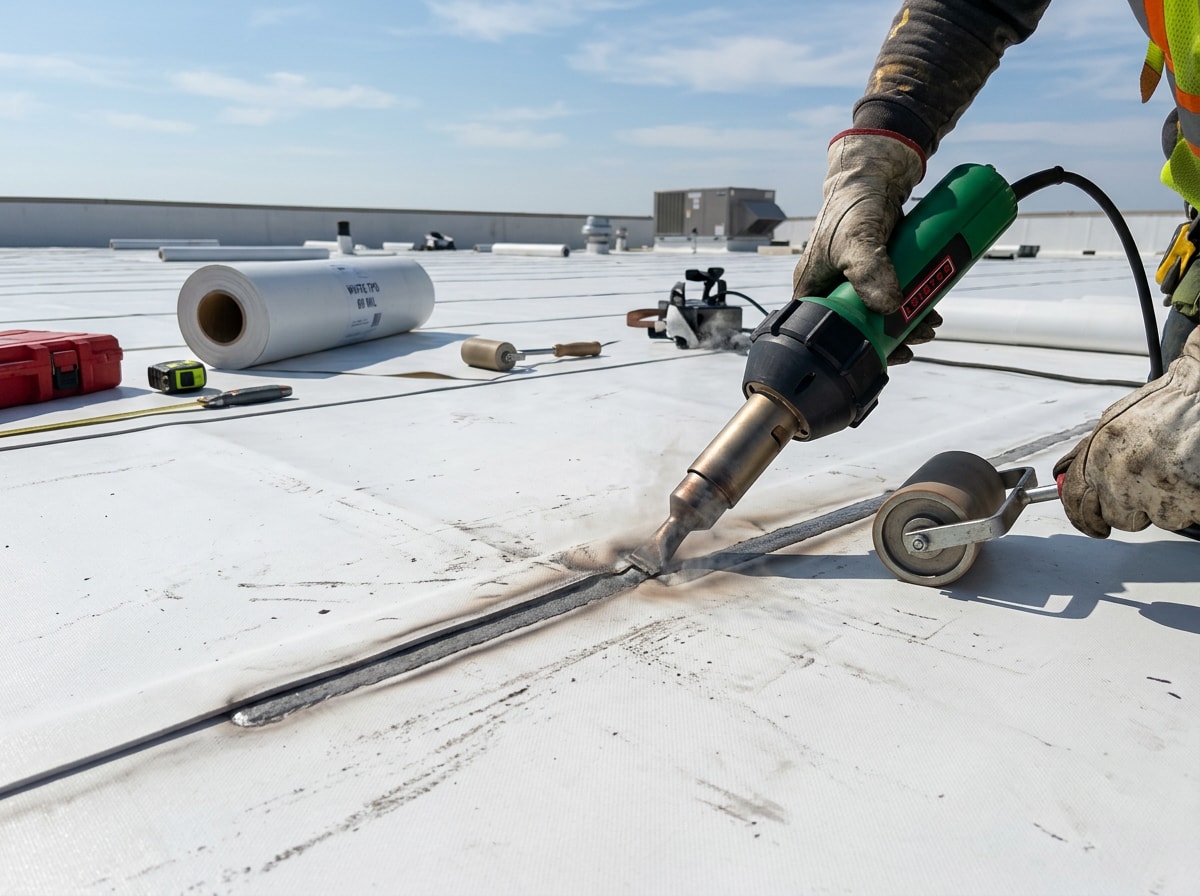
- Heat-weld all seams into one continuous, watertight surface
- Flash penetrations, drains, and parapet walls
- Run a final inspection for gaps, weak welds, or missed fasteners
Working With a Tallahassee TPO Roofing Contractor
A qualified contractor evaluates building type, sun exposure, storm history, and budget before recommending a thickness or attachment method. Given how much North Florida's humidity and storm season stress a flat roof, skipping that evaluation is how buildings end up with the wrong system installed. Our team at Alpha One Roofing serves Tallahassee and the surrounding Tallahassee, FL area with roof installation, repair, and inspection work built around that evaluation step, not around selling a predetermined product.
Get a Free Estimate before your next storm season starts, and we'll walk the roof with you before recommending anything.
FAQ
How long will a TPO roof last?
A well-installed TPO roof typically lasts 15 to 30 years, depending on membrane thickness, installation quality, and how consistently it's maintained. Thicker membranes and fully adhered systems tend to land toward the higher end of that range.
How much does TPO roofing cost in Tallahassee?
Expect a planning range of roughly $6 to $12 per square foot installed for most commercial profiles, with thinner 45-mil systems running lower and 80-mil fully adhered systems running higher. Tear-off, insulation upgrades, and flashing work can push the number up. A site visit through our contact page gets you an exact figure.
Is TPO roofing suitable for residential buildings?
Yes. While TPO is most common on commercial flat roofs, it also works well on additions, porches, and garages with flat or low-slope sections of a house.
How often should a TPO roof be inspected?
Inspect a TPO roof each spring and fall, plus after any major storm. Tallahassee's hurricane season makes post-storm checks especially important for catching wind-lifted seams early.
TPO vs. EPDM: which is better for Florida?
TPO's reflective white surface gives it an edge in Florida's cooling-dominated climate, since it rejects more solar heat than EPDM's black surface. EPDM can still make sense on shaded sections or where budget is the deciding factor.
What are the downsides of TPO roofing?
TPO quality varies more by manufacturer than older membrane types, so formulation and scrim quality matter. Poorly welded seams are the most common failure point, which is why installer experience matters as much as the material itself.
Can a TPO roof handle Florida hurricanes?
A properly fastened or fully adhered TPO system, installed to current Florida Building Code wind-uplift requirements, performs well in hurricane-force wind. The attachment method matters more than the membrane itself when it comes to wind resistance, which is why a wind mitigation report is worth having before storm season.