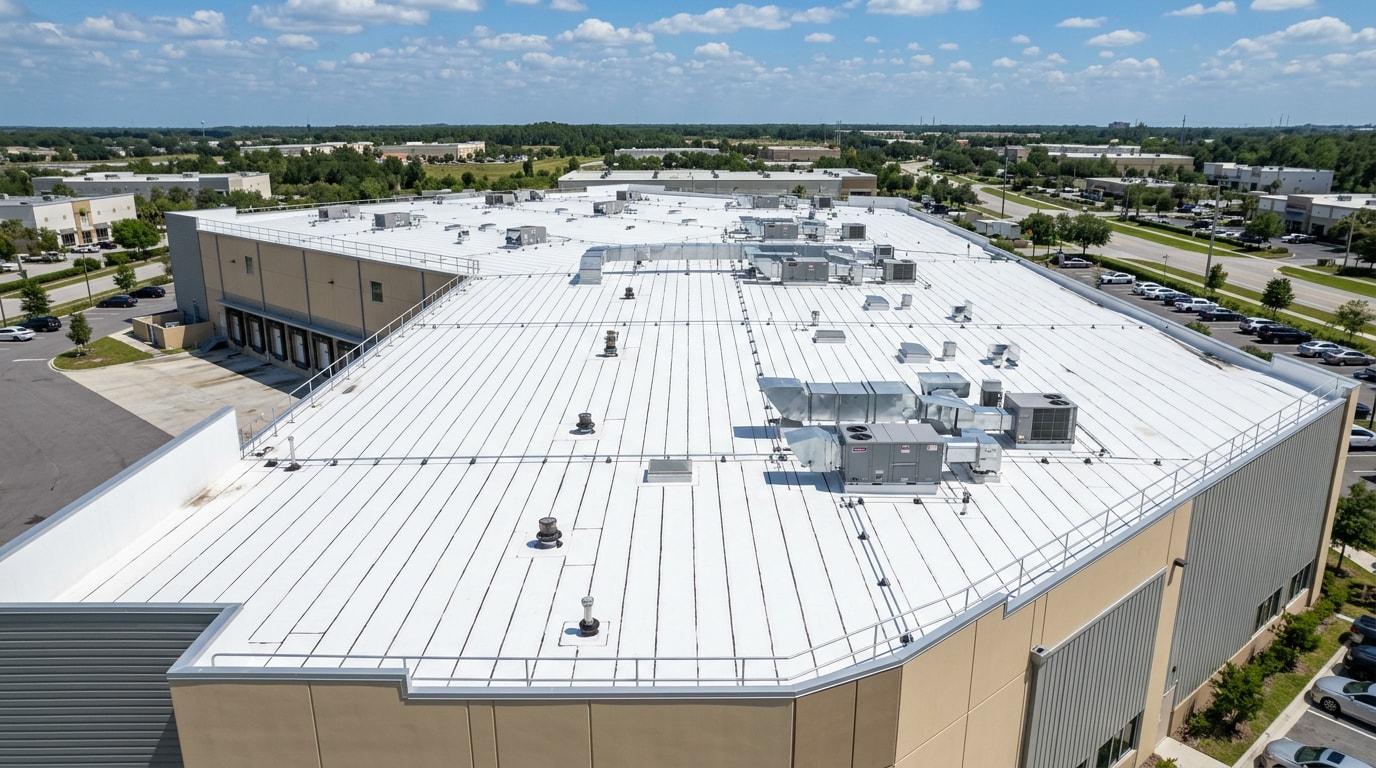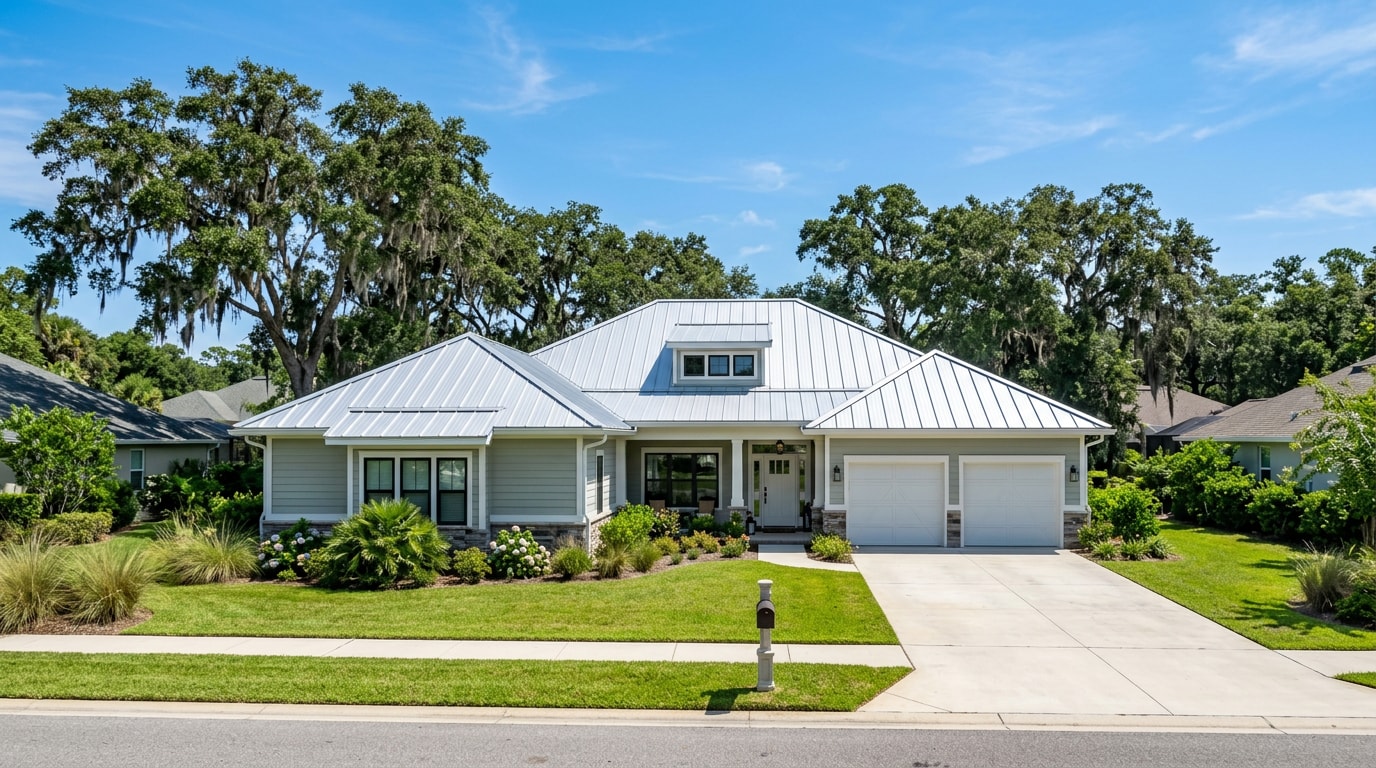
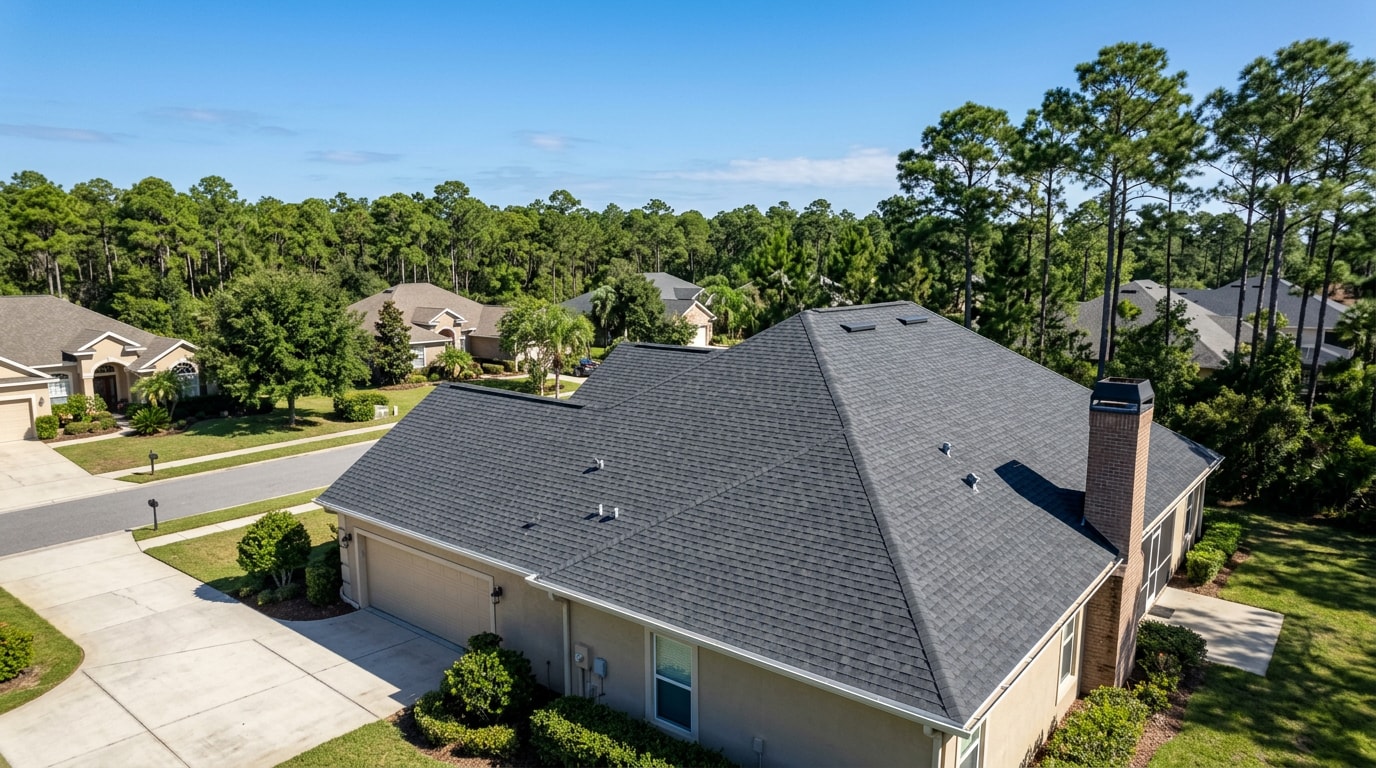
Roofing maintenance plans in the Florida Panhandle, FL exist because of one simple pattern: roofs don't fail on a schedule, but neglect does. A loose shingle or a cracked pipe boot sits unnoticed for a year, then a named storm finds it first. This guide breaks down what a real maintenance plan covers, what the Bronze, Silver, and Gold tiers typically cost, and how to match a plan to your roof's age, material, and exposure along the Gulf Coast.
Visit Alpha One Roofing to see our services and request a free estimate.
Why Panhandle Roofs Need a Standing Maintenance Plan
We've pulled enough post-storm roofs apart to know the damage almost never starts where the big leak shows up. It starts at a seam, a nail pop, or a flashing edge that nobody checked after the last heavy wind event.
A one-time inspection before hurricane season catches whatever is wrong that day. It does not catch the fastener that backs out in July or the sealant that cracks under August sun. A standing maintenance plan puts someone on your roof on a repeating schedule, not just once a year when you remember to call.
That difference matters more here than in most of Florida. Salt air off the Gulf accelerates corrosion on fasteners and metal flashing, and the mix of heavy summer rain and fall wind events keeps roofs under near-constant stress from June through November.
Hurricane Season: What the 2026 Outlook Actually Means for Your Roof
NOAA predicted a below-average 2026 Atlantic hurricane season, with eight to 14 named storms, three to six expected to become hurricanes, and one to three reaching major hurricane strength. That sounds like good news, but NOAA officials stressed that a below-average forecast should not keep people in hurricane-prone areas from taking storm prep seriously .
A quieter season on paper still only needs one storm to find your weak flashing. Hurricane Michael made that point in 2018, when a single Category 5 landfall near Panama City destroyed roofs on homes that had gone years without a real inspection. The lesson for Panhandle homeowners isn't "watch the seasonal number." It's "have someone checking your roof whether the Atlantic is busy or quiet."
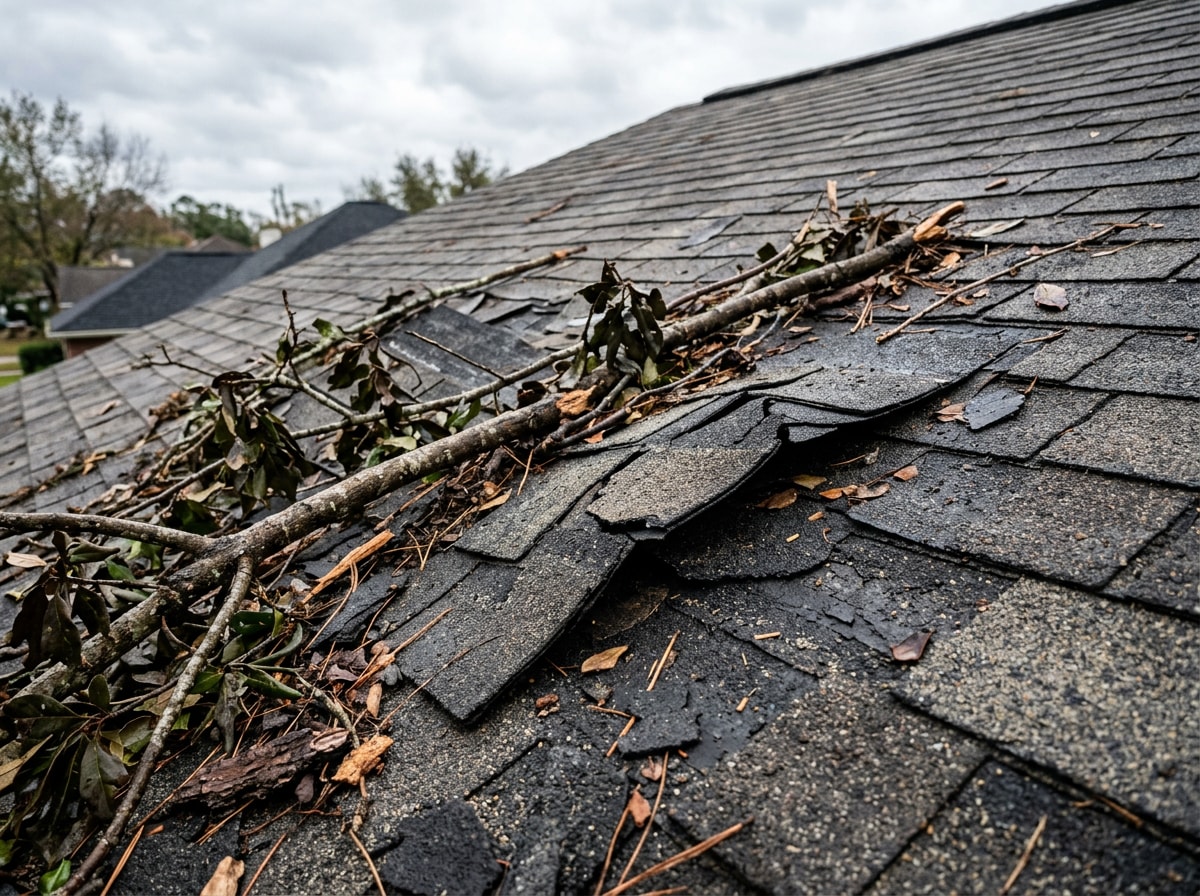
What a Residential Roofing Maintenance Plan Covers
Most residential plans in this market are built around the same core scope, with the visit frequency changing by tier. A typical plan includes:
- Debris removal from gutters, valleys, and the rooftop surface
- Minor repairs up to an annual dollar cap defined in the plan
- Sealant and flashing touch-ups around penetrations and vents
- A photo-documented inspection report after every visit
- Priority scheduling for storm response ahead of non-plan customers
- Routine gutter cleaning as a standard line item, not an add-on
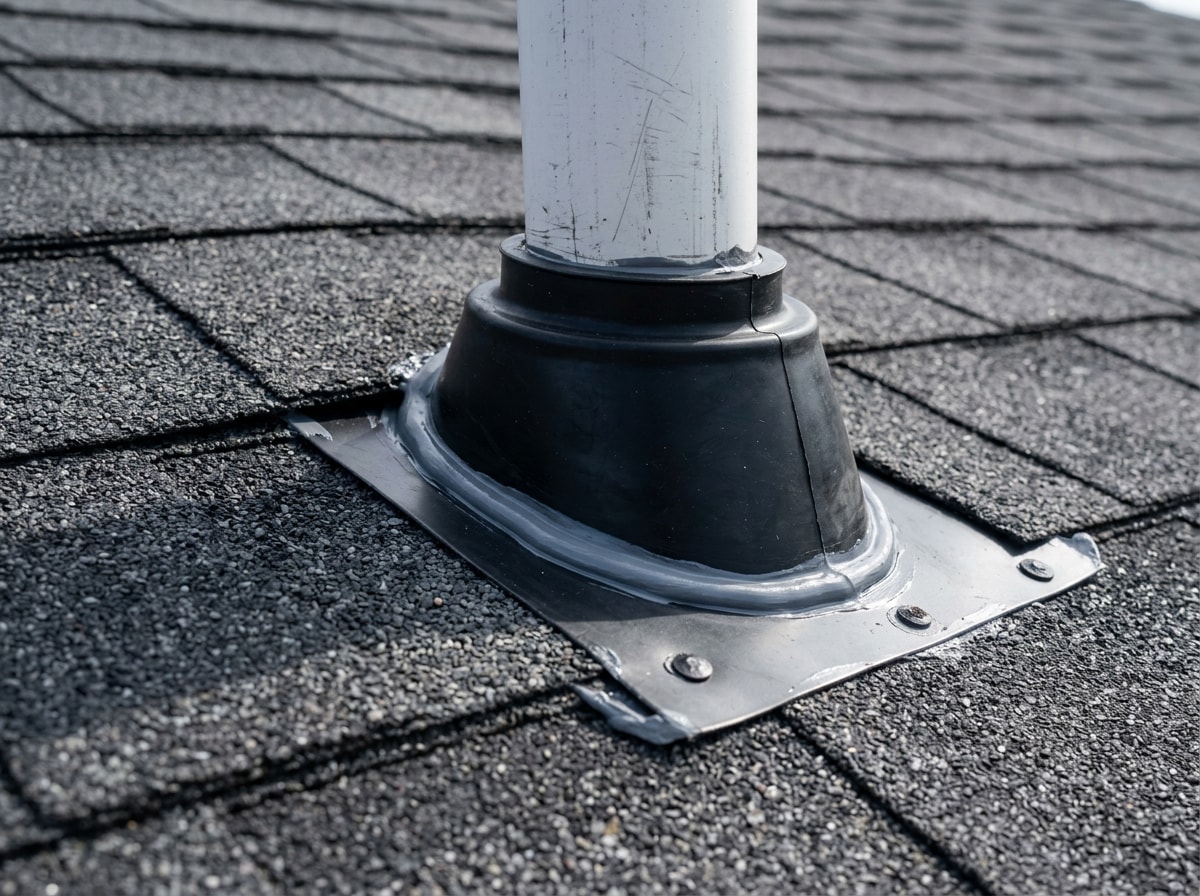
A technician working a maintenance visit should also be checking pipe boots for cracking, looking for animal entry points, and confirming caulking around flashings and ventilation stacks is still sealed. Those are the small items that turn into interior leaks if they sit for two or three seasons unchecked. If it's been a while since your last professional look, a roof inspection is the right starting point before enrolling in any plan.
What a Commercial Roofing Maintenance Plan Covers
Commercial plans carry the same base scope and add structure for ownership and insurance purposes. A solid plan defines:
- An inspection cadence set before hurricane season and repeated after major storms
- Leak response rules so recurring issues get documented, not just patched
- A reporting format with photos, condition notes, and recommended next steps
- Repair thresholds that separate routine maintenance from a capital-level roof event
- Budget planning that shows near-term repair cost against medium-term replacement risk
For a property manager handling multiple buildings across the Panhandle, that structure is what keeps a roof decision out of panic mode when a tenant calls about a ceiling stain. Our guide to commercial roofing maintenance in Monticello, FL walks through inspection cadence and budget planning in more detail if you're managing a commercial membrane roof specifically.
Roofing Maintenance Plan Tiers: Bronze, Silver & Gold
Plans generally scale by visit frequency and roof condition rather than one flat annual fee.
| Tier | Visits per Year | Best Fit | What Changes |
|---|---|---|---|
| Bronze | 1 | Roofs under 10 years old, still under manufacturer warranty | Baseline inspection and documentation |
| Silver | 2 | Roofs 10 to 20 years old, or standard Gulf Coast wind exposure | Adds a second seasonal check, catching wear before it spreads |
| Gold | 3 | Roofs 20+ years old, coastal exposure, or heavy tree cover | Adds a post-storm check on top of spring and fall visits |
Moving from Bronze to Silver tends to matter most around year 10 to 12, when sealant and flashing start showing their age even on roofs that look fine from the ground. Gold-tier frequency earns its cost on coastal properties in Panama City or St. George, where salt exposure and storm frequency are both higher than inland.
How a Maintenance Plan Protects Your Wind Mitigation Discount
This part gets skipped on most maintenance plan pages, and it shouldn't. Florida homeowners can take advantage of insurance premium savings by implementing windstorm damage mitigation features on their properties , documented through a wind mitigation inspection. A qualified inspector for that report can be a licensed general, building, or residential contractor, a licensed professional engineer or architect, or a certified building code inspector .
That wind mitigation report is only useful if it reflects your roof's actual current condition, and it needs periodic renewal as roofing features age or change. Pairing your maintenance visits with your wind mitigation report schedule means the documentation insurers see always matches what's actually on the roof, not a snapshot from several years and a few storms ago.
Hurricane-Season Prep Checklist for Panhandle Roofs
A standing plan handles the recurring work. These are the extra steps worth confirming every year on top of it.
- Schedule a professional inspection each spring.
NRCA recommends homeowners and building managers inspect their roof systems at least twice per year, preferably in the spring and fall , with additional checks after any severe weather event.
- Review your insurance coverage before June 1. Confirm your wind mitigation documentation is current through the Florida Office of Insurance Regulation's consumer resources.
- Trim branches back from the roofline. Keep at least 10 to 15 feet of clearance between your roof and nearby limbs, and remove dead wood that could snap in high wind.
- Check attic ventilation. Poor airflow traps heat and moisture against the roof deck.
Sealed attic construction has been measured in Florida field studies to reduce space cooling by about 8% , which shows how much attic performance affects both energy bills and deck longevity.
- Know who to call if a storm beats you to it. If wind or debris opens up your roof before a repair crew can get there, emergency roof tarping stops interior damage from compounding while repairs are scheduled.
What Happens If Storm Damage Shows Up Anyway
Even a well-maintained roof can take a direct hit. If a storm does damage your roof, a documented maintenance history actually helps your claim, because it shows the damage is new, not pre-existing neglect. A storm damage assessment paired with your maintenance records gives your adjuster a clear before-and-after picture instead of a guess.
For repairs that don't need a full tear-off, roof repair handles flashing, sealant, and localized shingle or membrane damage without putting the whole system out of warranty.
Finding the Right Plan for Your Florida Panhandle City
Maintenance priorities shift by location. Coastal cities face heavier salt exposure and wind-driven rain, while inland communities deal more with tree debris and humidity-driven wear.
- Panama City, FL and St. George, FL sit closest to the Gulf, where Gold-tier frequency earns its keep fastest
- Tallahassee, FL and Monticello, FL see more tree canopy pressure on gutters and valleys
- Crawfordville, FL and St. Marks, FL combine coastal humidity with rural tree cover
- Gainesville, FL sits further inland but still falls within our regular service radius
See our full Florida Panhandle, FL service area page for coverage details, or go straight to our roofing contractor services to see everything we handle beyond maintenance plans.
How Much Do Roofing Maintenance Plans Cost?
Pricing depends on tier, roof size, and roof condition at enrollment. As a general rule, Bronze costs the least and fits newer roofs with no known issues, Silver sits in the middle for roofs entering their second decade, and Gold costs the most but is built for aging or heavily exposed roofs where a missed problem is the expensive outcome. In nearly every case, the annual cost of any tier is a fraction of a single uninsured storm repair or an emergency tear-off.
The fastest way to get an accurate number for your specific roof is a short conversation, not a generic price list. Get a free estimate and we'll walk your roof, note its age and condition, and recommend the tier that actually fits it rather than upselling the most expensive option.
If you're also researching materials for an upcoming replacement rather than maintenance on an existing roof, our TPO roofing material guide for Tallahassee, FL covers cost and performance for one of the more common commercial and low-slope options in this region.
FAQ
What is included in every roofing maintenance visit?
Every visit typically includes debris removal, minor repairs up to a yearly cap, sealant and flashing touch-ups, and a photo-documented inspection report. Residential plans also include routine gutter cleaning as a standard item, not an upgrade.
How often should my roof be inspected in the Florida Panhandle?
NRCA recommends inspections at least twice per year, preferably spring and fall , plus an extra check after any major storm. Coastal or older roofs often benefit from a third annual visit.
Is a roofing maintenance plan worth the cost?
Compared against one emergency repair after storm damage, a maintenance plan at any tier usually pays for itself within a few years. Catching a failing flashing seal or a lifted shingle early avoids the much larger cost of interior water damage and deck replacement.
Does a maintenance plan help with my wind mitigation insurance discount?
Yes, indirectly. Wind mitigation documentation is what allows Florida homeowners to claim insurance premium savings for windstorm mitigation features , and that documentation only holds up if it reflects your roof's real, current condition. Regular maintenance visits keep that record accurate between formal wind mitigation inspections.
How much does a roofing maintenance plan cost?
Cost scales with tier, roof size, and condition at enrollment. Bronze is the lowest-cost entry tier for newer roofs, Silver sits in the middle for roofs entering their second decade, and Gold costs the most but targets aging or high-exposure roofs where missed damage is the expensive outcome.
Can a maintenance plan help after storm damage, not just prevent it?
A maintenance plan won't stop a direct hit from a falling tree limb or a major wind event, but the documented history from your visits strengthens your insurance claim by showing the damage is new. Pair it with a storm damage assessment after any significant weather event.
Ready to put your roof on a schedule instead of waiting for the next storm to find its weak point? Contact Alpha One Roofing to get a free estimate and the right maintenance tier for your home or building.