Commercial roofing systems in Monticello, FL have to survive heavy summer rain, intense UV exposure, and hurricanes that regularly track through the Big Bend. October 2026 was a reminder of that: Hurricane Isaias pushed across the Florida Panhandle with a flooding-rain threat that reached inland into the Big Bend counties, Jefferson County included. This guide covers the six systems local contractors actually install, what they cost in 2026, the code and permit rules that apply, and the maintenance habits that keep a roof off the emergency-repair list.
Commercial Roofing Systems in Monticello, FL: The Six Options on the Table
Most low-slope commercial buildings in Jefferson County use one of six roofing systems. Each one trades off differently on lifespan, upfront cost, and how well it handles North Florida's heat and humidity, so comparing them side by side is the fastest way to narrow down the right fit.
| System | Typical Lifespan | Relative Cost per Sq. Ft. | Best-Fit Building Type |
|---|---|---|---|
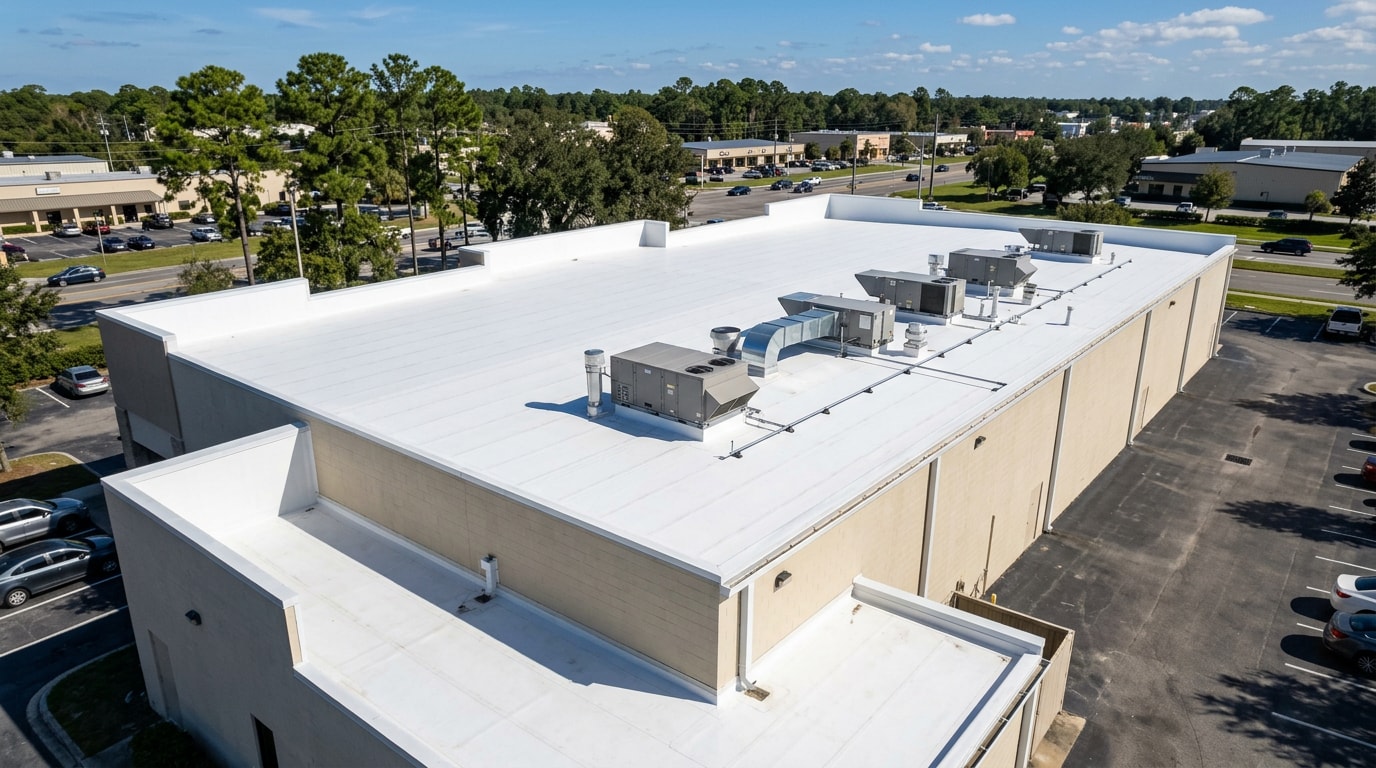
| TPO roofing | 20–30 years | $$ | Retail, office, warehouses wanting energy efficiency |
| EPDM roofing | 20–30 years | $ | Industrial buildings, roofs with many penetrations |
| PVC | 20–30 years | $$$ | Restaurants, buildings with grease or chemical exposure |
| Modified bitumen | 15–20 years | $$ | Multi-layer roofs needing extra puncture resistance |
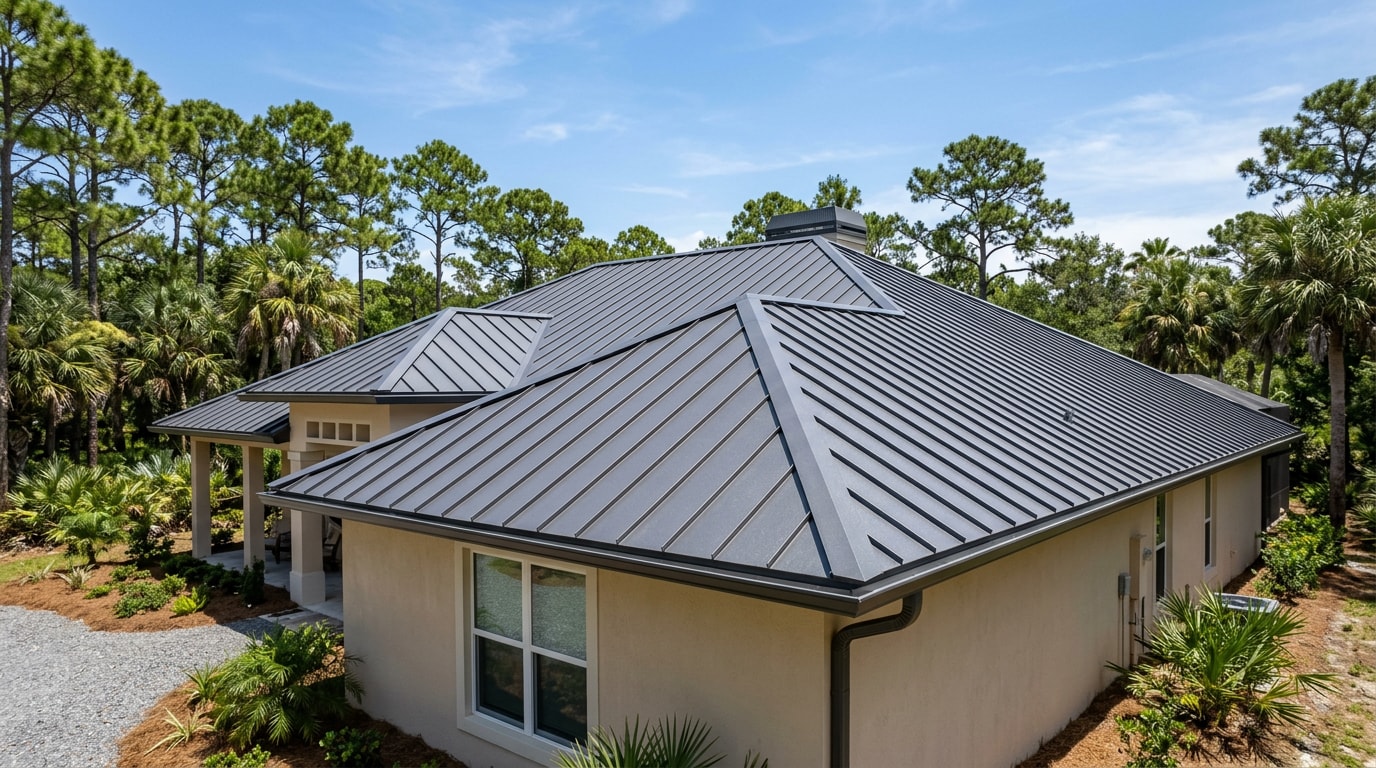
| Standing-seam metal | 30–50 years | $$$$ | Warehouses, retail wanting low maintenance |
| Silicone roof coating | 10–20 years (renewable) | $ | Restoring an aging roof without a full tear-off |
Lifespan ranges vary by manufacturer, installation quality, and how consistently the roof is maintained, so treat these as planning numbers rather than guarantees. A roofing contractor who works across North Florida can walk a specific roof and tell you which system actually fits the deck, the drainage, and the budget.
TPO vs. EPDM: Which Actually Performs Better in North Florida Heat?
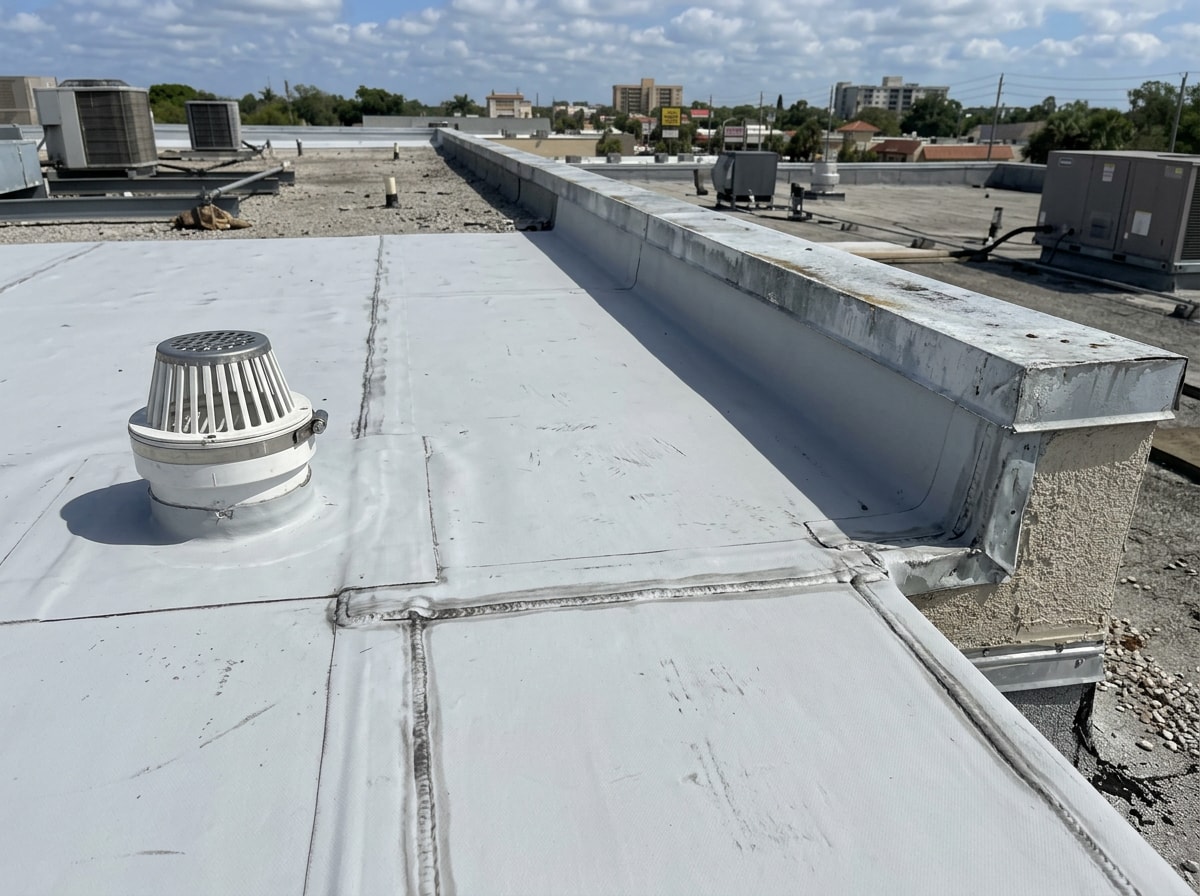
TPO and EPDM are the two most common choices for Monticello flat roofs, and the difference between them matters more here than in a cooler climate. TPO uses heat-welded seams, and a properly fused weld is typically stronger than the membrane around it. EPDM is joined with seam tape or adhesive, which performs well on roofs with irregular shapes or heavy penetrations but needs closer monitoring over time.
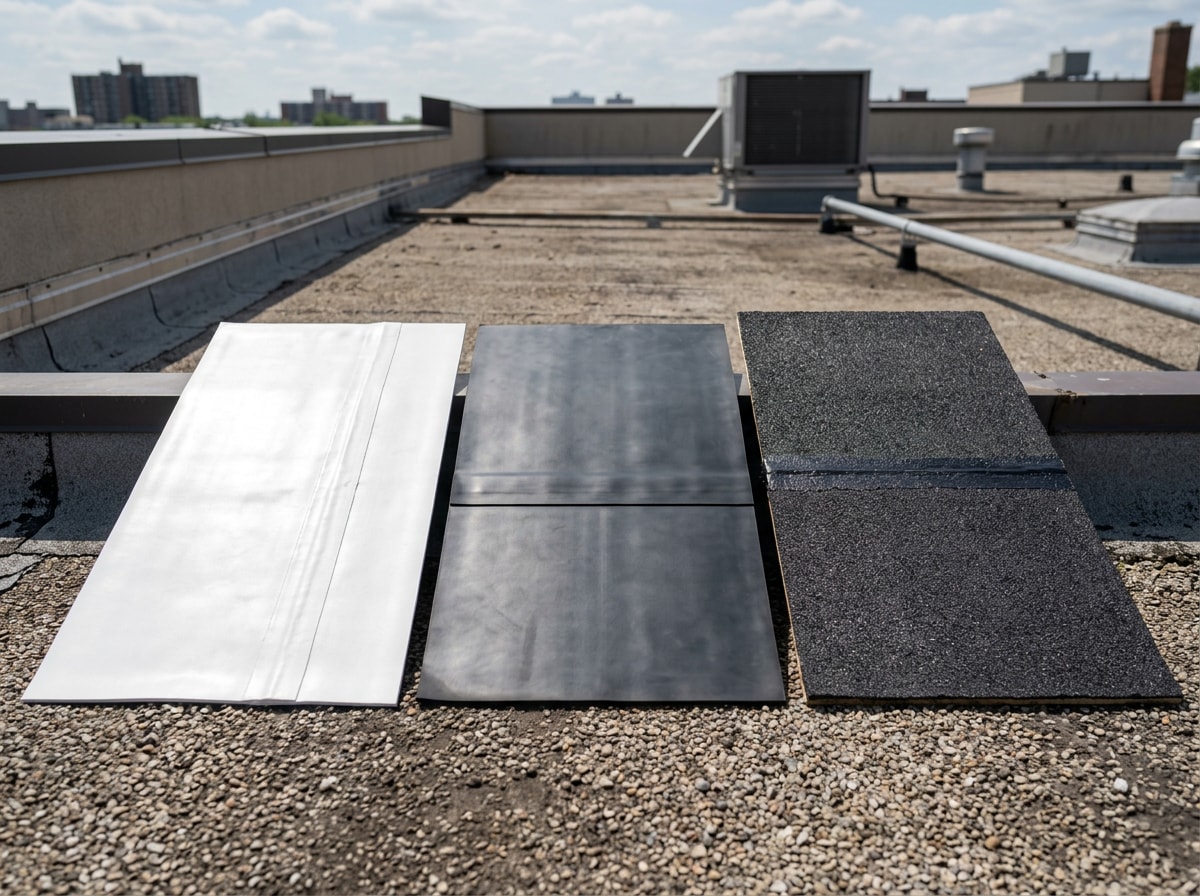
The bigger difference is reflectivity. White TPO reflects the majority of solar radiation, while classic black EPDM absorbs heat, which pushes rooftop surface temperatures higher on hot days. The U.S. Department of Energy's ENERGY STAR program notes that cool, reflective roofing can lower a building's surface temperature and reduce the cooling load on the HVAC system, an advantage that compounds over a 20-plus-year roof life in a climate where air conditioning runs most of the year. The National Roofing Contractors Association publishes selection and maintenance guidance for both membrane types if you want the technical detail before deciding between a roof installation and a full roof replacement.
- Choose TPO if the building has significant air-conditioning load and you want lower long-term energy costs.
- Choose EPDM if the roof has heavy penetrations, irregular geometry, or the budget is the primary constraint.
- Either system needs biannual inspections and prompt seam repair to hit its full service life.
What Commercial Roof Work Costs in Jefferson County in 2026
Costs vary by system, roof condition, and access, but a few rules of thumb hold true across most Monticello commercial properties:
- Targeted repairs (flashing, seam, or isolated membrane damage) are typically priced per job rather than per square foot, and usually cost far less than a full system replacement.
- Partial re-covers or sectional replacement run into the low thousands depending on the area affected and whether insulation needs to come out too.
- Full low-slope replacement generally lands in the range of several dollars per square foot installed, with standing-seam metal running meaningfully higher per square foot than single-ply membranes but lasting decades longer.
An on-site roof inspection is the only reliable way to turn these ranges into a real number for a specific building. If you're budgeting ahead of a renovation or new build, a construction estimate gives ownership a documented figure to work from before committing to a scope.
Permits and Florida Building Code: What Jefferson County Requires
Almost any commercial reroofing project in Florida, Jefferson County included, requires a permit because the work touches structural decking, insulation, and sometimes wind-uplift attachment details governed by the Florida Building Code. The code is based on the International Building Code with Florida-specific wind and water-intrusion amendments, and it's updated on a regular cycle, so the version that applied to a building's last reroof may not be the version in effect today. You can review current adopted requirements through the International Code Council's Florida code library before scheduling work, and confirm local submission steps with the Jefferson County building department.
For insurance purposes, many Monticello property owners also need documentation showing the roof meets current wind-resistance standards. A wind mitigation report documents the roof-to-wall connections, deck attachment, and covering type that insurers use to calculate premiums, and it's worth having on file even outside of a claim.
Hurricane Season Is Still a Factor: What October 2026 Proved
It's tempting to think of hurricane risk as a coastal problem, but Jefferson County sits close enough to the Gulf that inland wind and flooding-rain threats show up almost every season. In October 2026, Hurricane Isaias strengthened into a major hurricane in the Gulf before turning toward the Florida Panhandle, and the National Hurricane Center tracked a wind field wide enough to push damaging gusts and heavy rain well inland into the Big Bend. That kind of storm doesn't need a direct hit to compromise a weak flashing detail or an aging membrane seam.
When a storm does cause damage, speed matters more than perfection. Emergency roof tarping keeps water out of the building envelope while a permanent repair is scheduled, and a documented storm damage assessment creates the paper trail an insurance adjuster will ask for later.
Building a Preventive Maintenance Plan That Pays for Itself
Deferred maintenance on a commercial roof almost always costs more than steady upkeep. A small membrane repair today is far cheaper than the water damage, inventory loss, or tenant disruption that follows a roof failure later. A basic maintenance plan should include:
- Two scheduled inspections per year, typically spring and fall
- A running repair log with dates, photos, and scope of each fix
- Copies of warranty paperwork, kept with the building's records
- A post-storm inspection after any named storm or severe wind event
We've written a longer breakdown of what a Jefferson County maintenance program should actually include in our commercial roofing maintenance guide for Monticello, FL, including inspection frequency and budgeting for the eventual replacement cycle.
Drainage, Gutters, and Scuppers: The Overlooked Half of a Flat Roof
Proper drainage matters as much as the membrane itself on flat and low-slope commercial roofs. Ponding water that sits for an extended period after a rain event can accelerate membrane breakdown and, in some cases, void manufacturer warranties. Correctly sized scuppers, internal drains, and gutter systems keep water moving off the structure instead of pooling against the membrane. Routine roof maintenance should always include a check of drainage components, not just a walk of the roof surface itself.
What Happens During a Professional Roof Inspection
A typical commercial roof inspection starts with a licensed technician walking the entire roof, not just the areas with visible problems. From there, the process usually covers:
- A full walk of the membrane, checking for blistering, punctures, and seam separation
- Inspection of flashing, parapet walls, and rooftop equipment penetrations
- A check of drains, scuppers, and gutters for debris or standing water
- Photo documentation of existing conditions, tied to a written report
In our experience inspecting flat roofs across Jefferson County after summer storms, the failures that cause the most damage almost always start at a flashing detail or a clogged drain, not in the middle of the membrane field. That's why drainage gets its own line item on every inspection, not just a mention.
Before scheduling a survey, it helps to have a few things ready:
- Any existing roof plans or as-built drawings
- Notes on past leaks or repairs, including dates
- Current warranty documents, if available
- A rough estimate of the roof's age and last recover or replacement date
Choosing a Licensed Commercial Roofing Contractor in Monticello
Licensing matters because commercial roofing work touches structural decking, insulation, and sometimes electrical penetrations for rooftop HVAC units. A Monticello property deserves a contractor who understands North Florida's humidity, storm patterns, and current code requirements, and who can produce proof of license and insurance before any contract is signed. Ask for references from recent commercial jobs in the area, and if the project includes new construction or an addition, a commercial construction team that handles both the building shell and the roof can simplify scheduling considerably.
Alpha One Roofing works on commercial roofs throughout the Monticello, FL area and the wider Florida Panhandle. If a membrane is past its service life, showing storm damage, or just due for an honest second opinion, get a free estimate before the next summer storm season puts it to the test.
FAQ
What types of commercial roofing systems are used in Monticello, FL?
The six systems most commonly installed on Jefferson County commercial buildings are TPO, EPDM, PVC, modified bitumen, standing-seam metal, and silicone roof coatings. Each has different lifespan, cost, and maintenance needs, and the right choice depends on the building's slope, use, and budget.
Is TPO or EPDM better for a Florida commercial roof?
TPO generally performs better in Florida because its reflective white surface lowers rooftop surface temperature and reduces cooling load compared to classic black EPDM. EPDM remains a solid, lower-cost option for roofs with heavy penetrations or irregular shapes where its flexibility is the priority.
How long does a commercial roof last in North Florida?
Commercial roof lifespan generally ranges from 15–20 years for modified bitumen up to 30–50 years for standing-seam metal, with TPO, EPDM, and PVC typically falling in the 20–30 year range. Actual lifespan depends heavily on installation quality, drainage, and how consistently the roof is inspected and maintained.
Do I need a permit to replace a commercial roof in Jefferson County?
Yes. Most commercial reroofing work in Florida requires a permit under the Florida Building Code, which covers structural, wind-uplift, and water-intrusion requirements. Check current code editions and confirm the local submission process with the Jefferson County building department before scheduling work.
How often should a commercial roof be inspected?
A commercial roof should be inspected at least twice a year, typically in spring and fall, plus an additional inspection after any major storm or named hurricane. Regular inspections catch flashing and drainage problems before they become full leaks.
How much does commercial roof replacement cost in Monticello, FL?
Cost depends on the system chosen, roof size, and existing deck condition, with single-ply membranes like TPO and EPDM generally costing less per square foot than standing-seam metal. A property-specific inspection is the only reliable way to turn these ranges into an accurate quote for a given building.