If you're searching for emergency roofing services near me St. Marks, FL, you likely have water coming through your ceiling right now, not a question to research later. This guide covers the warning signs that mean your roof can't wait, the exact steps to take in the first twenty minutes, temporary fixes that buy time, and what emergency repair actually costs around Wakulla County. Read the signs section first, then jump straight to whichever step applies to your situation.
Signs You Need Emergency Roof Repair
A few curling shingles or a small patch of granule loss can usually wait for a scheduled appointment. A true roofing emergency is different. It's active, it's getting worse by the hour, and it threatens your home's structure or interior.
Warning Signs That Can't Wait
The clearest emergency roof repair signs are:
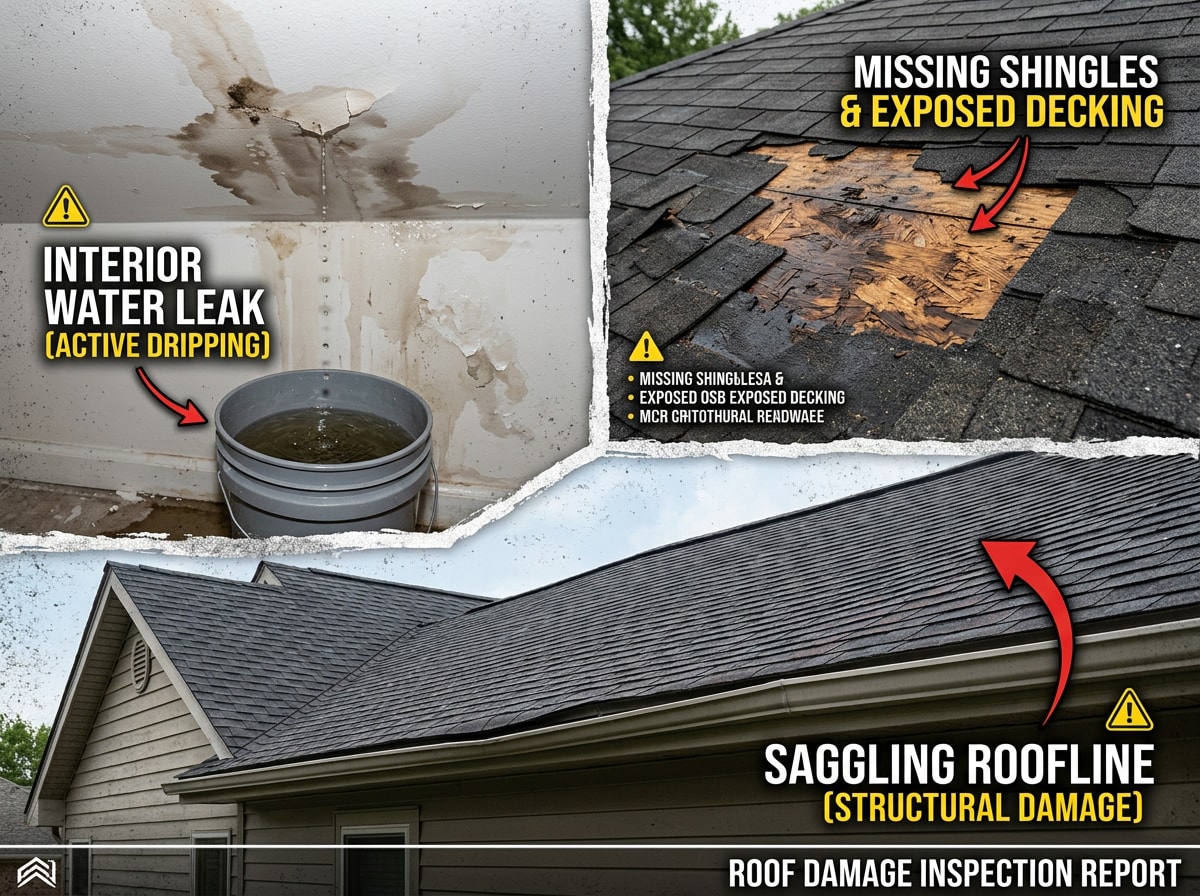
- An active roof leak dripping or pooling indoors
- Large sections of missing shingles exposing the deck
- Visible daylight through roof boards from inside the attic
- Fallen tree limbs or debris that have punctured or crushed part of the roof
Any one of these calls for same-day professional attention rather than a wait-and-see approach.
If you can see sky through your attic ceiling, water already has a direct path into your insulation and framing every time it rains. Large missing-shingle sections leave the underlayment exposed to UV and wind. Underlayment alone isn't built to shed water for long. A fallen limb that's punched through decking is a structural problem first and a leak problem second. Treat it as both.
Sagging Roof Deck
A sagging or bowing section of roofline is never just cosmetic. It almost always means the decking has absorbed enough water to lose its structural integrity, or that framing underneath has been compromised. This is a real collapse risk.
The safe move: stay off that section of roof and out of the room directly below it until a professional has assessed the damage. Don't walk the roof. Don't store anything under a visibly sagging ceiling. Don't assume it will hold until your next scheduled inspection. Call for an emergency evaluation instead.
What to Do Immediately After Discovering a Roof Leak
Finding an active leak is stressful, but the right steps in the first twenty minutes can meaningfully limit the damage.
- Get everyone clear of the area. If there's sagging, cracking sounds, or visible structural movement, treat the space below as off-limits.
- Contain the water. Place buckets, towels, or a tarp under the drip to protect flooring and furniture. If water is pooling near a ceiling light fixture, shut off power to that circuit first.
- Move valuables and electronics away from the affected area, including anything stored in the attic directly under the leak.
- Photograph everything including the ceiling stain, the pooling water, and visible exterior damage before cleaning anything up. These photos matter later for insurance.
- Call a licensed roofing contractor the same day and describe exactly what you're seeing so the dispatcher can prioritize your call.
This sequence won't stop the underlying problem, but it protects your home's interior while help is on the way. If you're in St. Marks or anywhere in Wakulla County, our emergency roof tarping team can usually walk you through this by phone while a crew heads your way. On past storm callouts in this area, the homes that fared best were the ones where someone contained the water and called before trying to climb up and fix it themselves.
Temporary Roof Leak Repair Methods
A tarp, a bucket, or a bead of roofing cement will slow things down, but none of them are a permanent fix. Think of temporary repair as damage control. The goal is to stop active water intrusion and protect the structure until a licensed crew can install a lasting repair.
Emergency Tarping
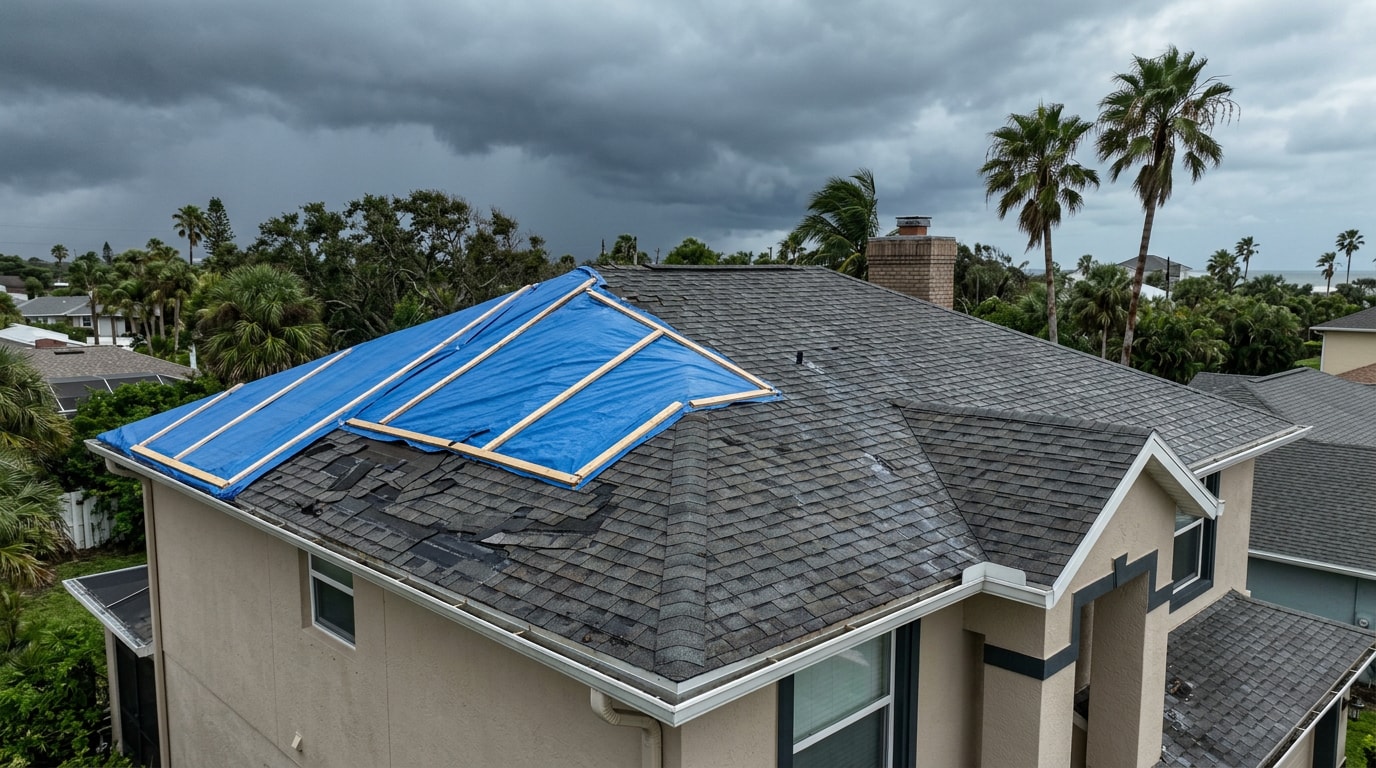
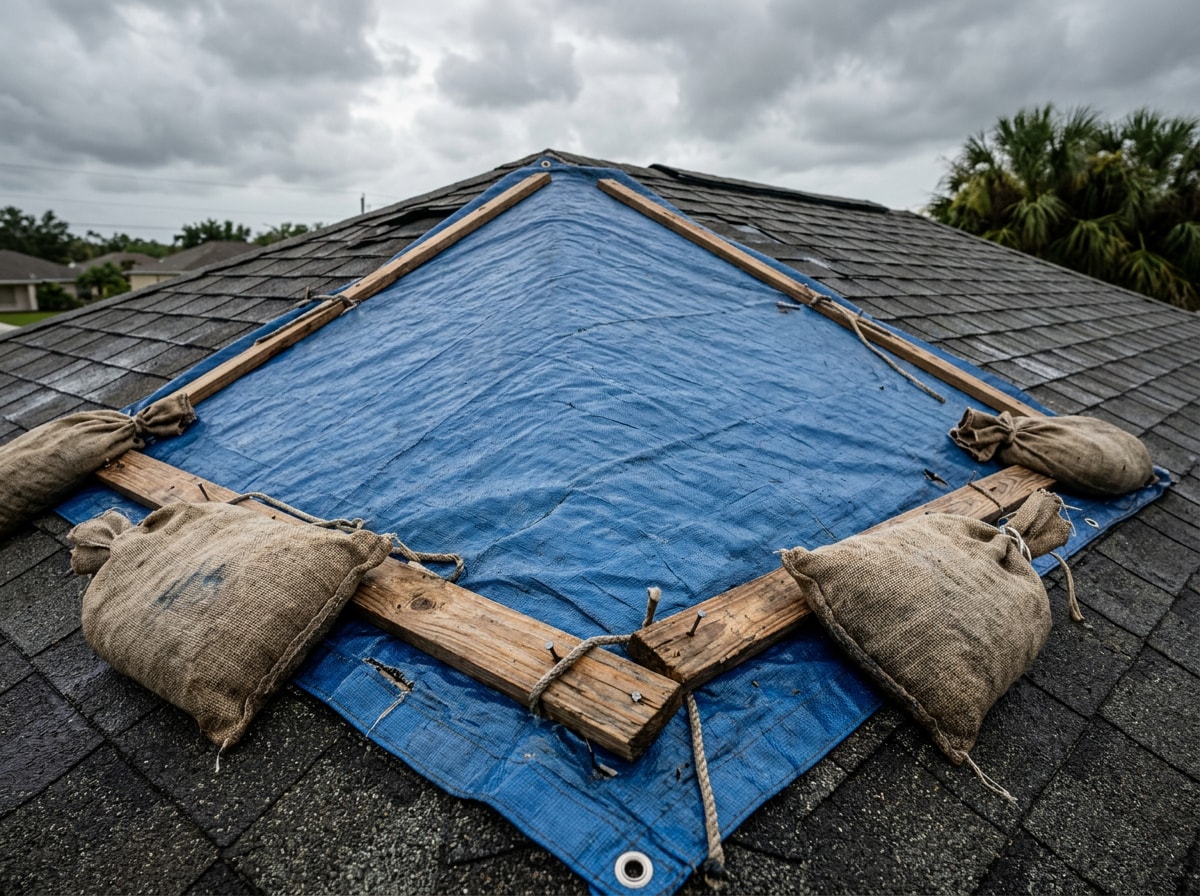
Emergency roof tarping is the standard short-term fix for larger openings, such as a missing section of shingles, a hole from fallen debris, or storm-stripped decking. A heavy-duty tarp gets stretched over the damaged area and anchored past the edges of the opening, then secured with furring strips or sandbags so wind can't work underneath it.
For smaller, more localized leaks, patch tape, roofing cement, or flashing sealant can sometimes stop a leak fast without a full tarp setup. Tarping is really reserved for anything bigger than a pinhole leak, since a loose tarp in a Gulf Coast wind event can do more harm than good.
When Storms Strike: Weather-Related Roof Emergencies in St. Marks, FL
The Big Bend coastline doesn't get hit by a hurricane every year, but when a storm does track toward Apalachee Bay, roofs in St. Marks take a different kind of beating than homes thirty miles inland. Tropical cyclones with maximum sustained surface winds of less than 39 miles per hour are called tropical depressions, while those with maximum sustained winds of 39 mph or higher are called tropical storms. That means even a storm that stays offshore can push sustained tropical-storm-force wind across Wakulla County for hours at a stretch. Hurricane season begins on June 1 and ends on November 30, although hurricanes can occur outside of this time frame. For real-time tracking during an active storm, the National Weather Service forecast office in Tallahassee covers the St. Marks area directly.
Wind-lifted shingles, storm-surge-driven water intrusion near the river, and falling limbs from the live oaks common throughout the area are the three roof emergencies we see most often after a named storm.
Proximity to the St. Marks River changes the response, too. Homes near the river and the flood-prone intersections close to town often deal with wind damage up top and standing water at ground level at the same time, which can slow a crew's ability to even reach the property safely. Inland properties elsewhere in Wakulla County usually see wind and tree damage without the access problems. Either way, hurricane roof damage tends to hit several roofs in the same neighborhood at once, so calls often arrive in waves right behind the weather itself. That's one more reason to have a contractor identified before the season starts, not after.
Commercial property owners along the waterfront face their own version of this problem. Standing water on a low-slope membrane roof behaves differently than wind damage on a pitched residential roof, which is covered in our commercial roof waterproofing guide for St. Marks.
Our storm damage assessment service tracks regional forecasts through the season so crews can stage ahead of a storm instead of scrambling after one.
How Much Does Emergency Roof Repair Cost?
Emergency and after-hours roofing work almost always costs more than a scheduled repair, and the gap depends heavily on how severe the damage is. A small tarp-and-patch visit might run a few hundred dollars, while a late-night callout involving decking replacement can run well into four figures. Treat any number you hear before an inspection as a rough range, not a final estimate.
What Actually Moves the Number
- Roof pitch and access – a steep or tall roof takes longer and needs more safety equipment
- Decking condition – how much is wet or rotted versus just surface-damaged
- Timing – after-hours or weekend calls typically carry an emergency service premium, often billed as a flat dispatch fee on top of labor and materials
Insisting on a written estimate before work begins, even for emergency calls, keeps the final invoice from surprising you later.
When Should You Call an Emergency Roofing Contractor?
Here's a simple decision rule: active water intrusion, visible sagging, or any hole or opening in the roof means same-day repair is warranted. Curling shingles, minor granule loss, or small cosmetic cracks can typically be scheduled within a week or two instead. It really comes down to whether the damage is actively getting worse right now.
What Can You Safely Check Yourself Before Help Arrives?
There are a few checks you can make safely without leaving the ground:
- Look in the attic with a flashlight for daylight, wet insulation, or fresh staining
- Walk the perimeter outside to check gutters and downspouts for granules, shingle pieces, or visible sagging from below
What you should not do is climb onto a wet, storm-damaged, or steeply pitched roof yourself. Falls are the leading cause of work-related deaths among residential construction workers , and OSHA's guidance on fall protection in residential construction exists for good reason. Leave the roof-level inspection to a professional with the right harness and ladder setup.
How to Find Reliable Emergency Roofing Services Near Me in St. Marks, FL
Hiring under time pressure is exactly when it's easiest to make a bad decision. Before you let anyone on your roof, confirm they hold an active Florida contractor license and carry current liability insurance. Ask for the certificate, not just a verbal assurance. A reliable emergency roofer will give you a written estimate or at least a clear not-to-exceed price range before starting work, even for a same-day tarp job.
Be cautious of door-knockers who show up uninvited right after a storm offering a "today only" discount in exchange for an upfront deposit. Legitimate contractors don't need high-pressure tactics to book emergency work after a hurricane since the demand is already there. Get the license number, get the estimate in writing, and take a few minutes to confirm both before signing anything.
If you're anywhere in St. Marks or greater Wakulla County, our St. Marks service area page lists current coverage details, and you can get a free estimate any time, day or night, for an active roof emergency.
FAQ
What are the most common signs your roof needs emergency repair?
The most common emergency roof repair signs are an active interior leak, large sections of missing shingles, visible daylight through the roof deck from inside the attic, and any sagging or bowing in the roofline. Interior water stains that are spreading rather than static also point to an active, worsening problem.
How do I know if my roof damage is an emergency or can wait?
Active water intrusion, visible sagging, or any hole or opening should be treated as same-day emergencies. Damage that's purely cosmetic, such as a few curling shingles, minor granule loss, or small surface cracks, can usually be scheduled within 24 to 48 hours. When in doubt, describe what you're seeing to a roofing contractor over the phone.
Will my homeowners insurance cover emergency roof repair?
Sudden damage from a storm, high wind, or falling debris is typically covered under a standard homeowners policy, while gradual deterioration from age or poor maintenance usually isn't. If a tree falls and damages your roof during a storm, you are covered for the damage to your roof under a standard policy. Coverage still varies by insurer, so confirm your deductible and specific exclusions before authorizing non-emergency work.
How fast can someone respond to an emergency roof call in St. Marks, FL?
Response time depends on how widespread the damage is across the area. A single-property leak outside of storm season typically gets a same-day visit. During active storm weather, when several roofs in the same neighborhood are damaged at once, crews triage by severity, so active leaks and structural damage get priority over cosmetic issues.
What should I document for my insurance claim after roof damage?
Keep dated photos and video of the damage from both inside and outside the home, save receipts for any emergency supplies like tarps or buckets, and hold onto the contractor's written estimate and final invoice. Our roof inspection service can also provide a written damage report to support your claim.
---
This guide was reviewed by the team at Alpha One Roofing, a Florida-licensed roofing contractor serving St. Marks and the greater Tallahassee area. Our crews have handled tarp-and-repair calls throughout Wakulla County during and after Gulf Coast storm events, from single-leak service calls to multi-property storm response. Questions about a specific situation? Contact us directly.