Greenhouse roofing in St. Marks, FL has to do three jobs at once: let in enough light to grow healthy crops, shed Gulf Coast humidity and heat, and survive the tropical storms that roll off Apalachee Bay most years. Pick the wrong glazing and you'll be replacing panels every season or watching plants scorch under too much direct sun. This guide breaks down which materials actually hold up here, what they cost relative to each other, and how to install them so they survive the next storm cycle.
Why Greenhouse Roofing Works Differently in St. Marks, FL
St. Marks sits on the coast in Wakulla County, which means growers are dealing with three overlapping pressures at once: light transmission, heat and humidity buildup, and direct storm exposure. A roofing material that performs great in a dry inland climate can fail fast here if it isn't rated for coastal UV and wind-driven rain.
Light Transmission Needs for Gulf Coast Growing
Light transmission is the percentage of sunlight a roofing material lets through to plants below, and it drives photosynthesis directly. In St. Marks' humid, sun-heavy climate, most growers target 60-90% transmission depending on the crop, since too much direct light can scorch leaves while too little stunts growth.
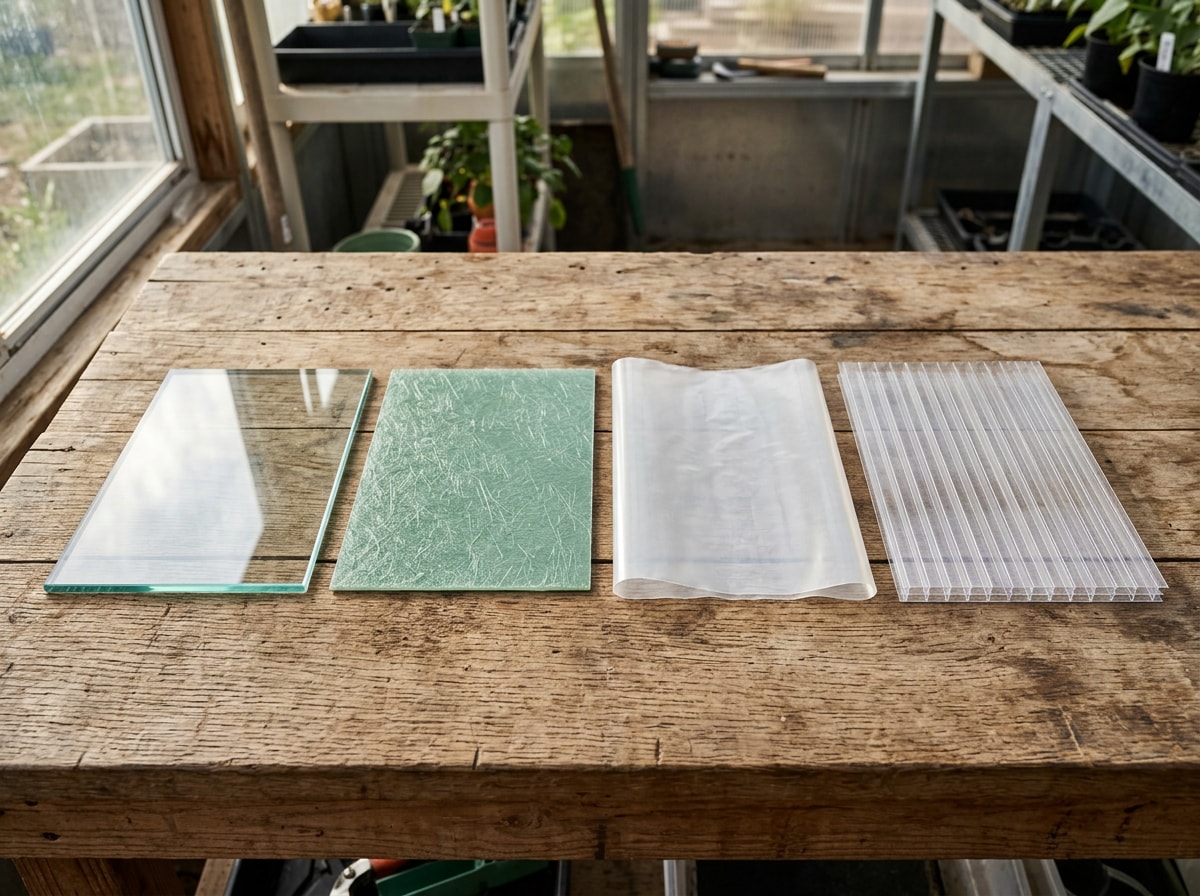
Matching your roof glazing to your crop's light needs gets easier once you can see the real trade-offs side by side, which is exactly what the comparison below is built for.
Best Greenhouse Roofing Materials for St. Marks, FL
Four materials dominate greenhouse roofing today: glass, fiberglass, polyethylene film, and polycarbonate. Each handles light, heat, and impact differently, and the right pick depends on your budget, how permanent the structure is, and how much wind the coast throws at it.
Glass Roofing
Glass roofing offers the highest light transmission of any common material. Glass is an excellent material when its high initial cost can be tolerated, and it has a life of 25 years or longer with low maintenance requirements and good light transmission. Tempered or safety glass is the standard choice, since it breaks into small, dull pieces rather than sharp shards.
The trade-offs are real. Glass requires skilled labor for construction and has a low impact strength, and it is heavy, requiring strong framing with large supports that can block light. For a permanent, high-investment greenhouse, though, glass still delivers unmatched clarity.
Fiberglass Roofing
Fiberglass panels cost considerably less than glass while still letting in strong light levels. Fiberglass reinforced plastic sheets are relatively low in cost, lightweight, and impact resistant compared to glass, with fairly high light transmittance that's slightly less than glass, though they degrade when exposed to ultraviolet light. Periodic resurfacing helps slow the yellowing that comes with years of direct Florida sun.
Polyethylene Film
Polyethylene film is the budget covering most beginners start with because it's lightweight, flexible, and cheap to replace. The catch is its lifespan in Florida specifically. Regular-grade poly film has a lifetime of only about nine months in Florida, and UV-stabilized grades last from eighteen months to four years, still requiring more frequent replacement than most other glazing materials. That's a meaningfully shorter window than poly film gets credit for in generic, non-Florida greenhouse guides, and it's worth planning your budget around.
Polycarbonate Panels
Polycarbonate panels have become the default recommendation for growers wanting a middle ground between glass and film. Multiwall polycarbonate traps air between layers, adding insulation value that helps on cooler nights while still letting in diffused light. It's also far more impact-resistant than glass, which matters for coastal properties. The main downside is gradual yellowing from UV exposure, though UV-coated surfaces slow that process for years.
Here's how the four materials stack up for a St. Marks greenhouse:
| Material | Light Transmission | Insulation Value | Typical Lifespan | Relative Cost | Florida Panhandle Suitability |
|---|---|---|---|---|---|
| Glass | 90%+ | Low | 20-25+ years | High | Excellent light, weak impact resistance |
| Fiberglass | 85-90% (new) | Moderate | ~15 years | Moderate | Yellows faster in high humidity |
| Polyethylene film | 85-90% | Low | 9 months-4 years (Florida) | Low | Needs frequent storm-season replacement |
| Polycarbonate (multiwall) | 70-85% | High | 10-20 years | Moderate-High | Strong impact resistance, handles humidity well |
Common Types of Polycarbonate Roofing Panels
Since polycarbonate is the practical middle-ground choice for most St. Marks growers, it's worth knowing the panel profiles available. Growers typically choose between multiwall sheets built for insulation and simpler corrugated or solid sheets built for straightforward coverage.
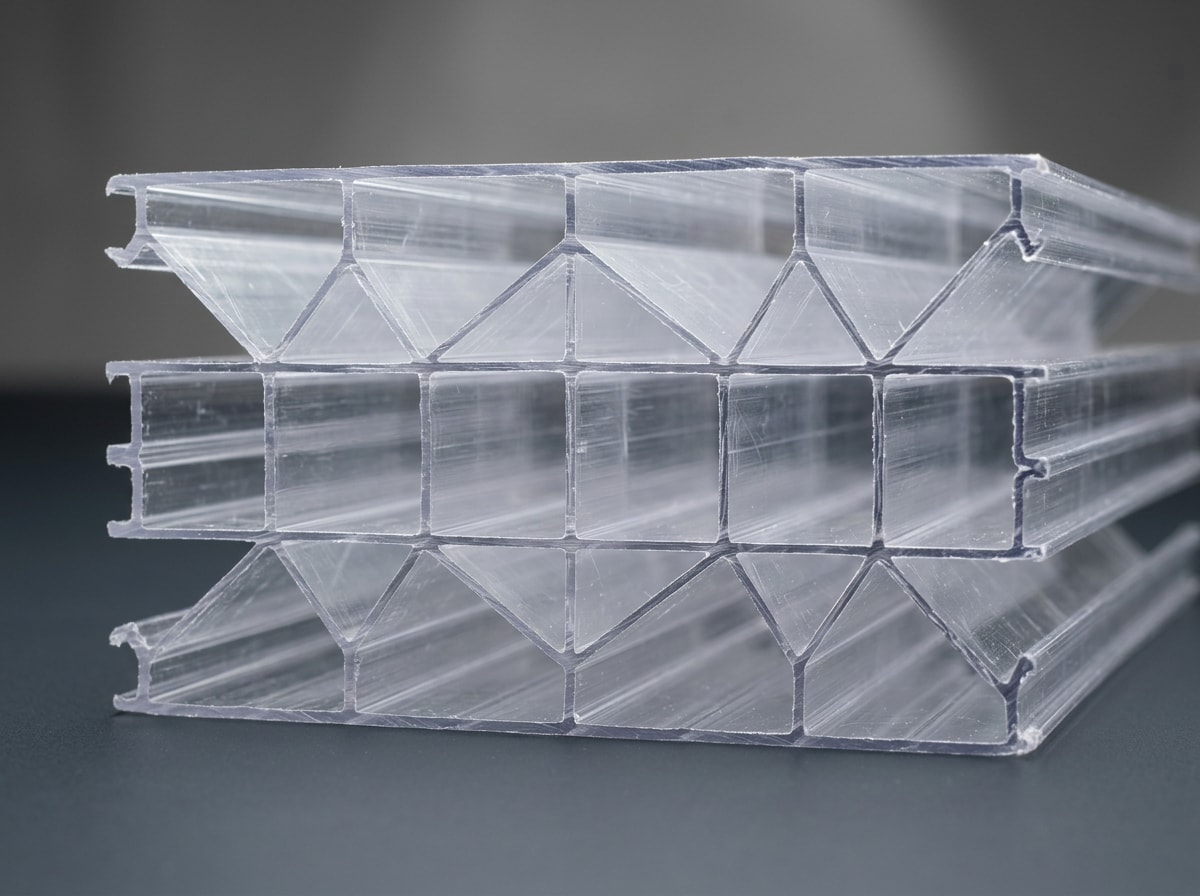
Twin-Wall and Multiwall Panels
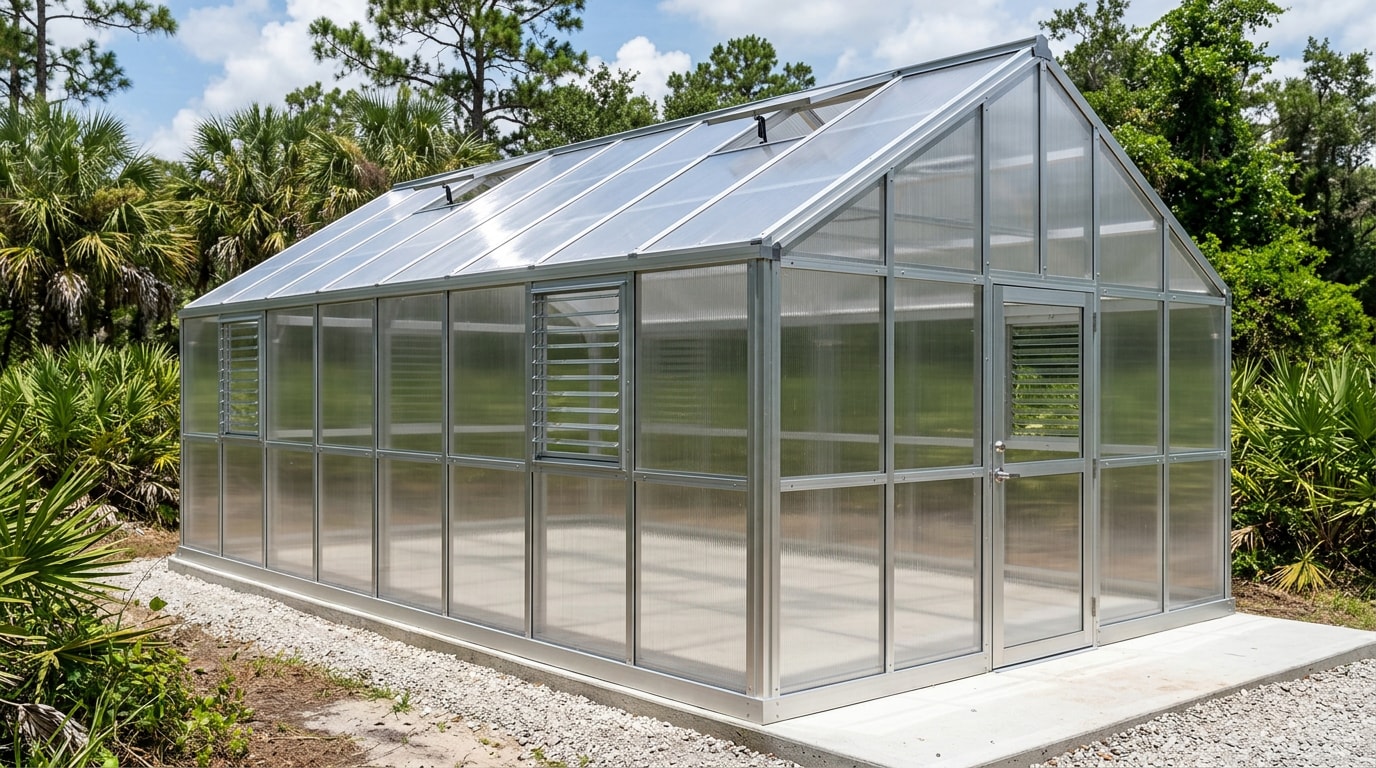
Twin-wall polycarbonate and other multiwall panels use internal ribs that create air channels between layers of plastic. Those channels work like double-pane windows, adding insulation that helps regulate temperature through summer heat and the occasional cold snap. Panels must be installed with channels running vertically so condensation drains out instead of clouding the panel.
Corrugated and Solid Sheets
Corrugated polycarbonate uses a ridged profile that adds stiffness without extra layers, making it lighter and cheaper for simple hoop houses. Solid polycarbonate sheets skip the air channels, trading insulation for a cleaner, single-skin look. Either profile needs framing and purlin spacing matched to the manufacturer's span ratings, or panels can sag under wind load.
Benefits and Trade-Offs of Polycarbonate Greenhouse Roofs
Polycarbonate's biggest selling points are impact resistance, lighter weight than glass, and insulation options glass and film can't match. It also diffuses light more evenly, which reduces leaf scorch compared to direct glass transmission.
The trade-offs:
- Panels need occasional cleaning to maintain clarity
- UV exposure can still cause slight yellowing over many years, even with coated products
- Multiwall channels need to drain correctly or condensation builds up inside
For most growers, those maintenance needs are a fair trade for added durability near the coast.
Planning and Budgeting Your Greenhouse Roof Project
Before buying, ask any supplier for written warranty details covering UV protection and discoloration, since coatings don't all perform equally under a Florida summer. Compare total installed cost rather than price per sheet. Heavier glazing like glass changes frame requirements, while lighter polycarbonate often fits existing structures with less reinforcement.
If you're weighing materials against an actual budget, request a free estimate from a local installer who can price your exact dimensions, or ask for a detailed construction estimate that accounts for framing changes alongside the roof itself.
Installing Polycarbonate Roofing to Withstand St. Marks Storms
St. Marks is coastal, and that matters for code compliance, not just comfort. Areas within one mile of the coastal mean high water line where the ultimate design wind speed is 130 mph or greater, or anywhere the design wind speed reaches 140 mph or more, fall inside Florida's wind-borne debris region under the Florida Building Code. That designation affects what glazing and protection standards apply to structures near the water, including greenhouses close to the shoreline.
Installation basics that matter most in this climate:
- Confirm roof pitch and layout match the panel manufacturer's load and span specifications
- Size frame and purlin spacing to the specific panel profile being used
- Orient air channels for proper drainage, not just structural convenience
- Pre-drill fastener holes oversized to leave a thermal expansion gap
That last point isn't optional. Pre-drilling insures that the panels will have room to expand and contract properly with temperature change, and skipping this step can lead to distorted or warped panels.
Nails should never be used, since rigid polycarbonate panels don't compress the way wood fibers do, creating a real risk of cracking and impact damage at the attachment point. Always defer to the product's official spec sheet over general guidance, since fastener spacing and hole size vary by manufacturer and panel thickness.
Maintenance and Storm Prep for Greenhouse Roofs in Wakulla County
Clean polycarbonate and fiberglass panels with mild soap and a soft cloth. Abrasive pads and harsh solvents scratch coatings and shorten panel life. Check seals, flashing, and fasteners each season, since coastal humidity accelerates wear faster than it would inland.
Storm prep isn't theoretical here. Hurricane Hermine made landfall around 1:30 AM EDT just east of St. Marks, Florida, near the Wakulla-Jefferson County line in 2016, and the area has seen multiple named storms since. After any significant weather event, inspect the roof for cracked panels, loosened fasteners, or lifted flashing before small damage spreads. If a storm has already done damage, a storm damage assessment can document the extent before you start repairs or file an insurance claim.
Why Local Installation Experience Matters
Material choice only gets you halfway there. The framing, fastening, and drainage details are where most greenhouse roof failures actually start, and that's harder to get right from a spec sheet alone. Alpha One Roofing brings 25 years of hands-on roofing experience to projects across the Florida Panhandle, including St. Marks and the surrounding Wakulla County coastline, and that experience shows up in how a roof is framed for wind load before the first panel ever goes on.
For growers planning a new structure rather than re-roofing an existing one, new construction roofing services can integrate greenhouse glazing decisions into the build from the foundation up, instead of retrofitting a roof system after the frame is already set. Homeowners dealing with a mix of greenhouse and residential roofing on the same property may also find it useful to compare options in a related guide on synthetic cedar shake roofing in St. Marks, FL.
Ready to move forward? Get a free estimate or visit the Alpha One Roofing homepage to see the full range of roofing and construction services available across the Panhandle.
FAQ
Is polycarbonate good for greenhouses?
Yes. Polycarbonate panels resist impact better than glass, trap air for extra insulation, and diffuse light evenly across plants. The main downside is gradual yellowing from UV exposure, though coated panels slow this significantly.
What is the best material for a greenhouse roof?
There's no single best material. It depends on budget, climate, and crop needs. The comparison table above weighs light transmission, insulation, lifespan, and cost across glass, fiberglass, polyethylene, and polycarbonate for Florida Panhandle conditions.
How thick should polycarbonate be for a greenhouse roof?
Most greenhouse roofs use polycarbonate between 6mm and 10mm thick, depending on panel type and climate. Thicker isn't automatically better; insulation gains depend more on air channel design than raw thickness.
What type of polycarbonate is best for greenhouses?
Twin-wall or multiwall polycarbonate suits insulation-focused, year-round greenhouses best. Corrugated polycarbonate fits simpler, budget-conscious builds like hoop houses where insulation matters less than low upfront cost.
Can greenhouse roofing withstand hurricanes in St. Marks, FL?
No glazing is hurricane-proof, but polycarbonate holds up far better than glass against wind-driven debris. Because St. Marks sits inside Florida's wind-borne debris region along the coast, structures close to the water may need impact-rated glazing or removable panel systems. Have a local contractor check your specific site against current Florida Building Code wind requirements before you finalize a material.
How much does greenhouse roofing cost in St. Marks, FL?
Cost depends on material, panel thickness, and structure size. Polyethylene film is the cheapest option but needs the most frequent replacement in Florida's climate. Polycarbonate costs more upfront than film but less than glass, and it typically delivers the best long-term value for coastal conditions. Request a written estimate based on your exact dimensions rather than relying on generic per-square-foot pricing.