Metal roofing St. George, FL homeowners choose has to survive conditions most inland Florida roofs never see: sustained onshore wind, salt-laden air, and storm systems that test every fastener and seam at once. Picking the wrong system here does not just shorten its life, it can void a wind mitigation discount or leave you re-roofing years ahead of schedule. This guide breaks down the real panel options, 2026 cost ranges, and the details worth asking a contractor before you sign anything.
Why Metal Roofing Fits St. George Island
Barrier-island properties face steady onshore wind, salt-laden air that accelerates corrosion, and tropical systems that test every fastener and seam. A roofing material has to hold up to all three at once, not just one of them.
That combination is why so many property owners on the island skip materials built for milder climates and go straight to metal. Alpha One Roofing has handled enough island re-roofs to see a pattern: the roofs that fail early almost always have the same two weak points, loose fastener spacing and undersized flashing details, not bad panels.
Residential Metal Roofing
St. George Island homes need systems built for wind exposure, moisture intrusion, and the slow grind of coastal weather over time, not just a one-time storm event. Repair and replacement work on the island typically focuses on two things: fixing whatever is currently failing and strengthening the roof against the next decade of exposure.
For coastal roofing, that often means re-evaluating fastener spacing, underlayment quality, and flashing details during a roof replacement, not just swapping panels. A roof that looks fine from the street can still have weak points only a trained eye catches, which is why a professional roof inspection belongs in every reroof conversation.
Homeowners planning a full roof installation should start with a site visit to see how their current system compares to current coastal standards.
Commercial Metal Roofing
Commercial buildings on the island carry the same exposure problems at a bigger scale, larger roof planes, more penetrations, and higher wind-uplift loads on parapets and edges. Metal is often the preferred choice here because of its wind performance and lower long-term maintenance needs compared with built-up or shingle systems.
New builds and additions on the island should factor metal roofing into the design early through new construction roofing planning rather than bolting it on after the fact.
Standing Seam vs. Exposed-Fastener Panels
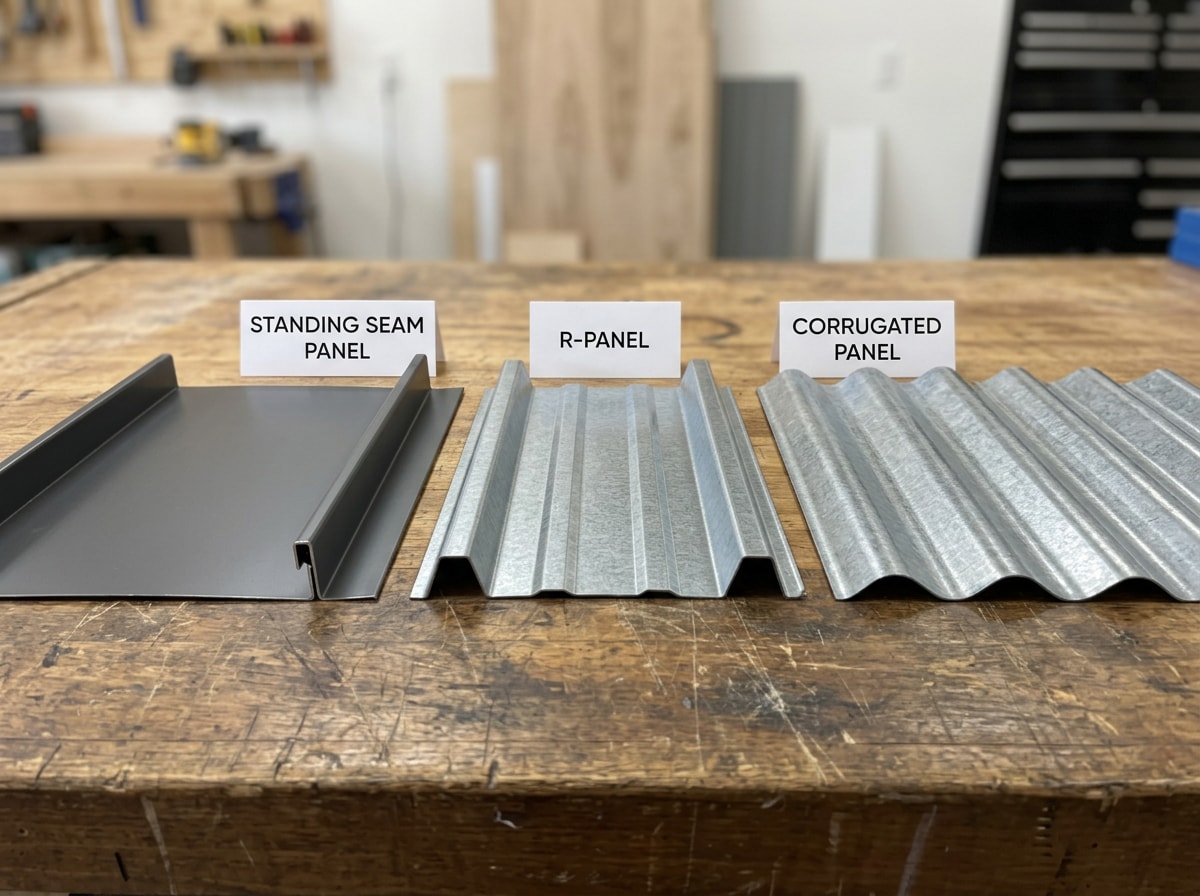
Two metal roofing systems dominate the island: standing seam and exposed-fastener panels like R-panel. They are not interchangeable once wind and salt exposure enter the equation.
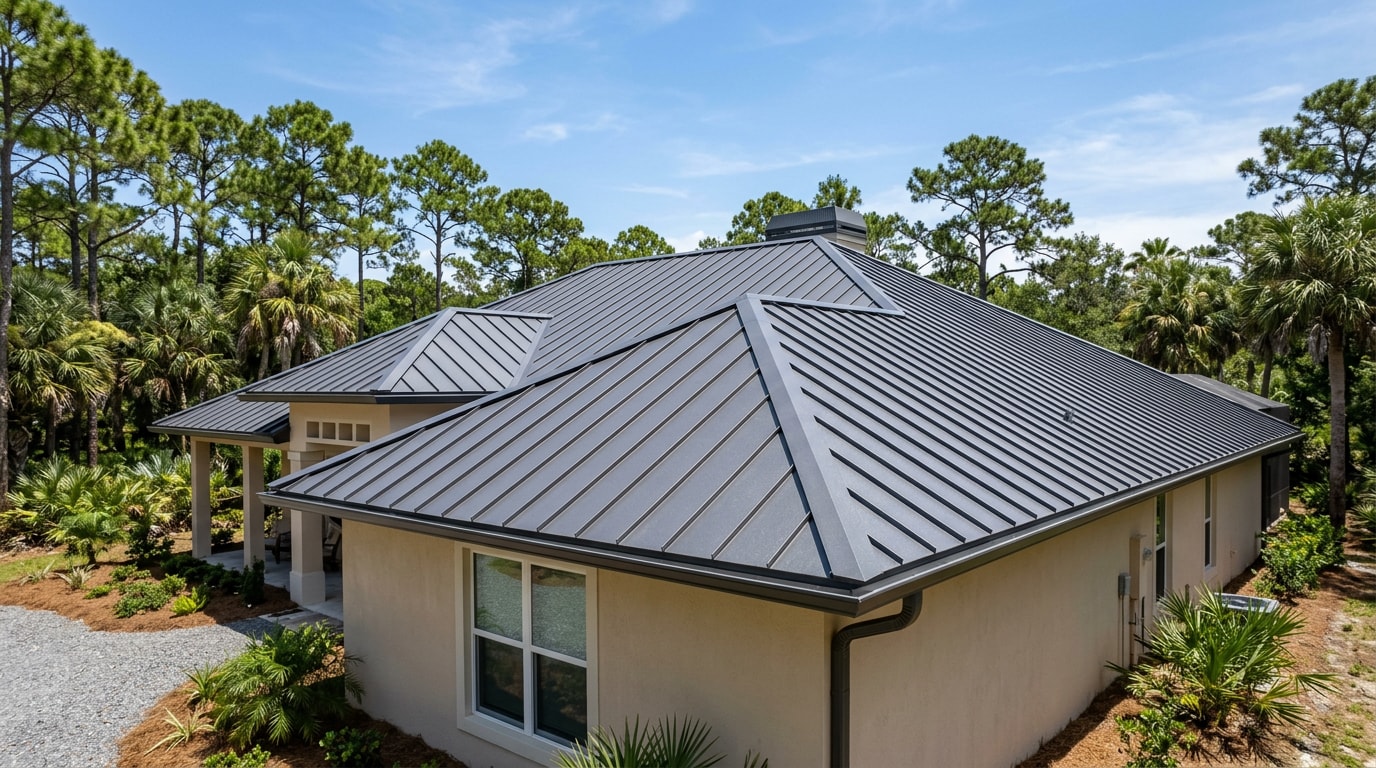
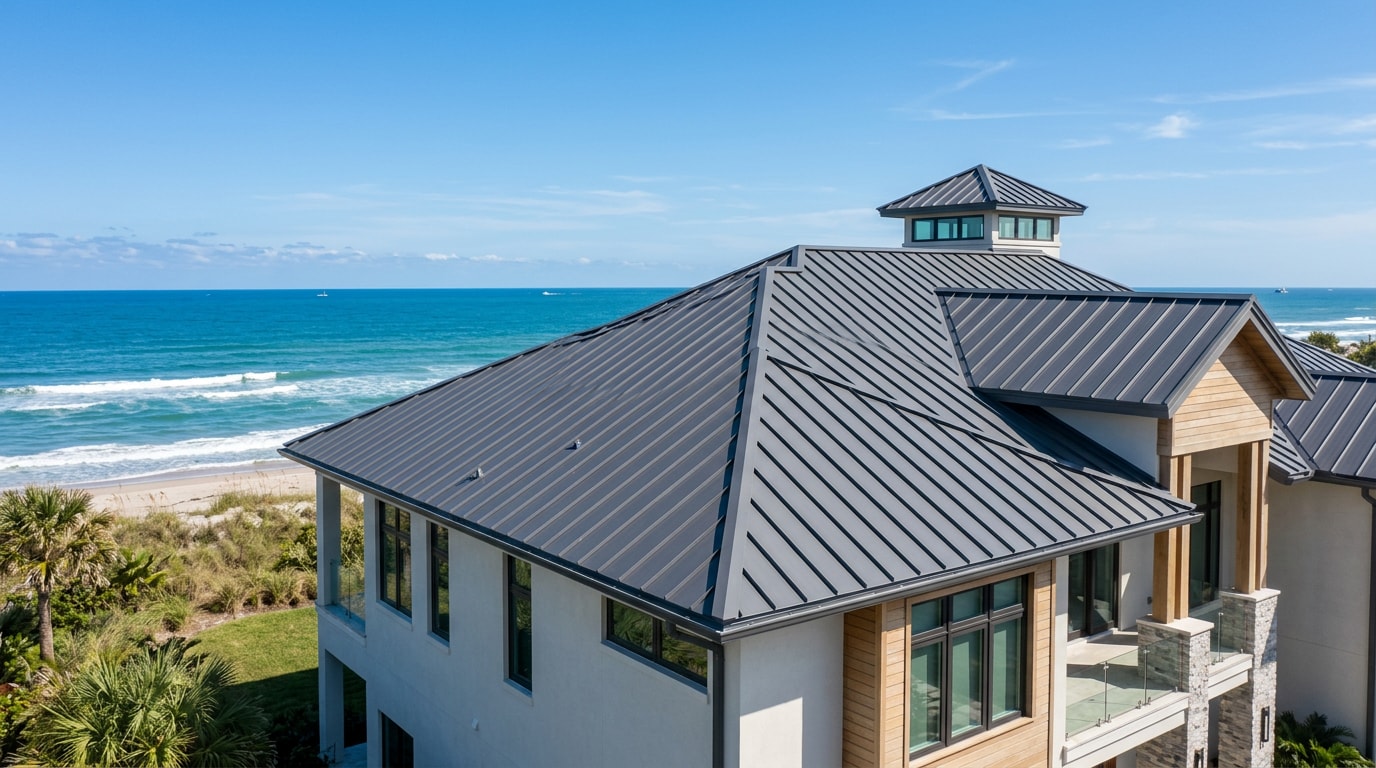
Standing seam panels use concealed fasteners and interlocking seams, so there are no exposed screw heads for salt air to corrode over time. That design also gives standing seam stronger wind-uplift performance, which matters on a barrier island where wind-zone requirements run higher than inland Florida.
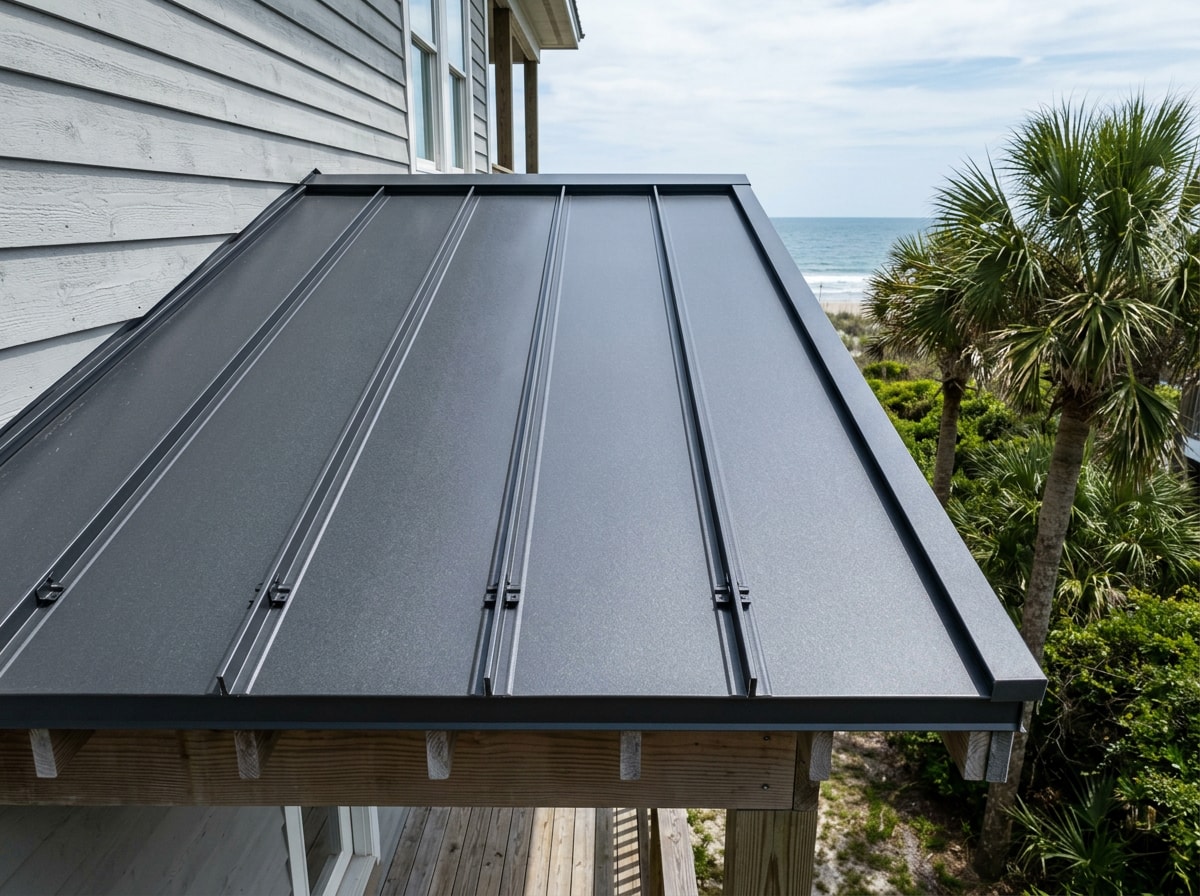
Exposed-fastener panels cost less upfront and install faster. The tradeoff: exposed screws need more frequent maintenance checks and tend to loosen sooner in high-wind, high-salt environments. On the re-roofs Alpha One Roofing crews have inspected, loosened fasteners on exposed-panel systems are the single most common callback in the first two to three years, well ahead of any coating or rust issue.
For most homes directly facing the Gulf or open water, standing seam is the stronger long-term match. For detached structures, sheds, or lower-exposure areas, exposed-fastener systems can still make sense.
Either way, confirm the panel's wind rating against current building code before installation. Wind-borne debris regions are areas within 1 mile of the coastal mean high water line where the ultimate design wind speed is 130 mph or greater, and anyplace the ultimate design wind speed exceeds 140 mph , which places most of St. George Island in a higher design category than the mainland. The Florida Building Commission publishes the current wind speed maps and zone definitions used to set that requirement.
Types of Metal Roofing Panels Available
St. George Island property owners typically choose from five main metal roofing types. Each differs in cost, appearance, and how well it handles coastal wind and salt exposure.
| Panel Type | Typical Use | Coastal Durability | Relative Cost |
|---|---|---|---|
| Standing seam | Primary homes, direct coastal exposure | Highest, concealed fasteners | $$$ |
| R-panel | Garages, sheds, budget commercial | Moderate, exposed fasteners | $ |
| Corrugated panel | Outbuildings, accent roofs | Moderate | $ |
| U-panel | Agricultural, light commercial | Moderate | $ |
| Copper / zinc / aluminum | High-end homes, architectural accents | Very high | $$$$ |
Corrugated panels and R-panel are common, budget-friendly choices often used on sheds, garages, and some commercial buildings. Standing seam is the preferred option for primary residences facing direct coastal exposure, thanks to its concealed fasteners and higher wind-uplift ratings. Specialty metals like copper and zinc show up less often, usually on higher-end homes where appearance and extreme longevity matter more than upfront cost.
Panel gauge also affects durability and should match current industry guidance for coastal applications. The Metal Construction Association is recognized as the leading advocate for architectural metal products , and its technical resources are a useful reference when a contractor specifies panel thickness for a coastal install.
How Long Metal Roofing Lasts on a Barrier Island
Metal roofing systems commonly last 30 to 50 years, with well-maintained standing seam installations exceeding that, far outlasting asphalt shingles, which typically need replacement every 15 to 20 years in coastal climates. Actual lifespan depends heavily on panel gauge and coating quality.
For context on how roofing materials generally compare, most new roofs are designed to provide useful service for about 20 years, while some roof types, such as slate, clay tile, and certain metals, can last longer , according to the National Roofing Contractors Association. On a barrier island, that longevity gap matters more, since every reroof means scaffolding, material delivery, and disposal logistics across a bridge or ferry route.
Energy Efficiency and Cooling Costs
A reflective metal roof can meaningfully cut cooling costs on an island where air conditioning runs nearly year-round. Metal panels with reflective coatings bounce back a large share of solar heat instead of absorbing it, which keeps attic temperatures lower and reduces strain on HVAC systems.
The U.S. Department of Energy has found that substituting a cool roof for a conventional one can reduce by up to 15% the annual air-conditioning energy use of a single-story building in warm climates. On a Gulf-facing home running AC most of the year, that translates to a noticeable line-item difference on summer utility bills, not just a marketing claim.
2026 Metal Roofing Costs for St. George Island
Metal roofing cost on St. George Island generally runs in this range as of 2026, shaped by panel type, gauge, coating, and local labor rates:
| Panel Type | Installed Cost per Sq. Ft. | Notes |
|---|---|---|
| R-panel / corrugated | $9 - $11 | Budget option, more frequent fastener checks |
| Standing seam (steel) | $11 - $14 | Best balance of cost and coastal performance |
| Standing seam (aluminum) | $13 - $16 | Preferred for direct salt-spray exposure |
| Specialty (copper, zinc) | $18+ | Longest lifespan, highest upfront cost |
Thicker gauge metal and marine-grade coatings add cost but extend lifespan and corrosion resistance, which usually pays off over a 30-plus-year roof life. Labor costs also run higher on barrier islands due to access logistics and specialized installation skill.
Treat any flat per-square-foot figure as a starting point, not a quote. A free roofing estimate tailored to your home's specific exposure and roof design gives a far more accurate number. If you are also weighing tile against metal for storm resistance, the cost breakdown in Tile Roof Repair in St. George, FL is worth a look before you decide.
Flexible Financing, No Stress
A new metal roof is a major expense, and most reputable contractors recognize that few homeowners want to pay the full cost upfront. Many roofing companies serving the island, including Alpha One Roofing, offer payment plans through financing partners structured to fit a range of budgets.
No-upfront-cost roofing programs typically spread payments out over months or years, which can make a higher-performing standing seam system more accessible than paying cash would allow. Ask about financing terms and interest rates during your initial consultation so there are no surprises later.
FAQ
What problems do roofs face on St. George Island?
Island roofs commonly face wind damage, salt-related corrosion, and leaks from material breakdown over time. Metal roofing addresses these directly through higher wind-uplift ratings, corrosion-resistant coatings, and sealed seams that resist water intrusion better than aging shingle systems.
How often should roofs be inspected on St. George Island?
Plan for a professional roof inspection once a year, plus an additional check after any major coastal storm. This catches loosened fasteners, lifted flashing, or early corrosion before it turns into a larger repair.
Does a metal roof lower homeowners insurance in Florida?
It can. Many insurers offer credits for wind-resistant roofing features documented through a wind mitigation report, and standing seam systems with sealed fasteners often qualify for better terms than aging shingle roofs. Ask your contractor to generate this report alongside your reroof.
What types of roofing materials are used for commercial buildings on the island?
Commercial roofs on the island commonly use asphalt shingles, clay or concrete tile, modified bitumen, and metal roofing. Metal is often the preferred choice for larger commercial structures due to its wind performance and lower long-term maintenance needs.
What warranties come with a metal roof?
Most metal roofing installations carry two layers of coverage: a workmanship warranty from the installing contractor and a manufacturer's material warranty, which commonly runs 30 to 50 years depending on the panel and coating. Always confirm specific terms directly with your installer, since coverage varies by manufacturer and project.