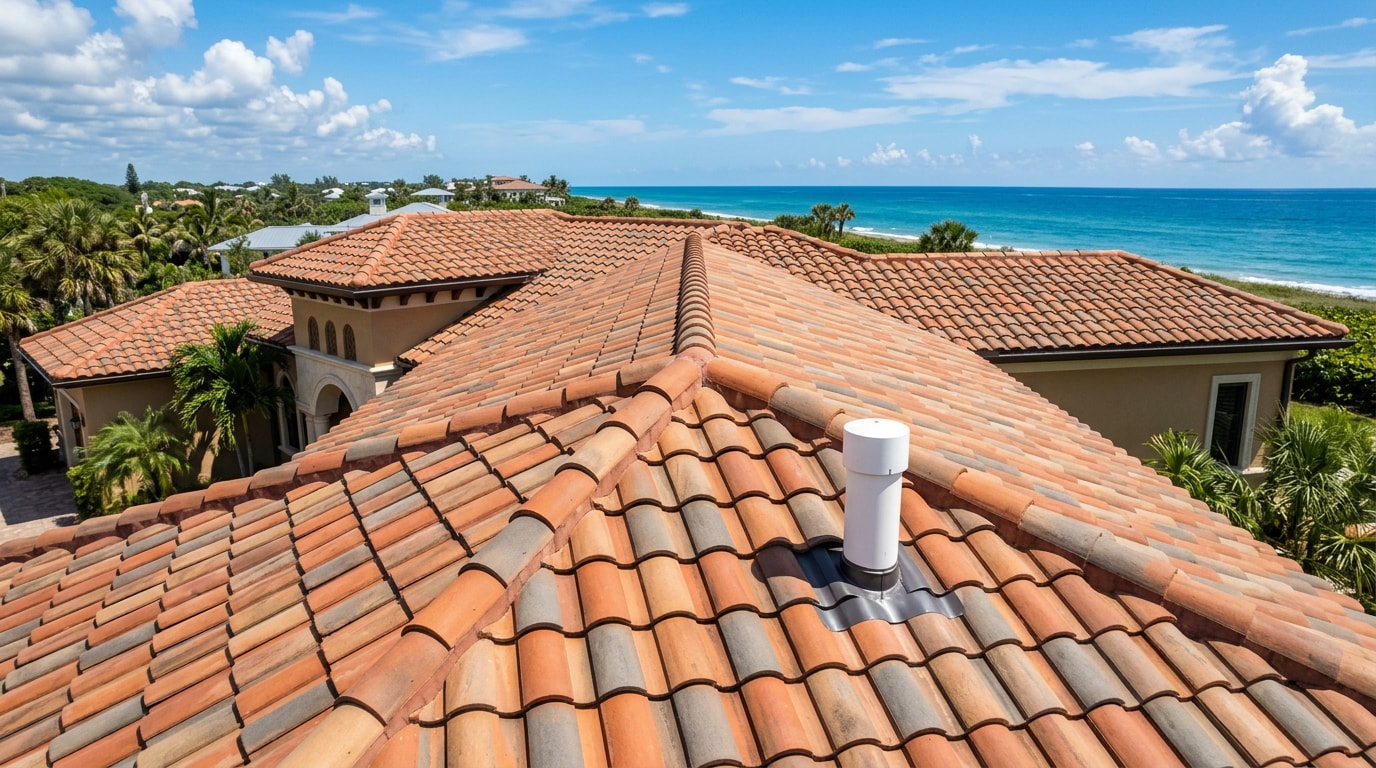
Tile roof repair in St. George, FL isn't quite like tile repair anywhere else in the Panhandle. This barrier island carries a 140 mph wind-load requirement, the toughest standard in Franklin County, on top of constant salt air and Gulf humidity. That combination wears down flashing, fasteners, and underlayment faster than it does fifteen miles inland. Here's what actually causes tile roof damage on St. George Island, what repairs run in 2026, and what separates a quick patch from a fix that holds through the next storm season.
The Most Common Tile Roof Repairs & Problems in Florida
Most tile roof issues on the Gulf Coast fall into a short list of recurring categories. Storm exposure, foot traffic, and age-related wear account for the majority of service calls. Knowing which category applies to your roof tells you roughly how serious the repair ahead actually is.
Cracked Tiles
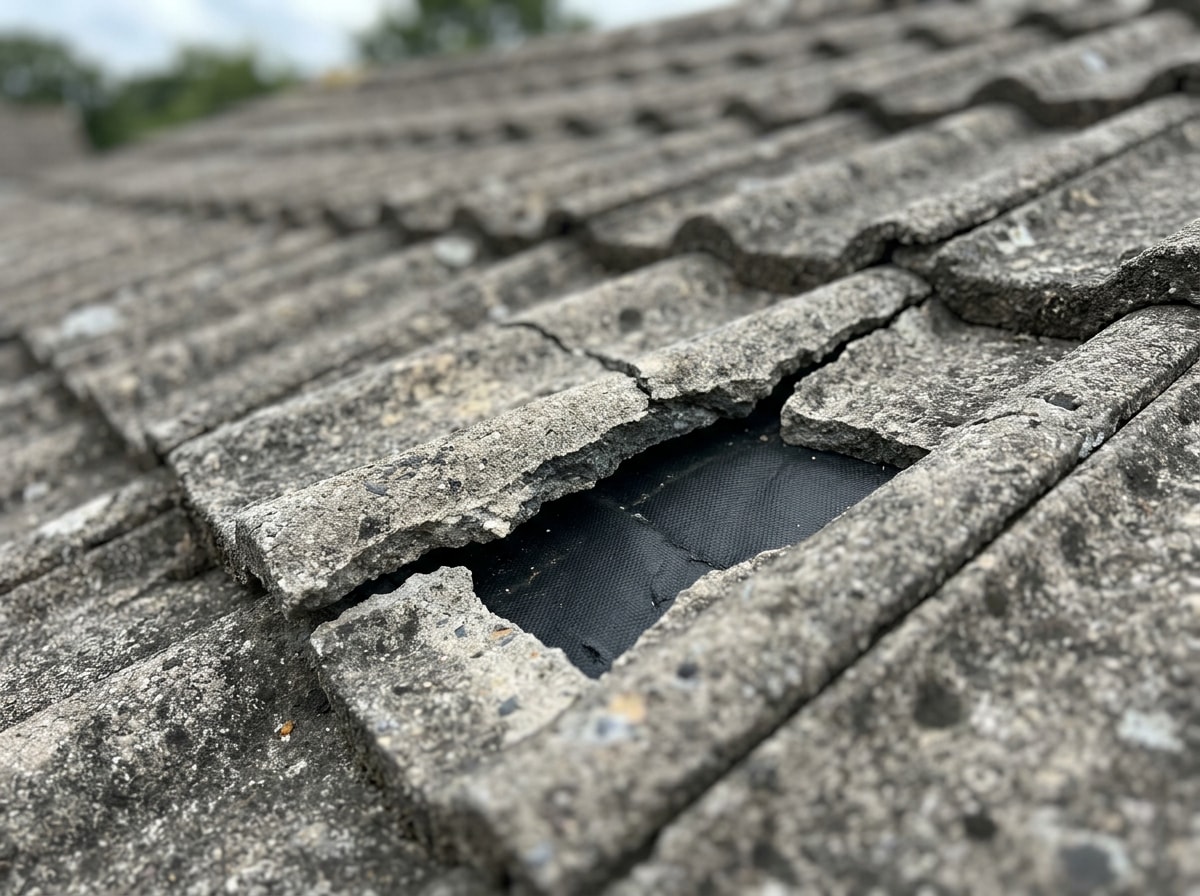
Cracked tiles are the most frequently reported issue on Florida tile roofs. They usually result from foot traffic during maintenance, falling debris during storms, or age-related brittleness in older concrete or clay tiles.
A single cracked tile might seem minor. But it exposes the underlayment beneath it to sun and rain. Left unaddressed, a cracked tile turns into a repair that involves underlayment replacement too. Tile damage tends to spread quickly once water finds a way past the surface layer, so prompt attention matters more than it looks like it should.
Fasteners Uplifting
Tile fastener uplift happens when nails or screws holding tiles in place gradually work loose. Wind pressure, thermal expansion, and incorrect driving during the original install all contribute.
Watch for nail pops, where fastener heads push up through the tile surface, or tiles that shift slightly out of alignment. This is often less about weather and more about installation quality from the start. A roof installed with proper fastening patterns rarely develops widespread uplift, which is one reason a qualified repair crew matters as much as the material itself.
Damaged Flashing
Flashing protects the seams around vents, chimneys, and roof-to-wall transitions where tiles alone can't seal out water. Flashing failure typically stems from storm impact, corrosion over time, or flashing that wasn't installed correctly to begin with.
Flashing repair is one of the most common line items on a Florida tile roof invoice because these metal components take direct hits during tropical weather. The tile manual is referenced by the FBC for tile roof installations throughout 65 of 67 counties in Florida; it may not be used in Miami-Dade and Broward Counties. A contractor who isn't familiar with that manual's flashing details is setting up a future leak, not fixing one.
Water Leaks and Hidden Moisture Damage
Moisture trapped beneath tiles doesn't always announce itself right away. Water can seep past a cracked tile or failed seal and sit against the roof deck for months before anyone notices bubbling paint or sagging drywall inside the home. By the time a hidden leak becomes visible, underlayment failure may already be underway, which is why a proper roof inspection looks under the tiles, not just at the surface.
Why St. George Island's Climate Pushes Tile Roofs Harder
St. George Island isn't a typical Gulf Coast repair market. Wind load requirements for St. George Island run 140mph, compared to 130mph for the rest of unincorporated Franklin County. That's not a trivia point. It's the reason tile fastening patterns and flashing details that pass inspection on the mainland can still fail here years early.
On our own repair visits on the island, we've found wind-driven rain working past ridge caps even when every field tile still looked intact from the ground. Salt-laden air also accelerates corrosion on exposed metal flashing and fasteners faster than it does even a few miles inland in Eastpoint or Apalachicola. If your roof is on St. George Island specifically, ask your contractor how their repair plan accounts for that higher wind rating, not just the general Florida code minimum.
Picking a Tile Roof Repair Pro
Tile roofing isn't a skill every roofer brings to the job. Walking across tiles without cracking them, matching replacement tiles to faded originals, and re-sealing flashing correctly all require hands-on tile experience that general shingle roofers often lack. Hiring the wrong crew can turn a simple repair into a repeat service call.
When evaluating a tile roof specialist, check for:
- Active state licensing you can verify independently
- A portfolio of tile-specific repair work, not just shingles
- Clear warranty terms covering both labor and materials
- A written repair plan explained before work starts, not an invoice handed over after
Before you sign anything, search the contractor by license number or licensee name through Florida's DBPR portal and confirm the license shows current, active status with no unresolved discipline. It takes two minutes and it's free. You can also review our roofing contractor services or contact us directly before scheduling a visit.
Step-by-Step Tile Roof Repair Process
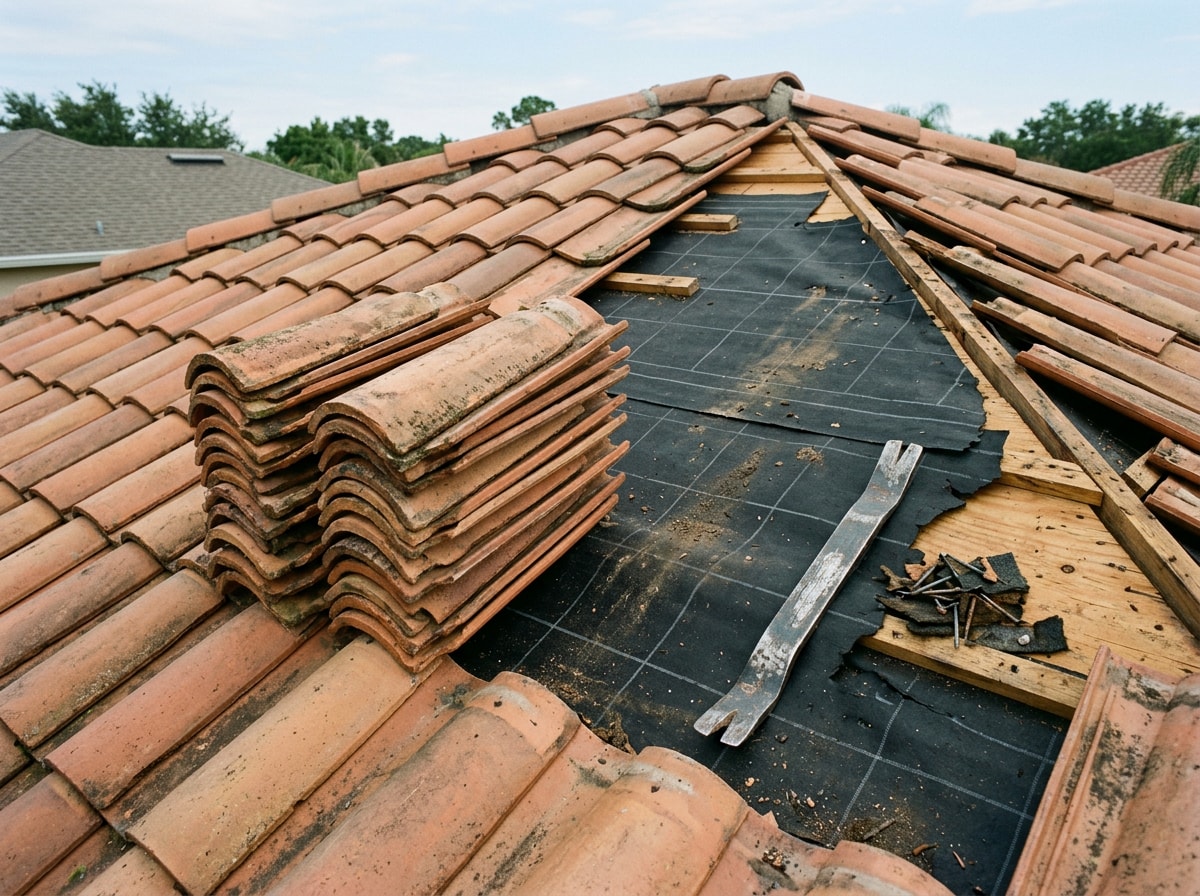
A professional tile roof repair generally follows five stages: inspection and damage assessment, careful tile removal, underlayment or flashing repair, tile reinstallation, and a final walkthrough. The exact sequence varies by contractor, but underlayment-first diagnosis is nearly universal among reputable crews.
| Step | Typical Approach | Where Detail Often Differs |
|---|---|---|
| 1. Inspection | Visual and physical check of tiles, flashing, deck | Depth of attic/interior moisture check varies |
| 2. Tile Removal | Carefully lift tiles around damaged area | Some crews stage tiles for exact reinstallation; others replace with new |
| 3. Underlayment/Flashing Repair | Replace failed underlayment sections, reseal flashing | Sealant or coating step added by some, skipped by others |
| 4. Tile Reinstallation | Reset original or matched replacement tiles | Fastener pattern and spacing can vary by crew |
| 5. Final Inspection | Walkthrough and water test | Photo documentation included by some, not all |
Skipping the underlayment check is how hidden leaks get missed. A roof inspection that stops at the surface tiles isn't a complete inspection. If you have an active leak right now, an emergency roof tarp buys time until a full repair can be scheduled. If you're comparing quotes for your St. George, FL service area, ask each contractor to walk through these five steps specifically.
Tile Roof Leak Repair: Finding and Fixing Hidden Leaks
Leaks are often diagnosed well before they become visible from the ground. The earliest warning signs tend to show up indoors, not on the roof itself, which is why many homeowners miss them for months.
Signs that point to a hidden leak:
- A musty attic smell that lingers after the air conditioning runs
- Bubbling or peeling ceiling paint
- Faint water stains on ceilings that fade and reappear after rain
- Darker or discolored tiles following a storm, even with no visible cracks
A water stain that reappears after every rain, rather than fading permanently, points to an active, ongoing leak rather than old damage. If a storm just came through and you're seeing any of these signs, a storm damage assessment documents the damage properly for an insurance claim before you start repairs.
Understanding Tile Roof Repair Costs
Tile roof repair pricing depends far more on damage type and extent than on a flat per-square-foot rate. A single cracked tile costs a fraction of what a widespread underlayment failure does, so cost ranges are more useful here than a single quoted price.
Repair Type & Cost Range (2026)
| Repair Type | Estimated Cost Range (2026) |
|---|---|
| Cracked tile replacement (per tile) | $150 – $400 |
| Small storm-damaged section (10-20 tiles) | $600 – $1,800 |
| Underlayment leak repair (localized) | $800 – $2,500 |
| Flashing repair/replacement | $400 – $1,200 |
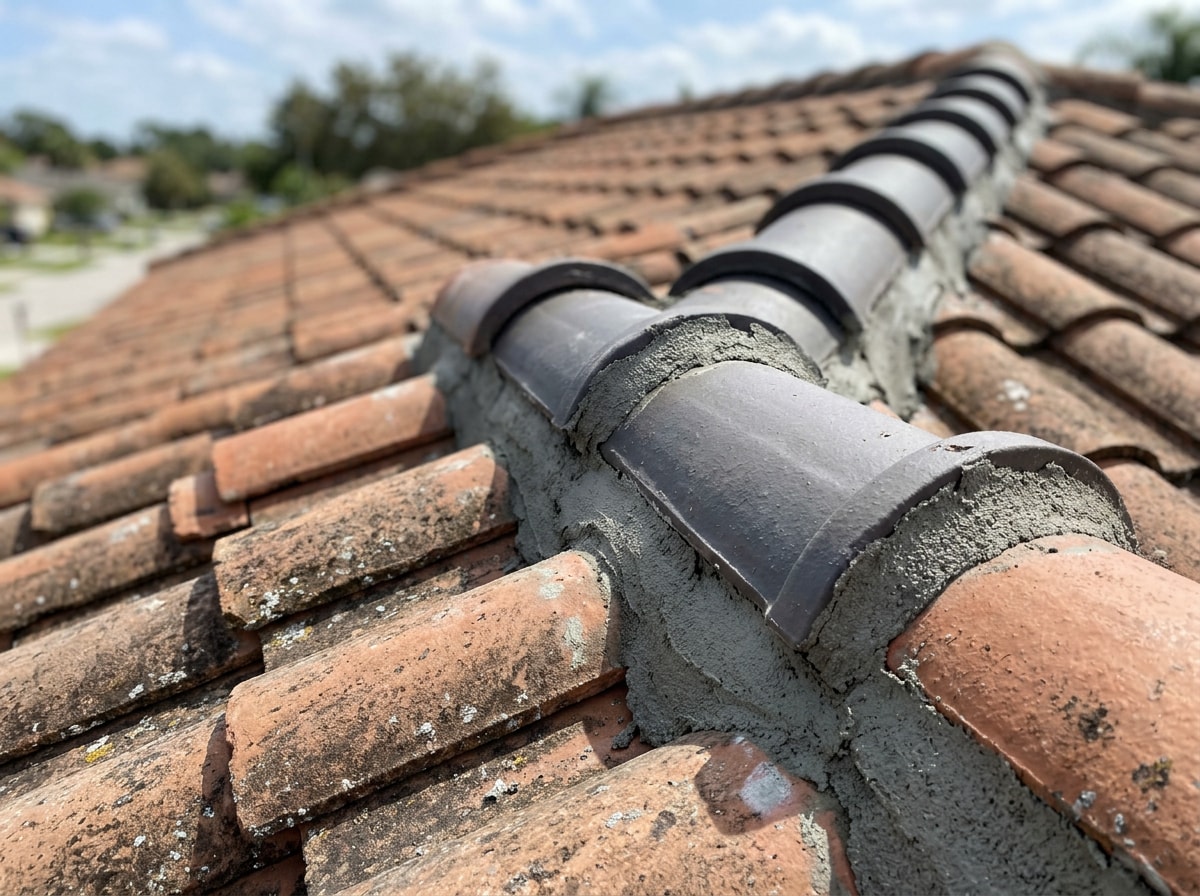
| Ridge cap repair | $500 – $1,500 |
| Partial re-roof (large section) | $3,000 – $8,000+ |
These figures reflect broader Florida roof repair pricing and will vary by roof pitch, tile availability, and crew. Barrier island markets like St. George often run slightly higher due to material delivery logistics and the 140 mph wind-rated installation requirements covered above. Treat this table as a planning range, not a fixed quote. Your actual estimate should come from an in-person inspection.
If the damage is extensive enough that repair no longer makes financial sense, compare the numbers against our cheapest roofing material guide for St. George, FL before deciding between a repair and a partial re-roof.
What Determines Your Tile Roof Repair Cost
- Material type — concrete tile repairs generally cost less than clay, since clay is pricier to source and more fragile to handle.
- Extent and severity of damage — a few cracked tiles cost far less than a section with compromised underlayment or deck rot.
- Roof pitch and accessibility — steeper or harder-to-reach roofs take longer to work safely.
- Age and condition of existing underlayment — older underlayment often fails further during repair, widening the scope.
- Permit and inspection requirements, which add cost in most Florida municipalities.
- Tile color-matching difficulty on older or discontinued roofs.
- Local labor rates.
The median annual wage for roofers was $55,440 in May 2025 , and labor costs for skilled roofing trades have climbed in recent years, which partly explains rising repair quotes industry-wide, not just in Florida.
Why Tile Roof Repair Is Different from Replacement
The repair-versus-replacement decision is the biggest fork in the road for most tile roof owners. Getting it right saves money. Getting it wrong means paying for a repair that doesn't solve the underlying problem.
Repair vs. Replacement: Which Option Saves You More
Repair is the right call when damage is localized, such as a handful of cracked tiles or one failed flashing point. Replacement becomes the better value when damage is systemic across the underlayment or deck.
Localized issues can typically be fixed in a single visit for a few hundred dollars. Systemic damage usually means underlayment has failed across large sections, not just one spot. Repairing isolated areas on a roof with widespread underlayment failure often means paying for repeat repairs every year or two, which can cost more over time than one planned replacement.
When Replacement Becomes Necessary
A few clear triggers point toward replacement rather than continued repair:
- Widespread underlayment failure
- Multiple leaks that have already weakened the roof deck
- Tiles that are brittle, discontinued, or hard to match
- A roof reaching the end of its underlayment's service life
Tile roofs can last 50 years or more, but the underlayment beneath them typically needs replacement every 20 to 30 years , long before the tiles themselves wear out. That mismatch is the real reason many "tile roofs" eventually need a partial re-roof even though the tiles still look fine. For a full breakdown of when repair stops making sense, see our roof replacement services.
Get a Free Tile Roof Repair Estimate in St. George, FL
A proper roof inspection and estimate should include more than a quick glance from the ground. Expect a trained technician to physically check tiles, flashing, and vent boots, document findings with photos, and provide a written scope of work with itemized pricing, not just a single lump-sum number.
Ask any contractor for an estimate that separates labor, materials, and any underlayment work discovered during inspection. A clear quote protects you from surprise add-ons later and gives you something concrete to compare against other bids. You can get a free estimate to get that process started, or browse recent work on our projects page.
Alpha One Roofing is a licensed Florida roofing contractor serving St. George Island, the Florida Panhandle, and the Big Bend coast, including Tallahassee and Crawfordville. Our crews work tile, metal, and shingle roofs across coastal wind zones, and our repair estimates always start with a full tile-and-underlayment inspection, not a drive-by quote. Visit our homepage to see the full range of services we bring to barrier island properties.
FAQ
How do I know if my tile roof is leaking?
Common signs of a leaking tile roof include interior water stains on ceilings, visibly cracked or missing tiles, moss or algae growth, granule buildup in gutters, and soft spots when walking the attic deck. Any of these warrants a professional inspection before the damage spreads.
How do I repair a concrete tile roof leak?
Concrete tile roof leak repair typically follows a short sequence: inspect the damaged area, remove the surrounding tiles, assess the underlayment and deck for moisture damage, replace any failed materials, then reinstall matched tiles. Skipping the underlayment check is the most common reason repairs fail early.
How much does tile roof repair cost in St. George, FL?
Most localized repairs, such as a handful of cracked tiles or a single flashing fix, run between $150 and $1,800 in 2026. Underlayment leak repairs and ridge cap work typically run $500 to $2,500. Barrier island logistics and the 140 mph wind-rated installation standard can push St. George quotes slightly above mainland pricing.
Should I repair or replace my tile roof?
Repair makes sense when damage is localized to a few tiles or one flashing point. Replacement, or a partial re-roof, makes more sense once underlayment has failed across large sections, since repeat repairs on a failing underlayment usually cost more over time than one planned project.
Are tile roofs expensive?
Tile roofing costs more upfront than asphalt shingles, but the comparison shifts over time. Tile lasts significantly longer than shingles and requires less frequent full replacement, so the higher initial investment often evens out, or comes out ahead, over several decades of ownership.
How long do tile roofs last in Florida?
Tile roof lifespan in Florida typically runs 40 to 100-plus years depending on whether the tiles are concrete or clay. The underlayment beneath those tiles usually lasts only 20 to 30 years, which is why many tile roofs need underlayment work or partial repair long before the tiles themselves wear out.