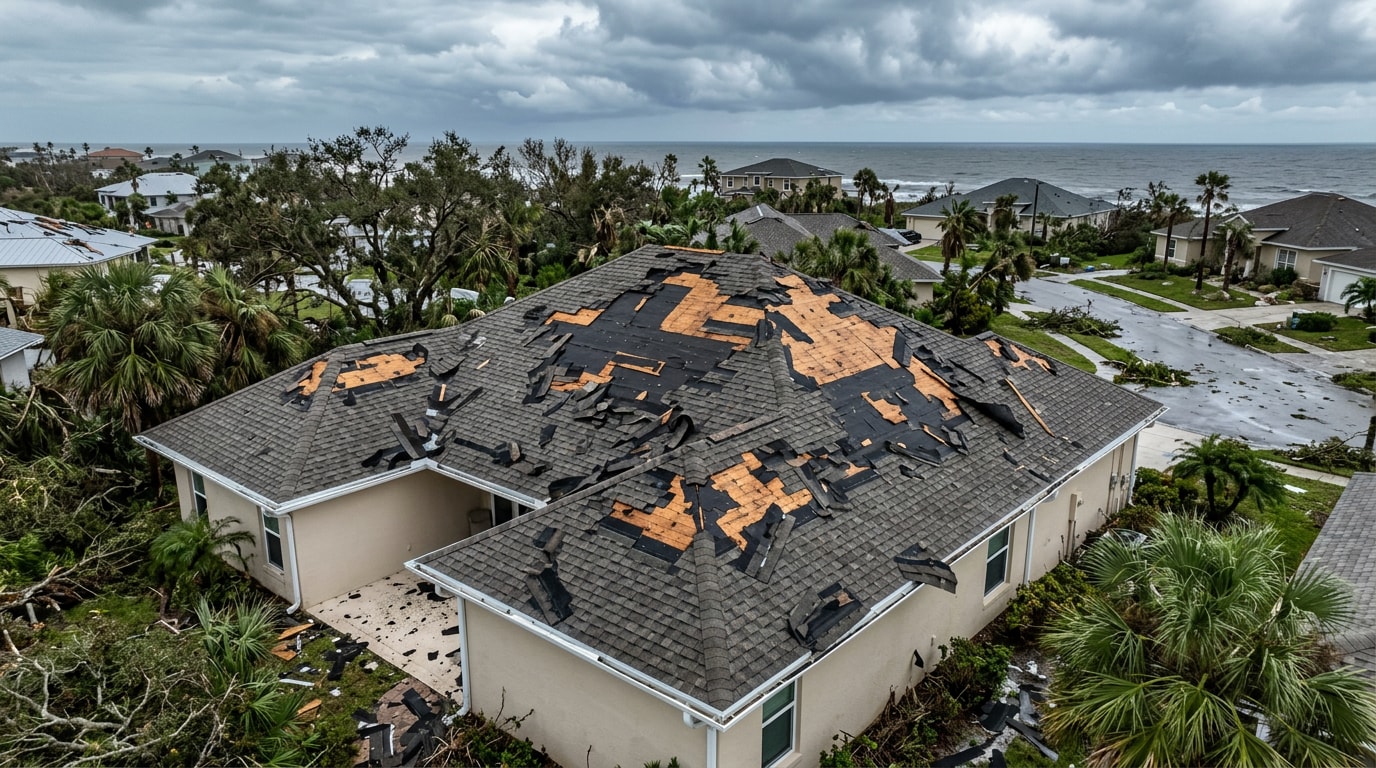
Filing roofing insurance claims for storm damage in Panama City, FL moves on a clock that starts the moment the storm makes landfall, not the day you finally call your agent. Bay County has absorbed everything from Category 5 wind to garden-variety summer microbursts, and the claims process looks different depending on which one hit your roof. This guide walks through the exact sequence, the statutory deadlines Florida actually enforces, and the mistakes that cost homeowners their payout.
Why Panama City Homeowners Can't Wait on This
Hurricane Michael made landfall just east of Panama City as a catastrophic Category 5 storm in October 2018, and Hurricane Michael made landfall as an unprecedented Category 5 Hurricane in the Florida Panhandle region with maximum sustained wind speeds of 140 knots (161 mph) . That single storm reshaped how local carriers and adjusters handle Panhandle roof claims, and the lesson stuck: documentation speed and contractor support decide whether a claim gets paid in full or gets whittled down to one slope.
Our crews have tarped roofs, photographed wind-lifted shingles, and sat through adjuster walkthroughs across Bay County after Michael and every named storm since. That hands-on claims experience is baked into every step below.
The First 24–48 Hours After a Storm
Stay off the roof. Wet decking, loose flashing, and downed power lines turn a quick look into an emergency room visit, so inspection is a job for an insured professional.
In the first two days, your priorities are narrow:
- Check for immediate hazards (downed lines, structural sag, gas smell)
- Note any active leaks and move valuables out of the path
- Arrange emergency roof tarping if water is actively entering the home
- Hold off on permanent repairs until documentation is complete
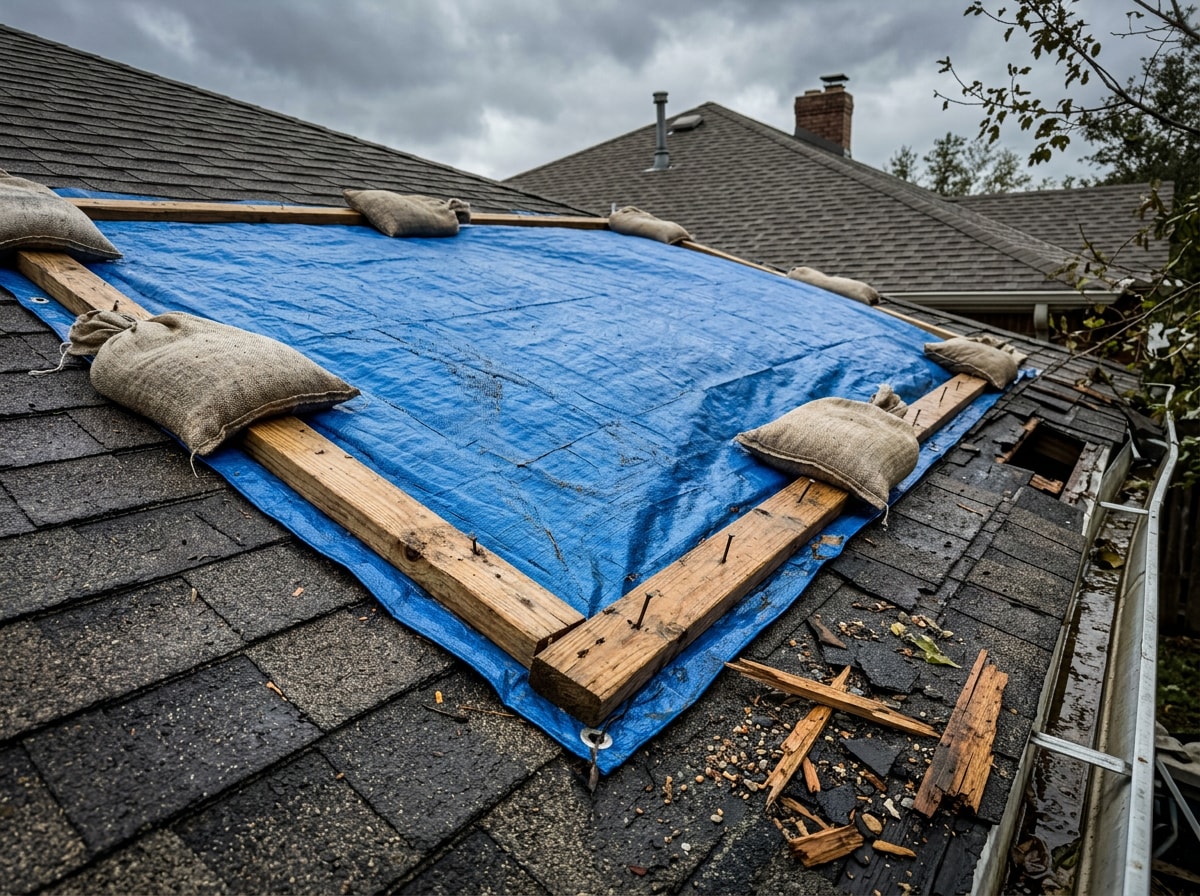
Need a crew out fast? Our emergency roof tarping service covers rapid response across Panama City and the surrounding Panhandle.
Signs Your Roof Took Storm Damage
Some damage is obvious from the yard. Some only shows up once someone is standing on the deck with a moisture meter.
Visible from the ground:
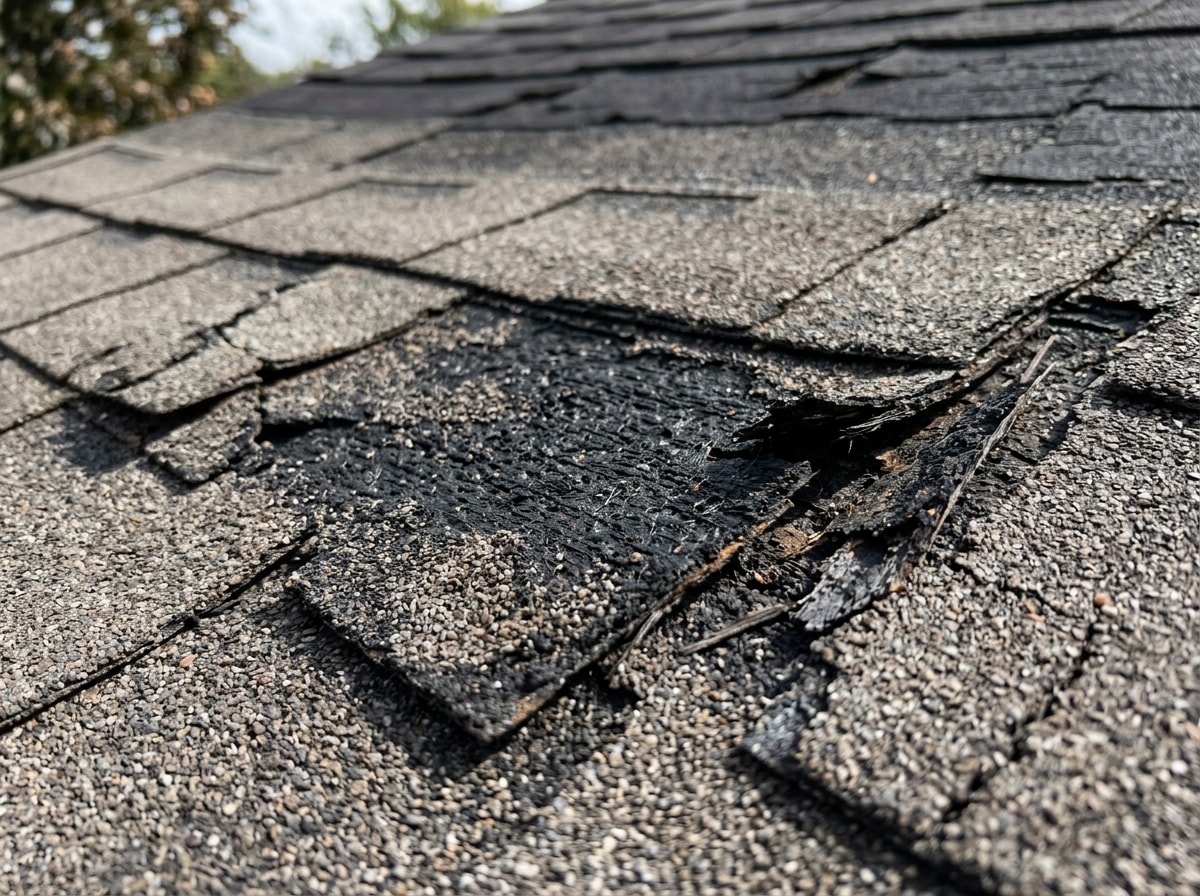
- Missing, cracked, curled, or lifted shingles
- Granules collecting in gutters or at downspouts
- Dented or loosened metal panels
- Bent gutters or loose flashing around chimneys and vents
- Cracked or slipped tiles
Only visible on inspection:
- Nail pops and compromised fastening
- Underlayment tears beneath intact shingles
- Soft or sagging deck sections
- Hidden flashing failures at penetrations
A musty attic smell or a fresh ceiling stain points to an active roof leak, even if the shingles look fine from the street. That's exactly the gap a professional roof inspection is built to close before you assume the roof only needs a minor patch.
Document the Storm Damage Immediately
Photos and video, timestamped and taken from multiple angles, are the backbone of your claim file. This is the step that separates a smooth payout from a drawn-out dispute.
Capture wide shots and close-ups of every affected area: roof, siding, gutters, screens, fencing, plus interior damage like ceiling stains or wet drywall. Note the storm's date and name for your records, since that detail supports your proof of loss later.
| Safe to check yourself (ground level) | Leave to a licensed Panama City roofer |
|---|---|
| Missing shingles visible from the yard | Full slope-by-slope roof surface inspection |
| Gutter debris, granule loss | Attic deck, underlayment, and nail-pop checks |
| Exterior siding, screens, fencing | Flashing integrity around penetrations |
| Interior ceiling stains | Confirming storm-caused vs. pre-existing wear |
A third-party storm damage assessment adds a documented, dated report to your file, which matters most when a carrier disputes causation.
Florida's Filing Deadlines: What You Actually Have
This is where most Panama City claims get tripped up, because the rules changed in 2022 and many homeowners are still working off the old timeline.
Under current Florida law, a claim is barred unless notice of the claim was given to the insurer within 1 year after the date of loss, and a supplemental claim is barred unless notice was given within 18 months after the date of loss . That one-year clock starts on the date of loss, not the day you notice the damage or the day repairs begin.
| Claim type | Statutory deadline | Starts from |
|---|---|---|
| Initial claim | 1 year | Date of loss |
| Supplemental claim | 18 months | Date of loss |
These windows apply regardless of which carrier holds your policy, so confirm your specific dates directly with the Florida Office of Insurance Regulation rather than assuming your policy's internal notice period matches state law. Data from recent storms shows the cost of waiting: after Hurricane Debby hit Florida in August 2024, 68% of residential insurance claims were closed without payment , often because documentation didn't meet the carrier's evidentiary standard or a deadline slipped.
How to File Your Roof Insurance Claim, Step by Step
Before calling your carrier, pull your declarations page and check your deductible type and valuation method. This single step avoids a lot of confusion later.
1. Call your insurance company
File as soon as possible. Have your policy number, the storm date, and a general damage description ready. Ask for a claim number, your adjuster's name and direct contact, and your deductible amount in writing. If the rep offers a phone-only settlement, push for an in-person inspection instead, since roof damage is hard to value sight unseen.
2. Get a written estimate from a local contractor
Contact a roofing company with real experience in Florida's storm-claim environment before your adjuster meeting. A licensed contractor's written estimate gives you a second data point to compare against the carrier's number. Vet any contractor through the official DBPR license lookup before signing anything, and confirm active insurance coverage alongside the license.
3. Meet the adjuster with your contractor present
Adjusters are generalists covering every type of property loss. A roofer on-site can point out damage specific to shingles, flashing, or underlayment that's easy to miss on a quick walk-through. Bring your photo documentation and contractor estimate, and avoid starting permanent repairs before this visit happens.
4. Review the settlement line by line
Compare the carrier's written estimate against your contractor's estimate. Gaps usually show up as missed damage or underpriced line items, and these support a formal supplement request filed inside that 18-month window.
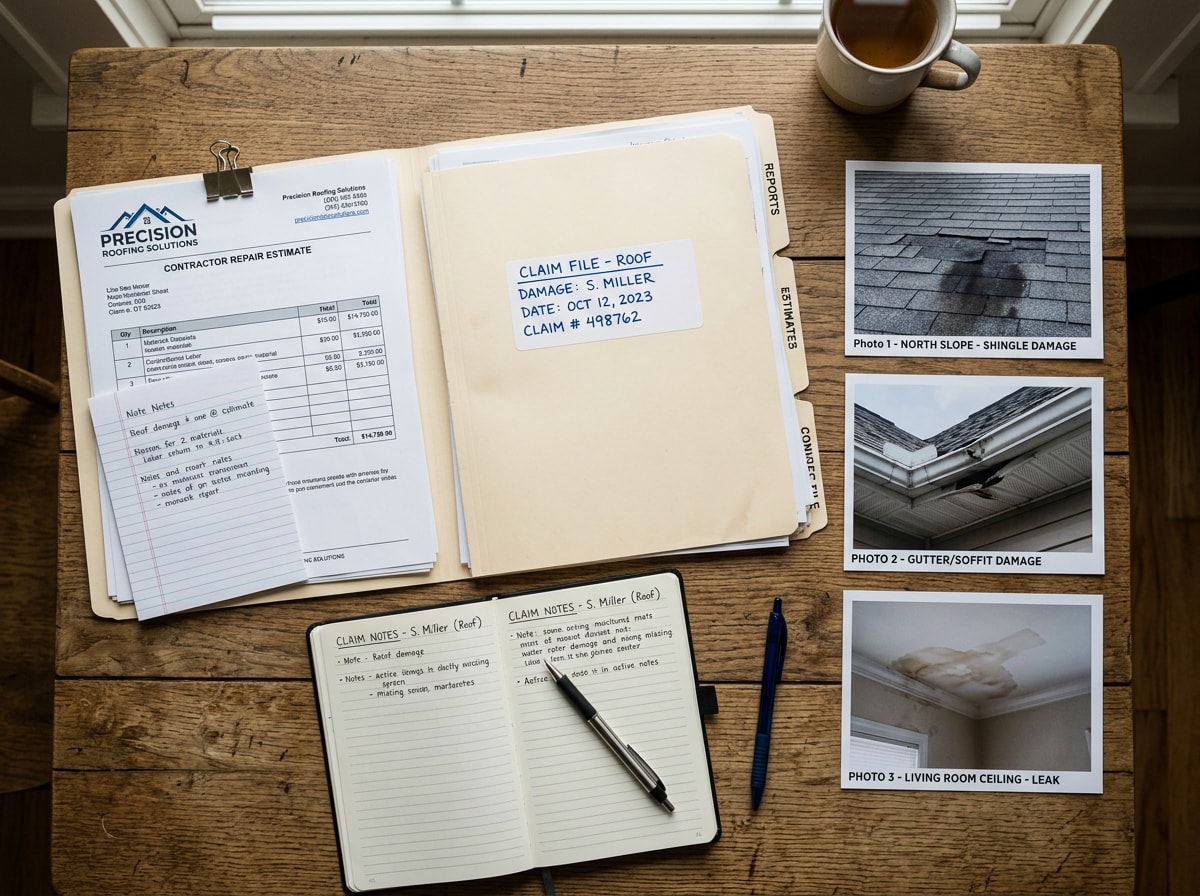
Keep a dedicated claim file with every call log, email, and reference number from day one. If the settlement doesn't cover necessary repairs, put that in writing and attach your contractor's documentation.
ACV vs. RCV, and the Hurricane Deductible
Florida homeowners policies generally cover wind, hail, and falling debris as named perils but exclude gradual wear and tear. How much you're actually paid depends on two things: your valuation method and your deductible structure.
| Term | What it means |
|---|---|
| ACV (Actual Cash Value) | Pays depreciated value based on your roof's age and condition |
| RCV (Replacement Cost Value) | Pays full replacement cost, usually in two installments as repairs are completed |
| Hurricane deductible | A separate, often higher deductible that applies specifically to hurricane-caused wind damage |
Hurricane damage is covered under the windstorm provisions of a policy, subject to the hurricane deductible established under Florida Statutes §627.701 . Most coastal Panama City policies set this as a percentage of dwelling coverage, often 2% to 10%, rather than a flat dollar figure, so confirm your exact percentage on the declarations page before you assume your standard deductible applies.
A current wind mitigation report can also lower future premiums and document the roof-to-wall connections carriers scrutinize during a wind claim.
Repair vs. Full Replacement
Insurers often limit payment to the damaged slope unless your documentation and local code-matching rules support more. Localized hail damage might only need one slope repaired, while widespread wind damage or code-matching requirements can justify full replacement.
Your contractor is the right person to make that call. A straightforward roof repair handles isolated damage, while a full roof replacement may be warranted when matching materials aren't available or Florida Building Code requires uniform coverage across the structure. If your roof is a flat or low-slope commercial section, our Roofing TPO Panama City guide covers material and code considerations specific to that scope of work.
Not sure which path applies to your property? Get a free estimate and we'll walk the roof with you before the adjuster does.
FAQ
How long do I have to file a roof insurance claim in Florida?
One year from the date of loss for an initial claim, 18 months for a supplemental claim covering damage discovered later, per Florida Statute 627.70132 . Miss the window and the claim is barred regardless of how legitimate the damage is.
What's the difference between ACV and RCV on a roof insurance claim?
ACV pays the depreciated value of your roof based on age and condition. RCV pays the full replacement cost, usually in two checks: an initial payment, then recoverable depreciation once repairs are verified complete.
What should I do if my roof insurance claim is denied?
Request the denial reason in writing, then get a second, independent inspection from a licensed roofer to challenge findings you disagree with. If the carrier still won't budge, a formal appeal or a public adjuster can help push the claim forward.
Does homeowners insurance cover roof damage from storms in Florida?
Generally yes. Sudden, accidental damage from wind, hail, or falling debris falls under covered perils in most Florida homeowners policies. Damage from neglect, age, or gradual wear typically isn't covered.
Will insurance replace my whole roof or just repair the damaged section?
Insurers often limit payment to the damaged slope unless your documentation and local code-matching rules support full replacement. Full replacement may be warranted when matching materials aren't available or code requires uniform coverage.
What's a hurricane deductible and how is it different from my regular deductible?
It's a separate, percentage-based deductible (commonly 2% to 10% of dwelling coverage) that applies specifically to hurricane wind damage, instead of your standard flat-dollar deductible. Check your declarations page for the exact figure, since it won't match your everyday deductible.
Ready to get your roof documented before the adjuster arrives? Visit Alpha One Roofing or get a free estimate and we'll have a licensed crew on-site.