A galvalume roof in Crawfordville, FL costs less than aluminum or copper while still shrugging off Panhandle humidity and hurricane-force wind for decades. The same zinc-aluminum coating that makes it such a strong inland performer has a real limit near saltwater, and knowing where that limit falls on your property is the difference between a 40-year roof and an early repair bill. Here's what the coating is actually made of, what it costs installed in 2026, and exactly how close to the Gulf you can push it.
What Is Galvalume Steel, and Why Do Crawfordville Roofers Use It?
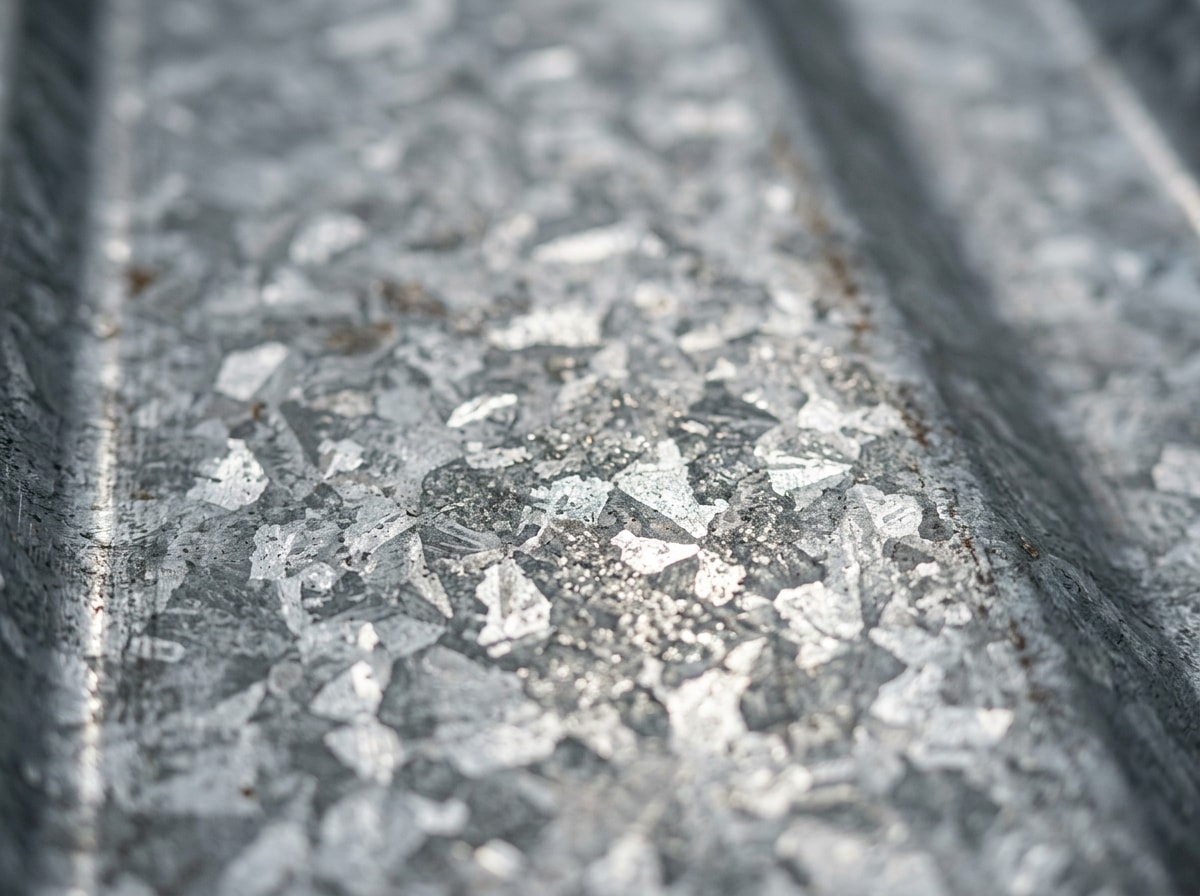
Galvalume isn't a type of steel on its own. It's a coating, roughly 55% aluminum with a balance of zinc and silicon, applied to a steel panel. The coating is precisely defined as 55% aluminum, 1.6% silicon, and the balance (43.4%) zinc by weight. That blend combines the barrier protection of aluminum with the sacrificial, scratch-healing behavior of zinc, which is why "galvalume steel" has become shorthand for an entire category of metal roofing panels.
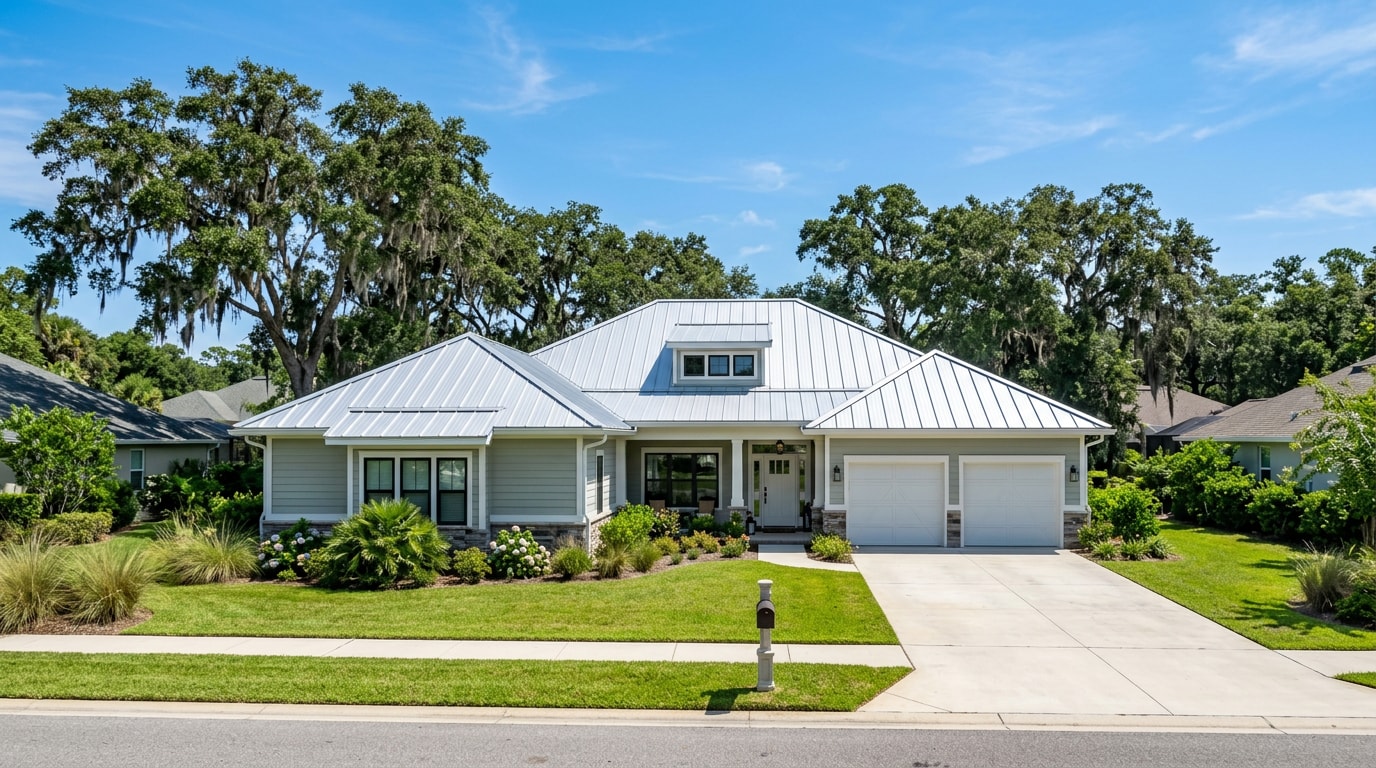
This isn't a theoretical material for Wakulla County. Public project records from a regional metal building manufacturer show a single-slope residence built right here in Crawfordville, FL. It is a single slope building with a 3" to 12" roof slope.
The structure features a 26-gauge Galvalume roof, 24-gauge designer flat (smooth) Kynar wall panel, FW-120 roof liner/soffit panels and large open areas for glass. That 26-gauge spec is typical: most standing seam panels made with this coating run 24 to 26 gauge, a range that balances durability against weight and cost for the wind and rain Wakulla County sees every year.
The coating itself isn't a generic marketing term. Galvalume is a continuously hot-dip coated sheet steel governed by ASTM A792. That standard spells out the chemistry, coating weight, and mechanical properties manufacturers have to hit before a panel can legally carry the name.
For a deeper look at how these panels go on a roof deck, including fastening patterns and code requirements for the region, see our steel roof installation guide for the Florida Panhandle.
Galvalume Roof Cost in Crawfordville, FL: 2026 Price Comparison
Galvalume shows up on so many Florida roofs because it resists corrosion well and holds up under hurricane-prone wind loads without the price tag of premium metals. It isn't automatically the right pick for every property, especially one sitting close to open water.
Here's how it stacks up against the materials Crawfordville homeowners most often compare it to, with 2026 installed pricing per square foot:
| Material | Avg. Cost per Sq. Ft. (Installed) | Corrosion Resistance | Best For |
|---|---|---|---|
| Galvalume steel | $10–$19 | Very good (inland) | Inland & most of Wakulla County |
| Galvanized steel | $7–$12 | Fair | Budget projects, low-moisture areas |
| Aluminum | $15–$21 | Excellent (coastal) | Within 1–2 miles of saltwater |
| Standing-seam premium (copper/zinc) | $20–$30+ | Excellent | High-end, long-term coastal builds |
Crawfordville sits a few miles inland from the Gulf and the St. Marks coastline, which puts most local properties in a reasonable zone for galvalume. Industry guides usually round the danger zone to "within a mile or two of the coast." A technical note from the Cold-Formed Steel Engineers Institute gets more specific: the amount of salt spray in the air is greatest near the breaking waves and can decline rapidly in the first 300 to 3000 feet landward of the shoreline, with corrosion farther landward akin to milder, inland conditions.
Translation for Crawfordville: homes more than roughly a half-mile to a mile from open saltwater, without regular direct salt-spray exposure, generally do fine with galvalume. Properties closer than that, especially anything facing the water directly along the St. Marks River mouth, should lean toward aluminum or a marine-grade coated panel instead.
Not sure which side of that line your property falls on? Our roof replacement team can assess your distance from the coast and salt exposure before recommending a material.
Pros and Cons of a Galvalume Roof in Crawfordville, FL
Pricing aside, the real question most homeowners want answered is simpler: will a galvalume roof actually perform well on a Crawfordville property? Here's the short version before the detail:
Pros
- Costs less than aluminum, copper, or zinc
- Handles wind gusts up to 140 mph when installed correctly
- Reflects UV rays, which helps cut attic heat gain
- Can run 40 to 60+ years in a low-salt, inland setting
Cons
- Not rated for direct, sustained salt-spray exposure
- Fewer color and finish options than painted steel or shingles
- Cut edges and deep scratches need touch-up paint to stay protected
Pro: Affordable Metal Roofing
Cost is usually what pulls homeowners toward galvalume in the first place. Aluminum can run as much as $21 per square foot installed. Galvalume steel rarely exceeds $16 per square foot with labor included.
That gap adds up fast across a few thousand square feet of coverage. For anyone comparing galvalume against other metal roofing options, it's typically the more affordable choice without giving up much performance. Our metal roofing installation specialists can walk you through an itemized quote for your roofline.
Con: Not Built for Direct Coastal Exposure
Galvalume resists rust and corrosion well across most of Florida, but homes within a half-mile to a mile of coastal saltwater should consider a different material. Salt-laden air accelerates corrosion on coated steel faster than it does on aluminum, which tolerates direct salt exposure more gracefully over time.
Across inspections we've run throughout Wakulla County, bare galvalume panels installed close to the St. Marks shoreline have shown edge rust and fastener staining within five years. The same panel three-plus miles inland still looks close to new after a decade of service. If your home sits in that narrow coastal band, ask your contractor about aluminum or a marine-rated coating instead of standard galvalume.
Pro: Wind and UV Resistance Built for Florida's Weather
Wind and UV exposure rank among Florida's biggest roof killers, and galvalume holds up well against both. Architectural shingles are typically rated for winds up to about 110 mph. A properly installed galvalume roof can handle gusts up to 140 mph without panel failure.
Florida's building code actually treats coastal and inland zones differently here. Areas within 1 mile of the coastal mean high water line where the ultimate design wind speed is 130 mph or greater, or areas where the ultimate design wind speed is 140 mph or greater, fall into the wind-borne debris region. Most of Wakulla County falls under that broader 140 mph standard, which is exactly the range galvalume panels are built to handle.
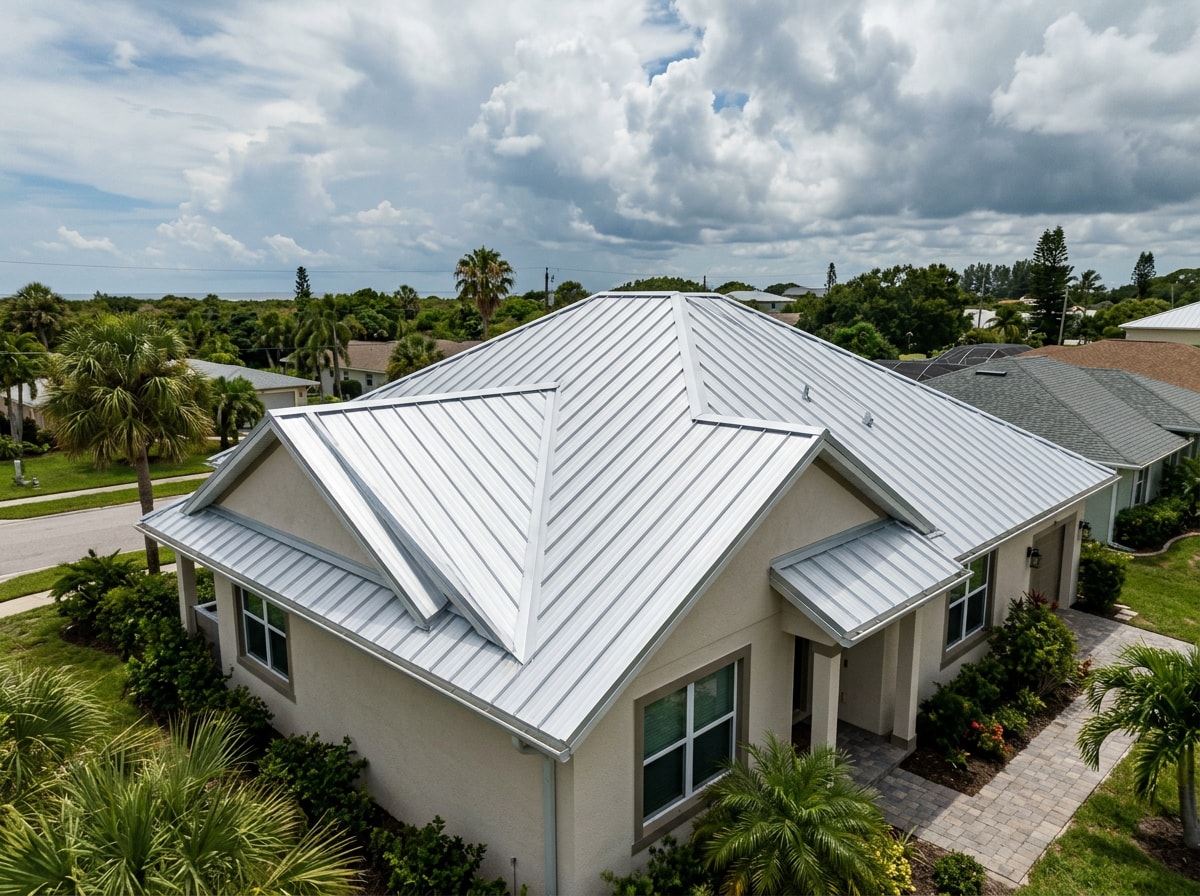
The reflective coating also deflects UV rays better than asphalt, slowing heat buildup on the panel's surface. That reflectivity is a big reason the material holds up: GALVALUME sheet is an ideal material for roofing because of its extraordinary outdoor corrosion resistance and heat reflectivity, which results in its long service life and helps keep the inside of the building cooler.
Pro: Long Service Life, With a Caveat
Most roofing blogs round galvalume's lifespan to a flat "60 years." The research is more conservative than that. Research conducted by the Metal Construction Association indicates that galvalume roofing could last as long as 40 to 50+ years without any extreme signs of corrosion. That's still more than double a standard shingle roof, which often needs replacement within 20 to 25 years, but it's a meaningfully different number than the marketing claim.
Part of the reason galvalume outlasts plain galvanized steel comes down to the coating chemistry itself: compared to galvanized metal, galvalume's corrosion resistance is about two to four times better, because the formula combines the toughness and strength of zinc with the rust resistance of aluminum. Where your roof actually lands in that 40-to-60-year window depends on local humidity, roof slope, fastener quality, and how close you are to saltwater.
Ready to see whether galvalume pencils out for your roofline? Get a free estimate before you compare quotes, so you know exactly what's included in the price per square foot.
Why Local Experience Matters for a Galvalume Installation
Alpha One Roofing is a licensed general contractor serving Crawfordville and the rest of the Florida Panhandle, and galvalume is one of the most common materials we spec for inland Wakulla County projects. We've seen firsthand that panel quality, fastener choice, and flashing detail matter as much as the coating itself once wind-driven rain gets involved.
If you're weighing galvalume against other materials for a home in Crawfordville or anywhere nearby, our team can walk the roof, measure your distance from the coast, and give you a straight answer instead of a generic sales pitch.
FAQ
How Much Does a Galvalume Roof Cost in Florida?
A galvalume roof typically costs between $10 and $19 per square foot installed, materials and labor included. The exact cost on your home depends on panel gauge, profile style, and how complex your roofline is. Steep pitches, valleys, and dormers all add labor time.
Is a Galvalume Roof Good for Coastal Areas Like Crawfordville?
Most of Crawfordville is far enough inland to work well with galvalume. The exception is property within roughly a half-mile to a mile of the St. Marks shoreline or open Gulf water, where direct salt spray accelerates corrosion. Homes in that narrow band should look at aluminum or a marine-grade coated panel instead.
What's the Difference Between Galvalume and Galvanized Steel?
Galvanized steel is coated in pure zinc. Galvalume adds aluminum to that mix, which forms a tougher barrier against moisture and salt. The practical result: galvalume holds up roughly two to four times longer than galvanized steel in the same environment, especially in humid or coastal-adjacent conditions.
How Long Does Galvalume Steel Actually Last?
Expect 40 to 50-plus years in a low-salt, inland setting like most of Crawfordville, based on Metal Construction Association research, not the flat "60 years" figure some sites repeat. Actual lifespan varies with local climate, roof slope, and how well gutters and flashing are maintained. If you want a professional read on your own roof's expected lifespan, schedule a roof inspection with our team.
Is Galvalume More Expensive Than Other Materials?
Galvalume costs more than standard galvanized steel but less than copper or aluminum, while offering comparable corrosion resistance and lifespan for most inland applications. For homeowners weighing galvalume against aluminum specifically, galvalume usually wins on value unless the home sits close enough to the water to need aluminum's extra salt tolerance.
Will a Galvalume Roof Rust or Corrode Over Time?
Not under normal inland conditions. The zinc in the coating sacrifices itself to protect any scratched or cut edges, which is why the material resists rust so well. Rust risk goes up near saltwater, around un-sealed cut edges, or anywhere the panel sits in direct contact with dissimilar metals, wet concrete, or treated lumber.